Written by two sisters

Every animal here is in trouble. Every story here ends well.

We made this website to introduce kids to endangered species. Each animal gets a story told in its own voice, a list of facts we researched ourselves, and an honest look at how many are left. We only write endings that are true, so the hope in them is real.

19
animals, each with a story, facts, a habitat map and a population update
11
of them are Critically Endangered, the highest level of risk
3
stories you can read in English or in French
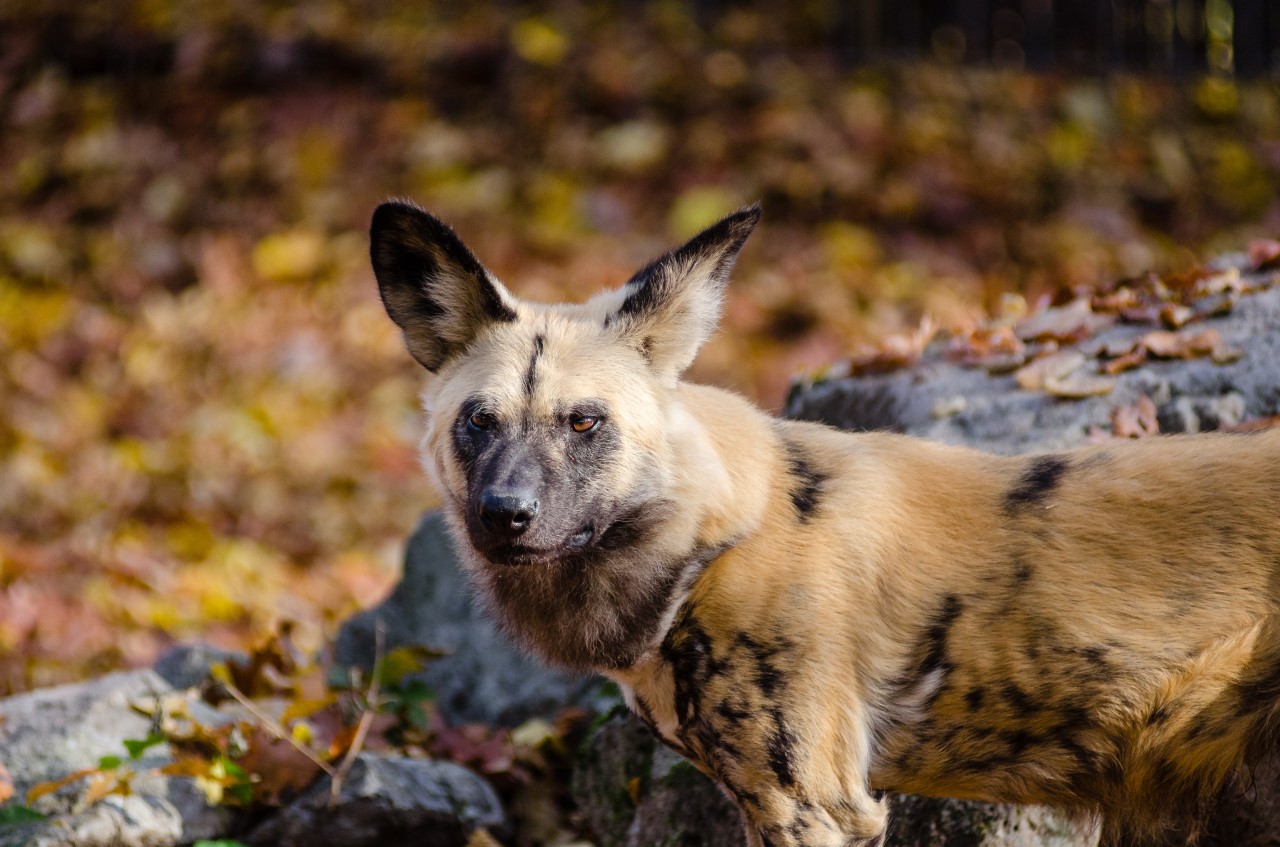
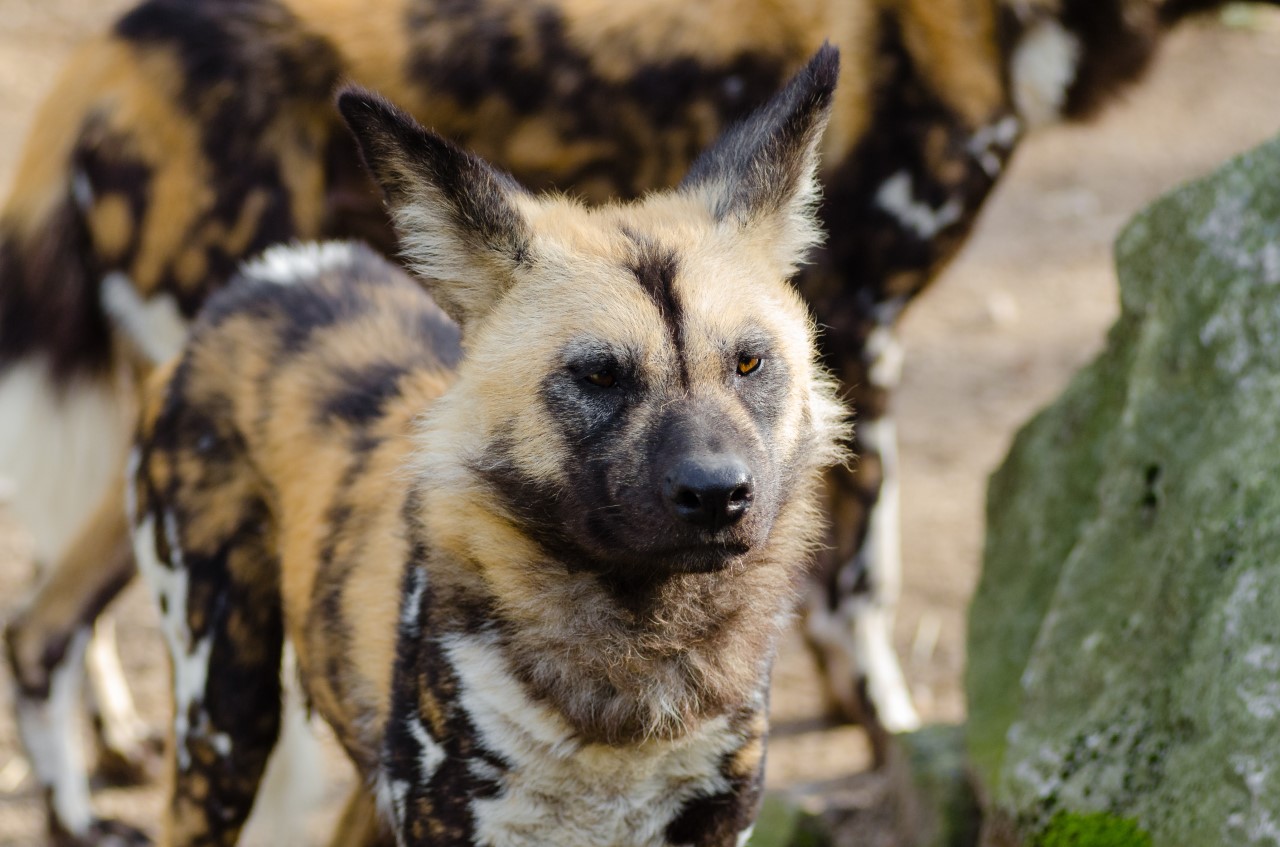
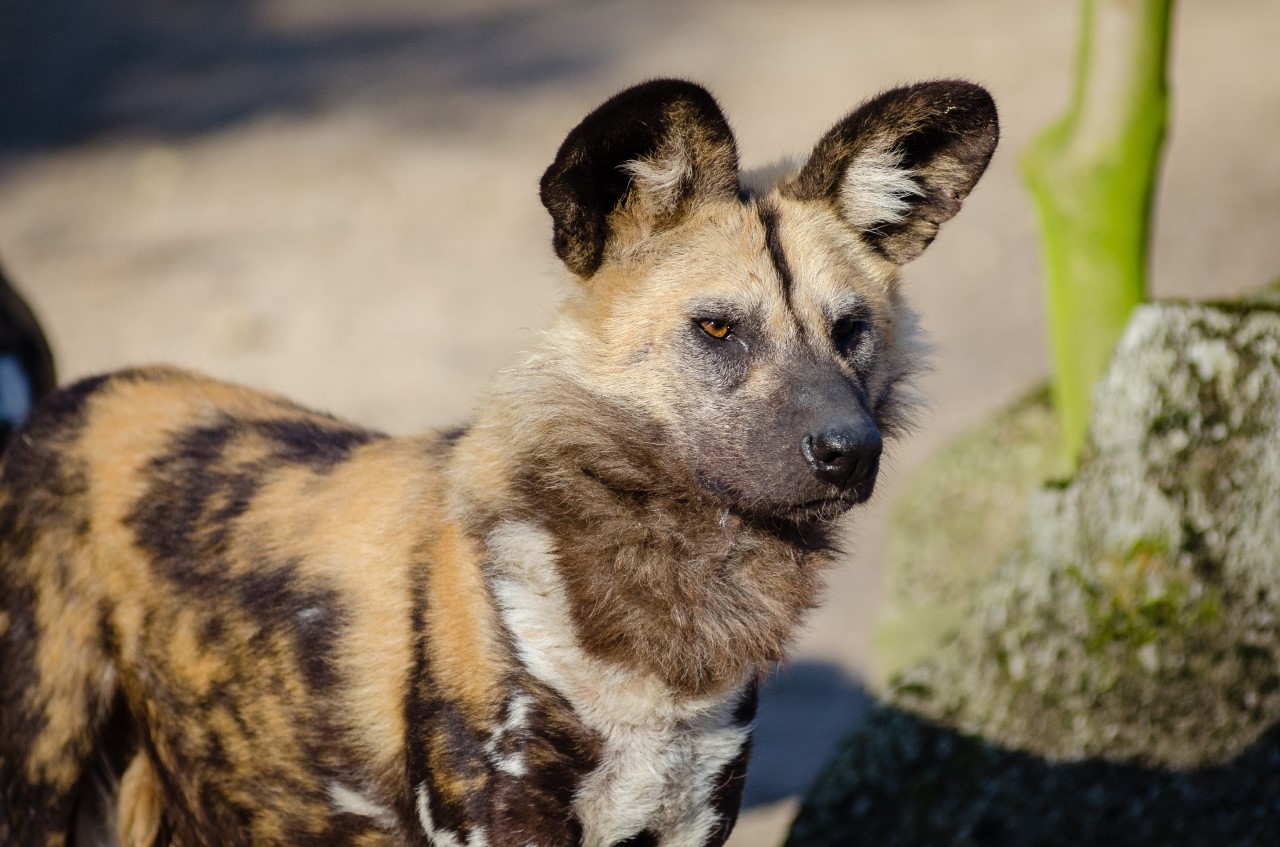
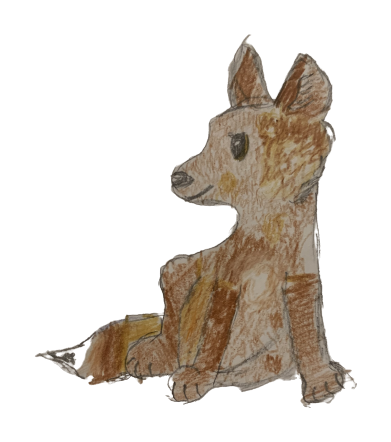
Mina the African wild dog
Mina the African wild dog, the very first story on this website

Why save endangered species?

Why should you save us endangered animals? Here are three reasons.

1

The food chain breaks

If we go extinct, the food chain is disrupted. Every animal is somebody else's meal or somebody else's gardener, and pulling one out changes everything above and below it.

2

People end up with less food

We help keep the plant eaters under control so there are not too many of them. Without us they eat all the vegetation, and that vegetation is what your food grows in.

3

You depend on a healthy ecosystem

When we are endangered the ecosystem is thrown off balance, and that makes it harder for you to survive. You never know what ripple one extinction will cause, and by the time you find out it can be too late to fix.

How you can help

The more people who know about these animals and care about them, the better the chances that they make it. Here is where to start.

1

Tell somebody

Teach your siblings, parents, friends and anybody else about these animals, so they understand what biodiversity loss actually costs and why wildlife conservation matters.

2

Do your own research

Do what we did. The more you know, the more you can help, and the more sure you can be that you are not accidentally doing something that harms these animals or their habitats.

3

Support the people doing the work

Almost every good ending on this website was made by a specific group of people doing specific work. If you are an adult, donating to those groups gives them what they need to keep going.

4

Pass this website on

Share it so that other people can learn about these animals too. If somebody gave you this link, tell them thank you.

Stories

Each animal has a story told in its own voice, facts we researched and checked, a look at where it lives, and an honest update on how many are left. Pick a reading level or just start anywhere.

Reading level
Endangered

African Wild Dog

Africa · All ages

Mina's pack runs, hides and looks after its old and injured. Read her story, then find out how fourteen wild dogs, and the packs that followed them, turned into hundreds in Mozambique.

Read about the african wild dog
Endangered

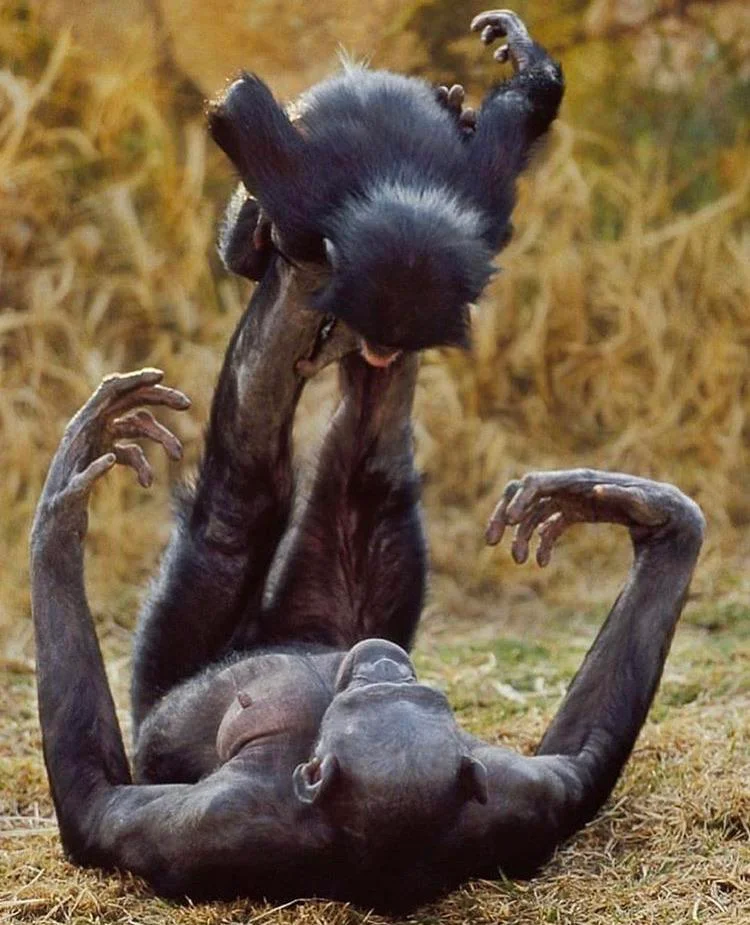
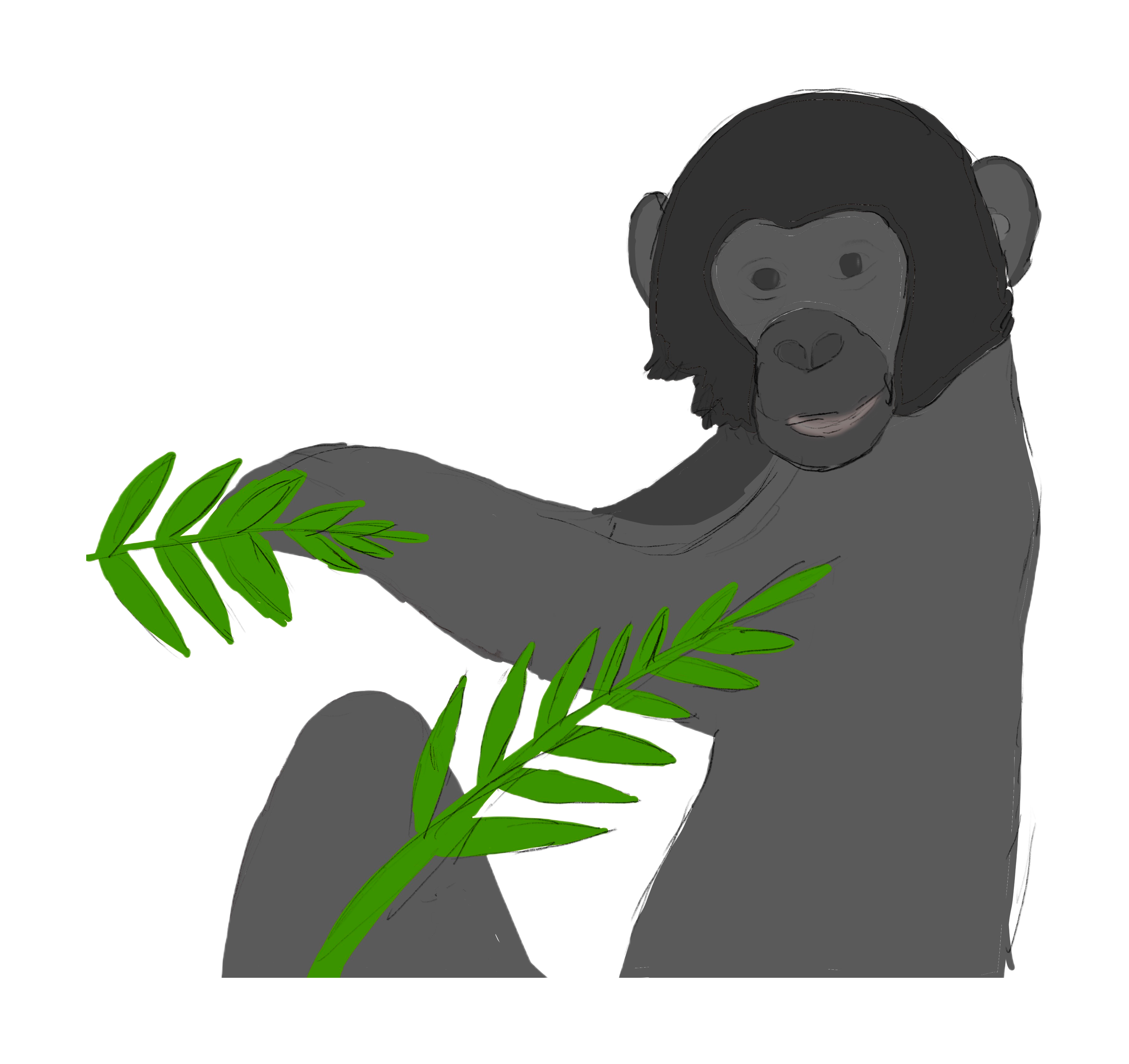
Bonobo

Democratic Republic of Congo · All ages

Eliana's troop welcomes a baby and then runs from gunfire the same night. The miracle she hopes for turns out to already be happening, and it is made of people.

Read about the bonobo
Vulnerable

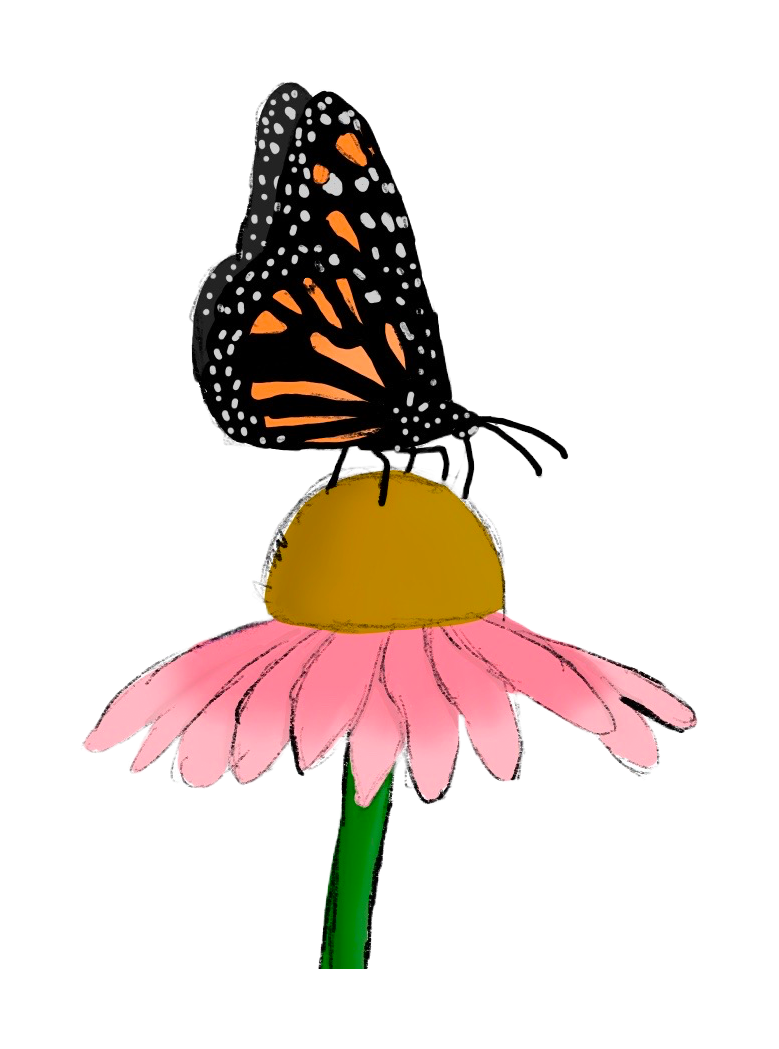
Monarch Butterfly

The Americas · All ages

Anika talks to herself, tells herself jokes, and walks out of her own skin five times. Then she learns how people actually count monarchs, and what happened the year after the worst count ever.

Read about the monarch butterfly
Endangered

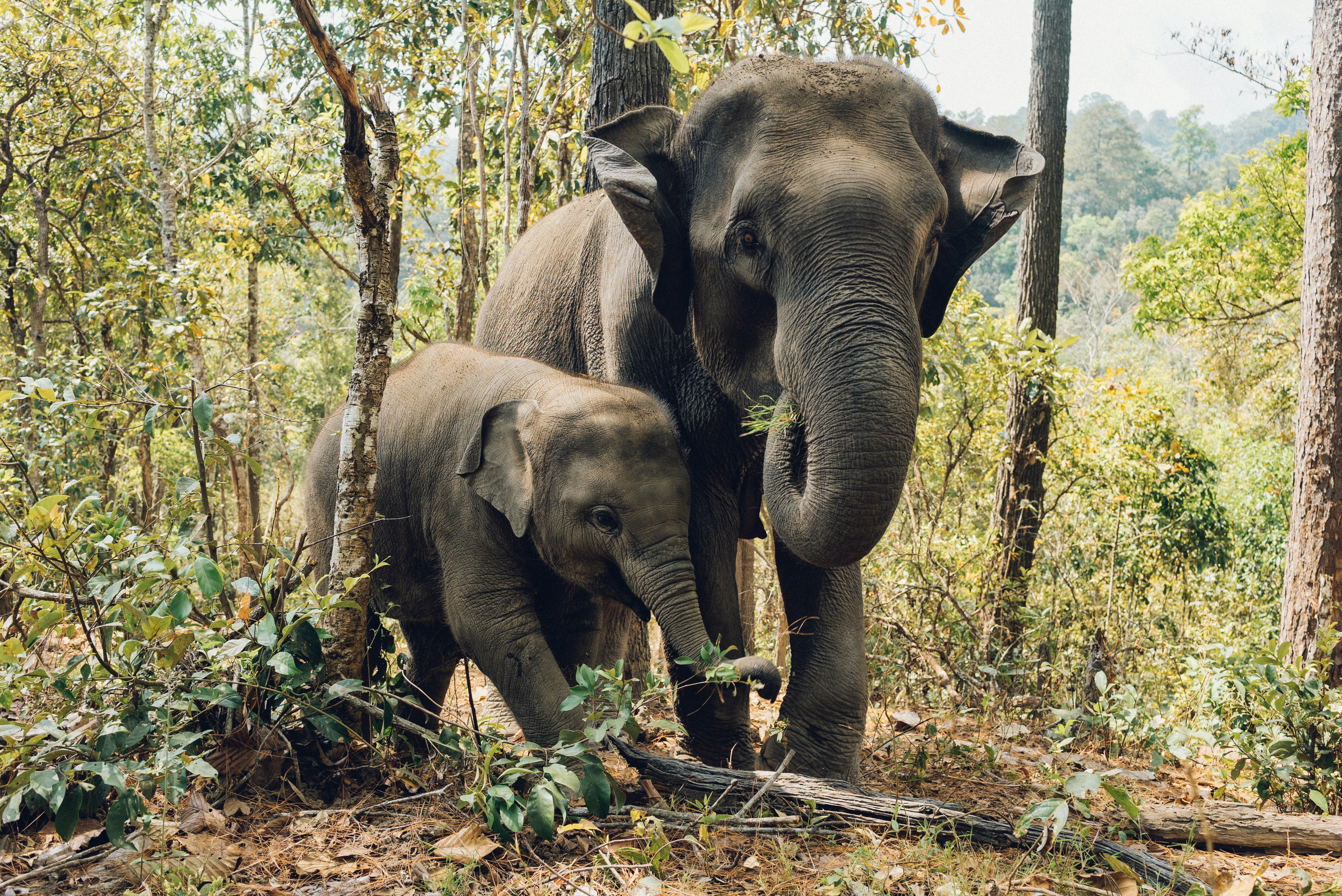
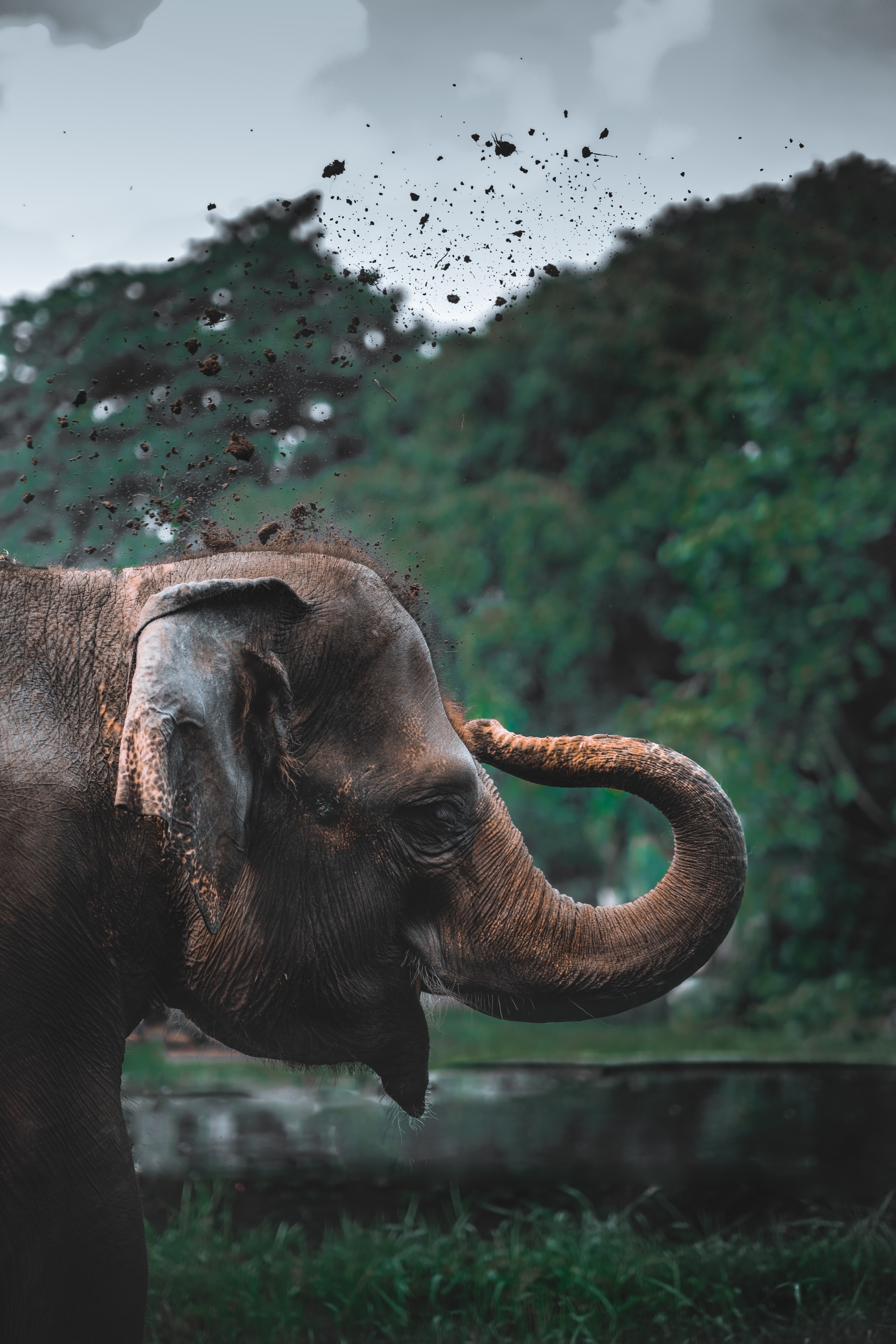
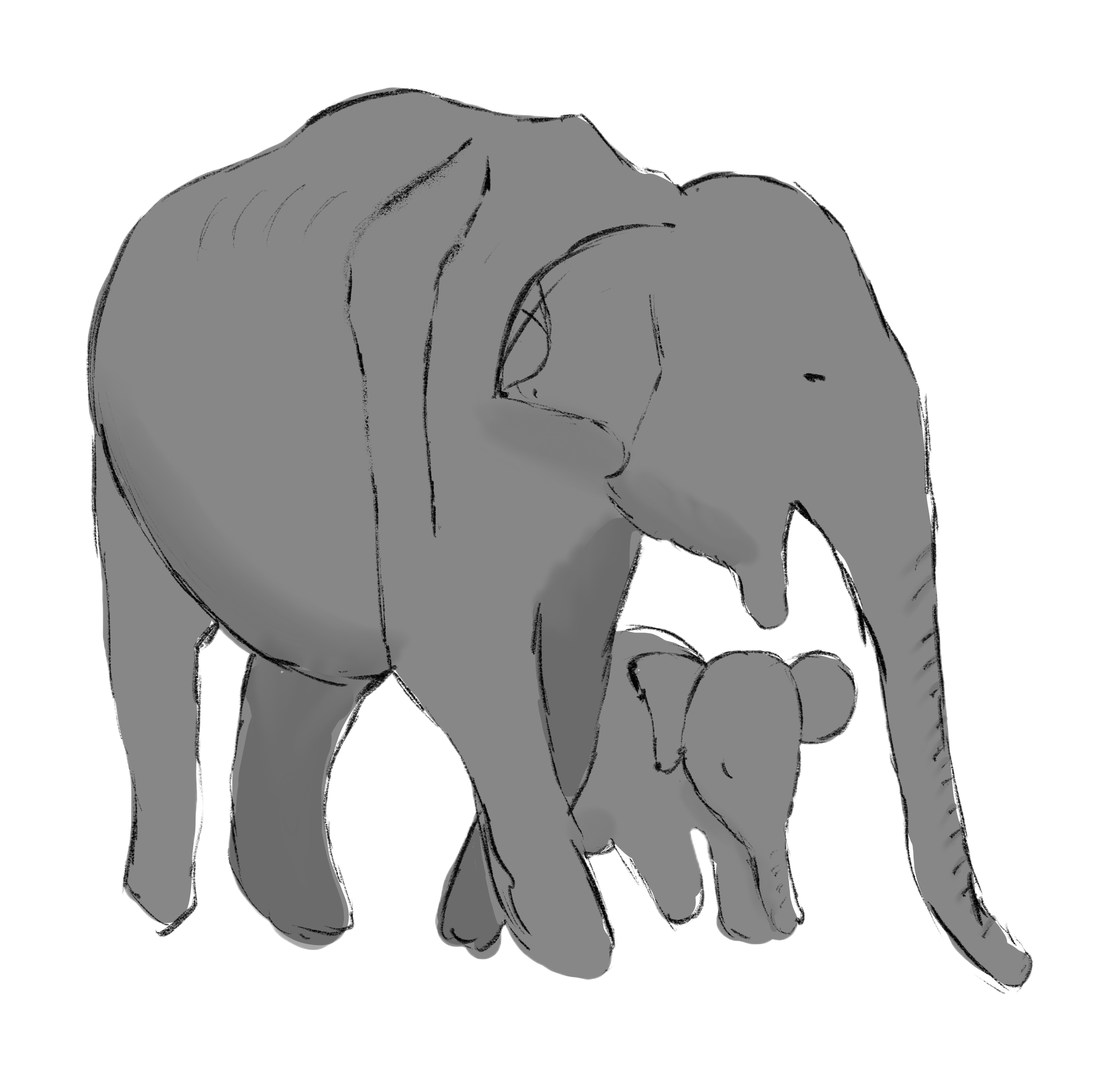
Asian Elephant

South and Southeast Asia · All ages

Willa and her little sister Ellie watch machines tear up their grassland. Then Grandma tells them the other half of the story, the half nobody expected.

Read about the asian elephant
Critically Endangered

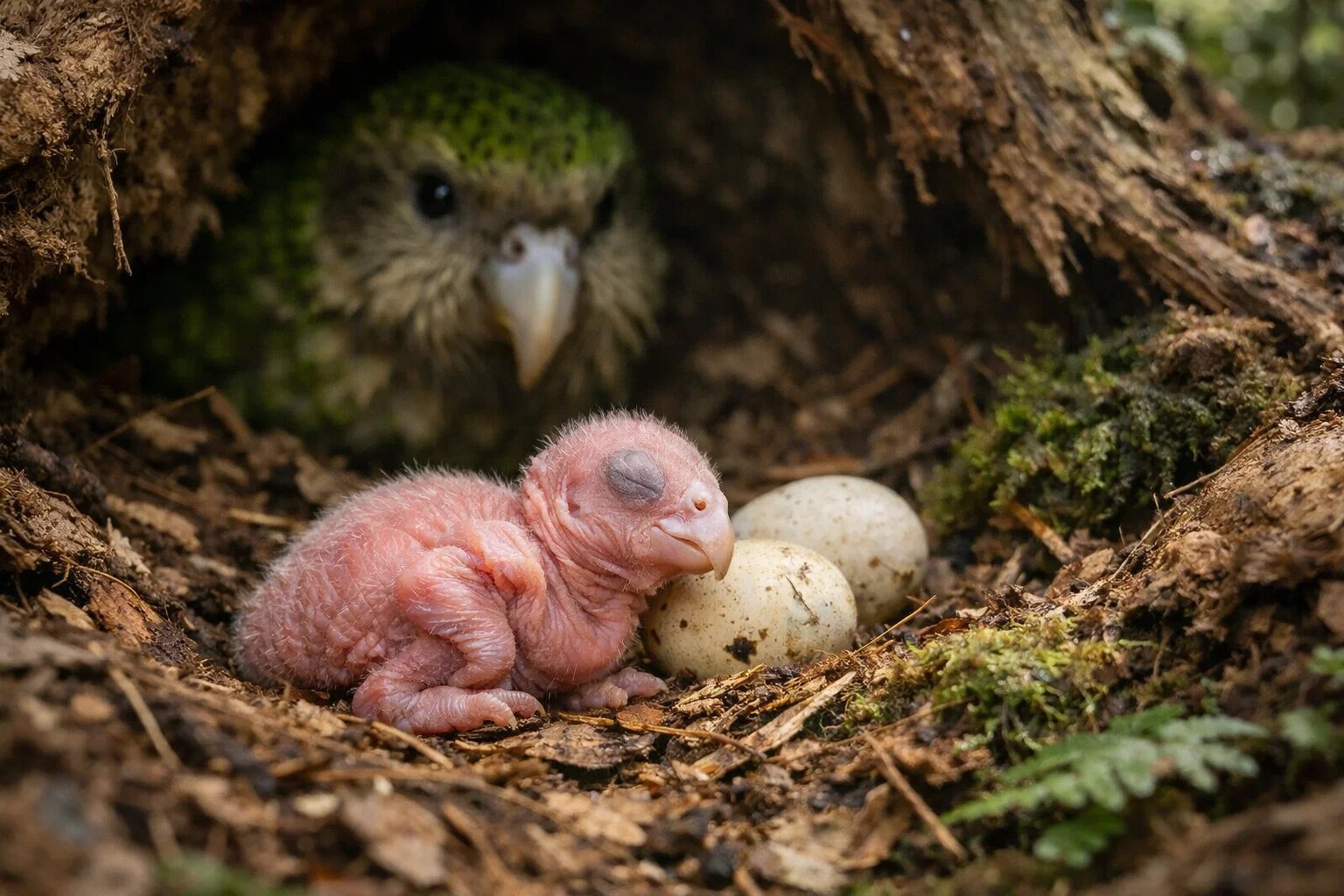
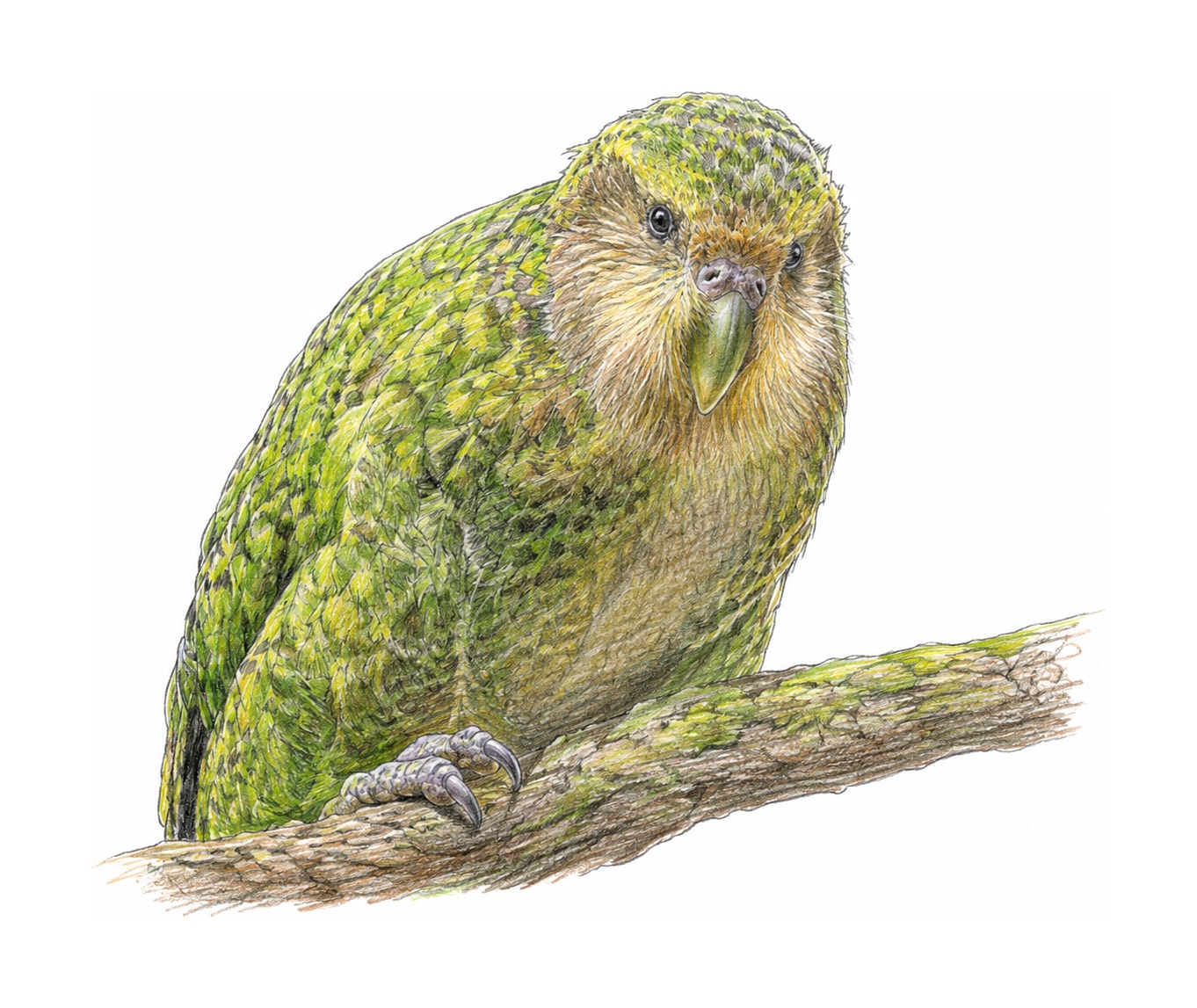
Kakapo

New Zealand · Ages 9 to 11

Meet Pudding, a parrot who weighs as much as a house cat, cannot fly one inch, and booms in a hole in the ground for eight hours a night.

Read about the kakapo
Critically Endangered

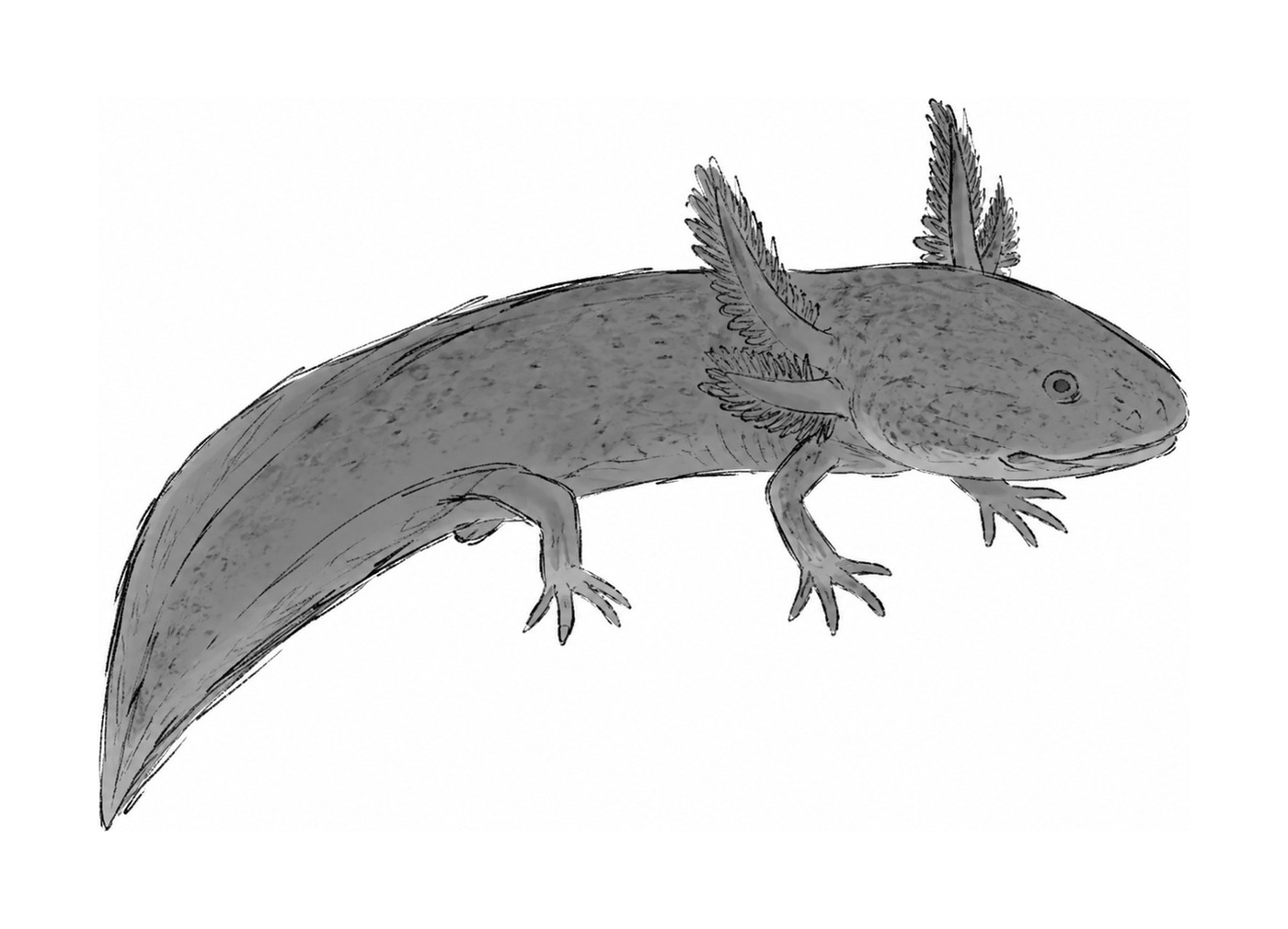
Axolotl

Mexico · Ages 9 to 11

Tito is a baby forever, breathes three different ways, and can regrow his own leg in a month. Also he cannot stop smiling.

Read about the axolotl
Endangered

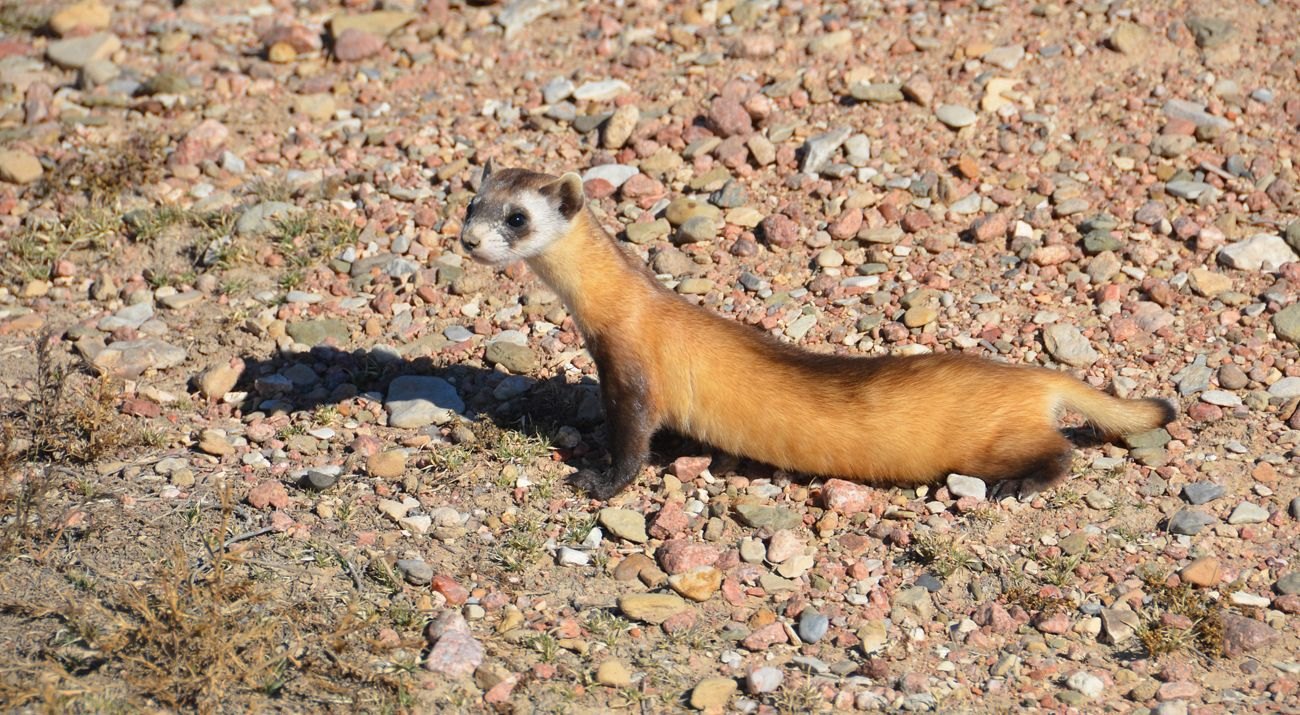
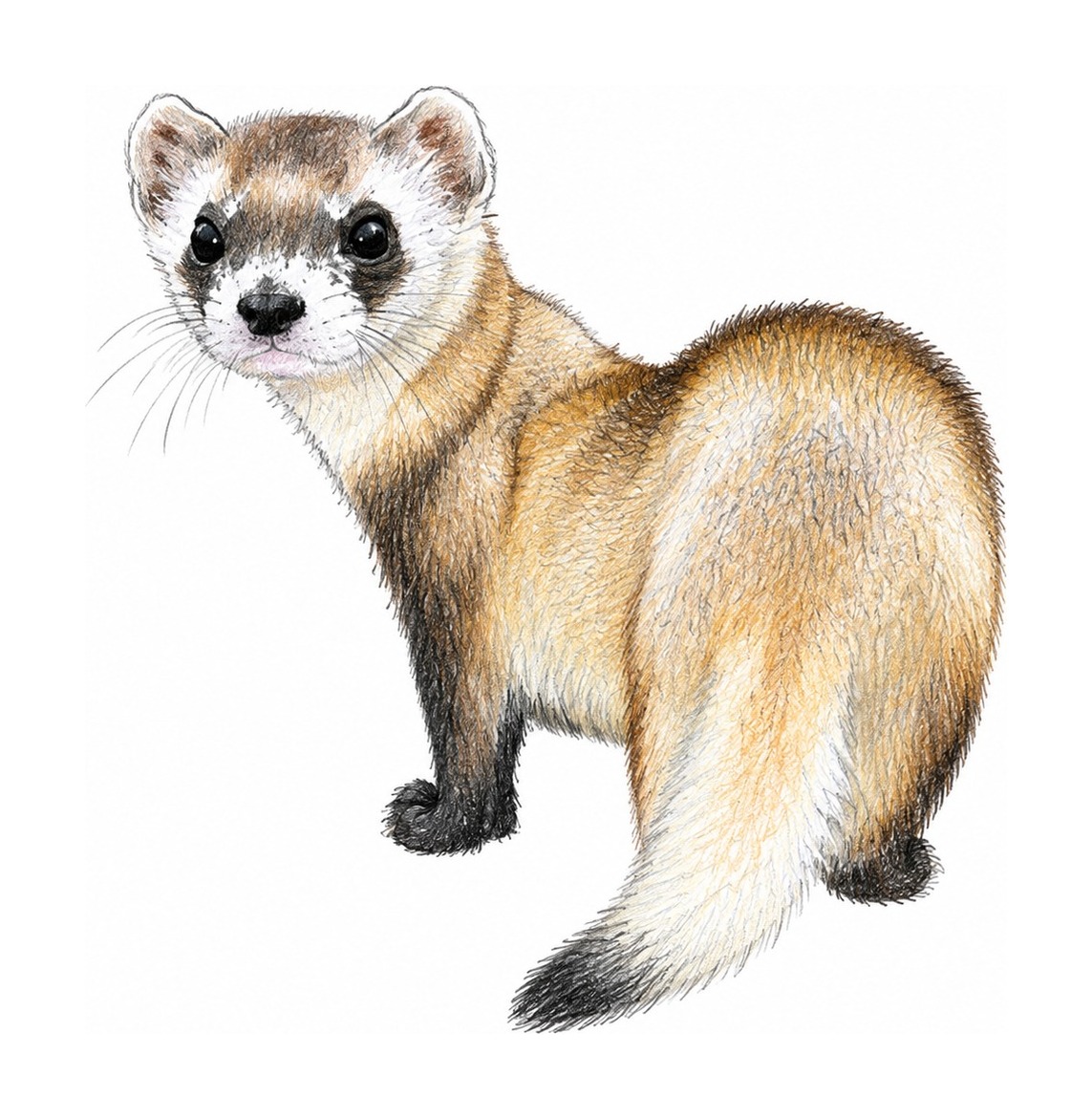
Black-Footed Ferret

United States · Ages 9 to 11

Noodle sleeps 21 hours a day, wears a tiny robber costume, and was saved because a ranch dog named Shep found one in 1981.

Read about the black-footed ferret
Vulnerable

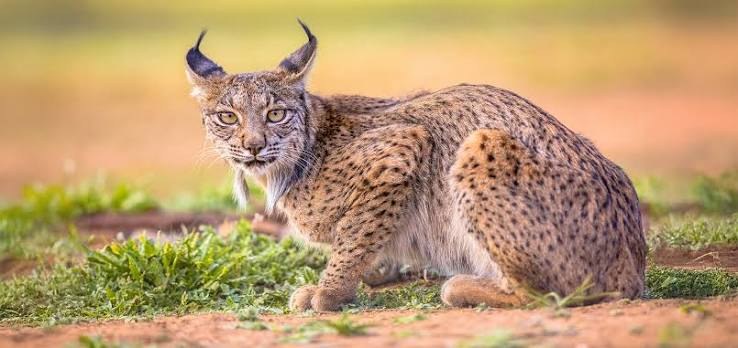
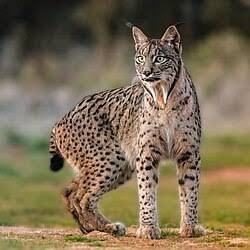
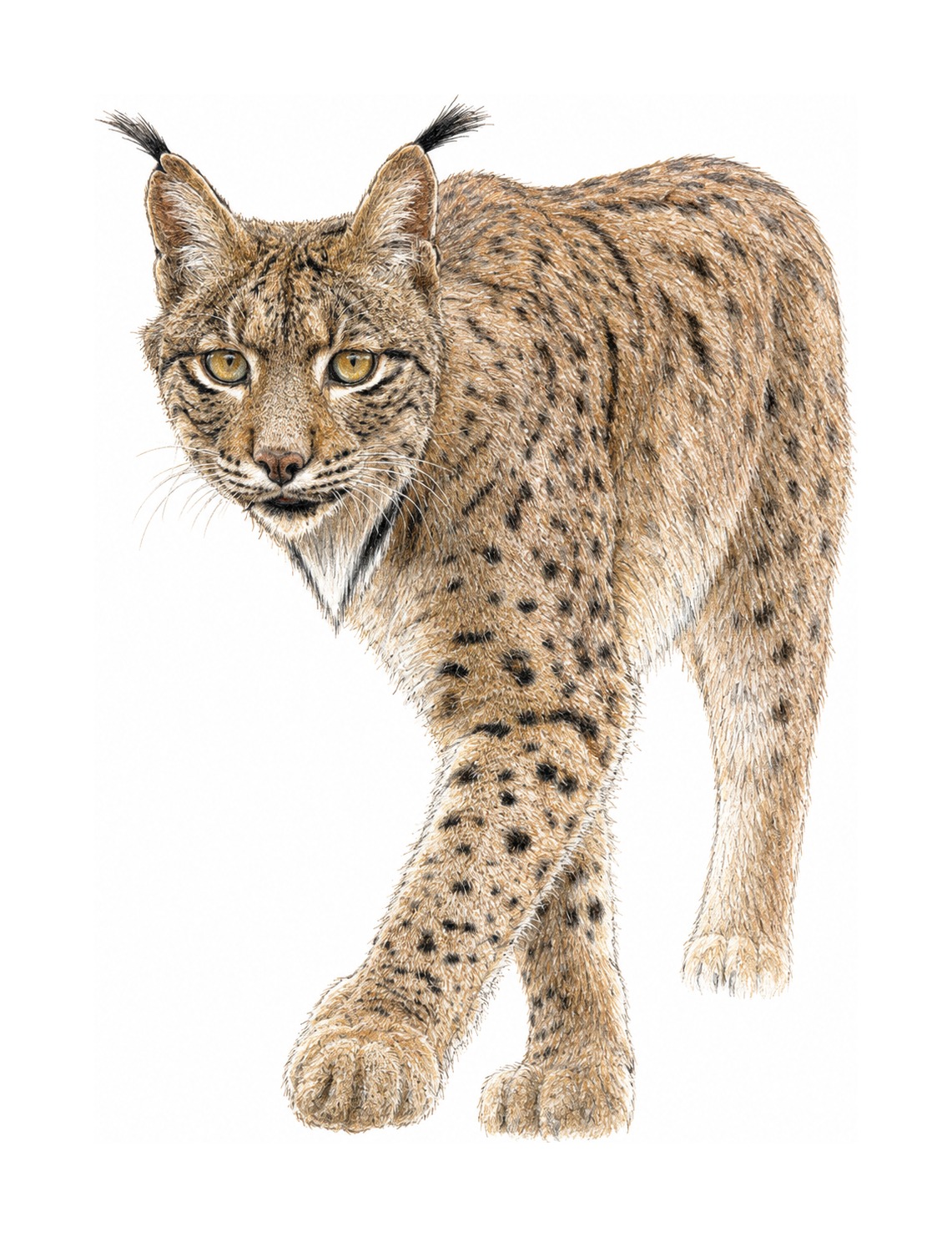
Iberian Lynx

Spain and Portugal · Ages 9 to 11

Rufo has a beard, a one item menu, and belongs to the greatest comeback any cat species has ever had. Fewer than 100 in 2002, over 2,600 now.

Read about the iberian lynx
Endangered

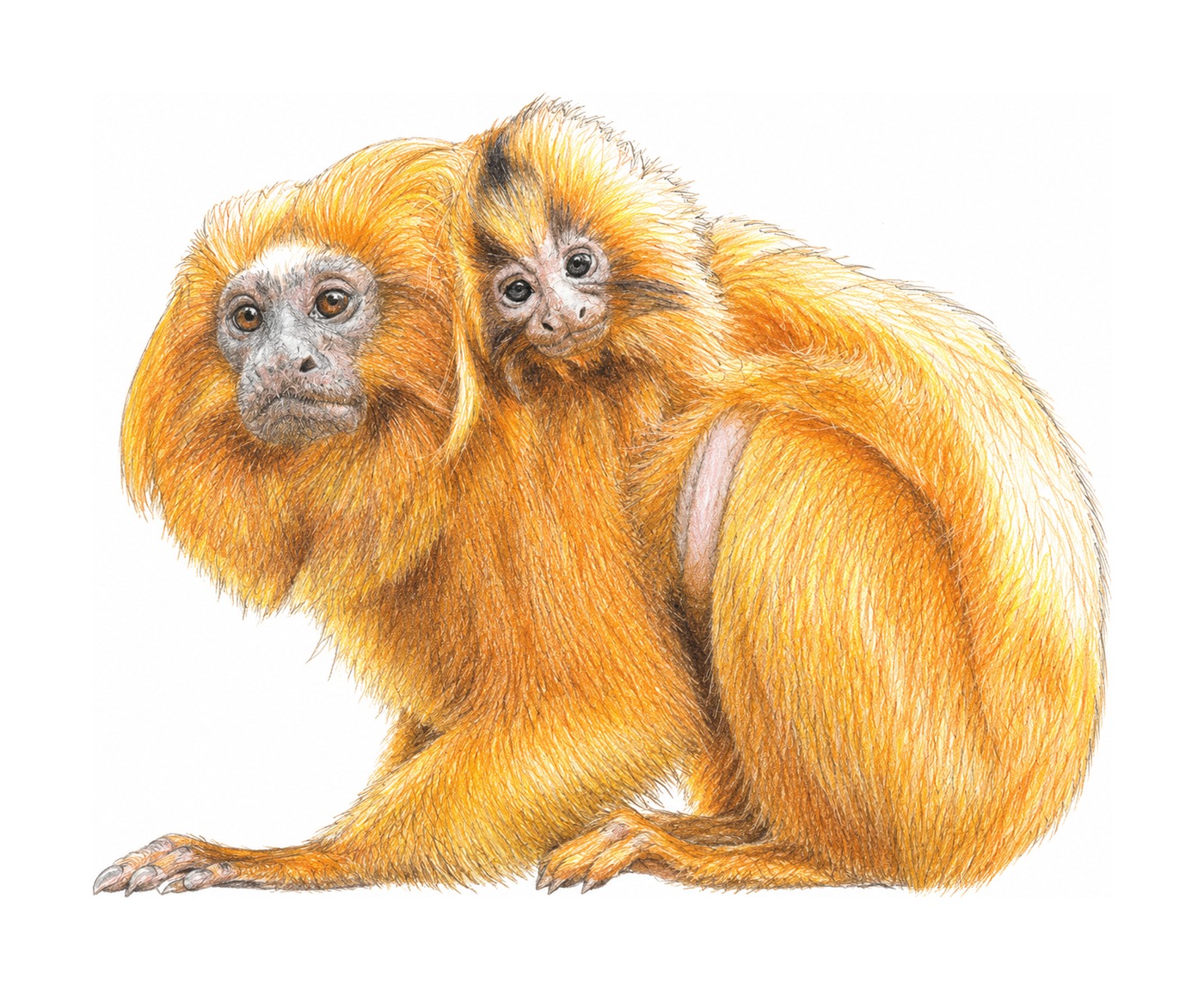
Golden Lion Tamarin

Brazil · Ages 9 to 11

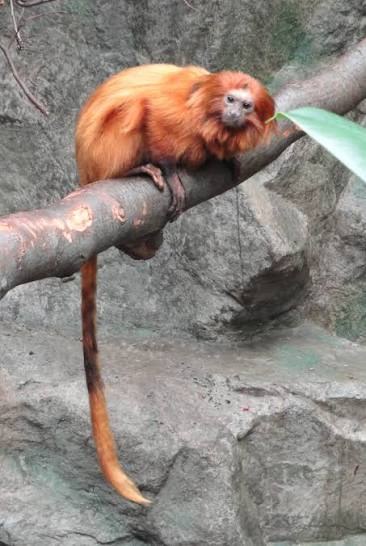
Pipoca is a squirrel-sized monkey with a lion's mane, a dad who carries the twins all day, and a bridge made of forest built just for her.

Read about the golden lion tamarin
Critically Endangered

Yangtze Finless Porpoise

China · Ages 9 to 11

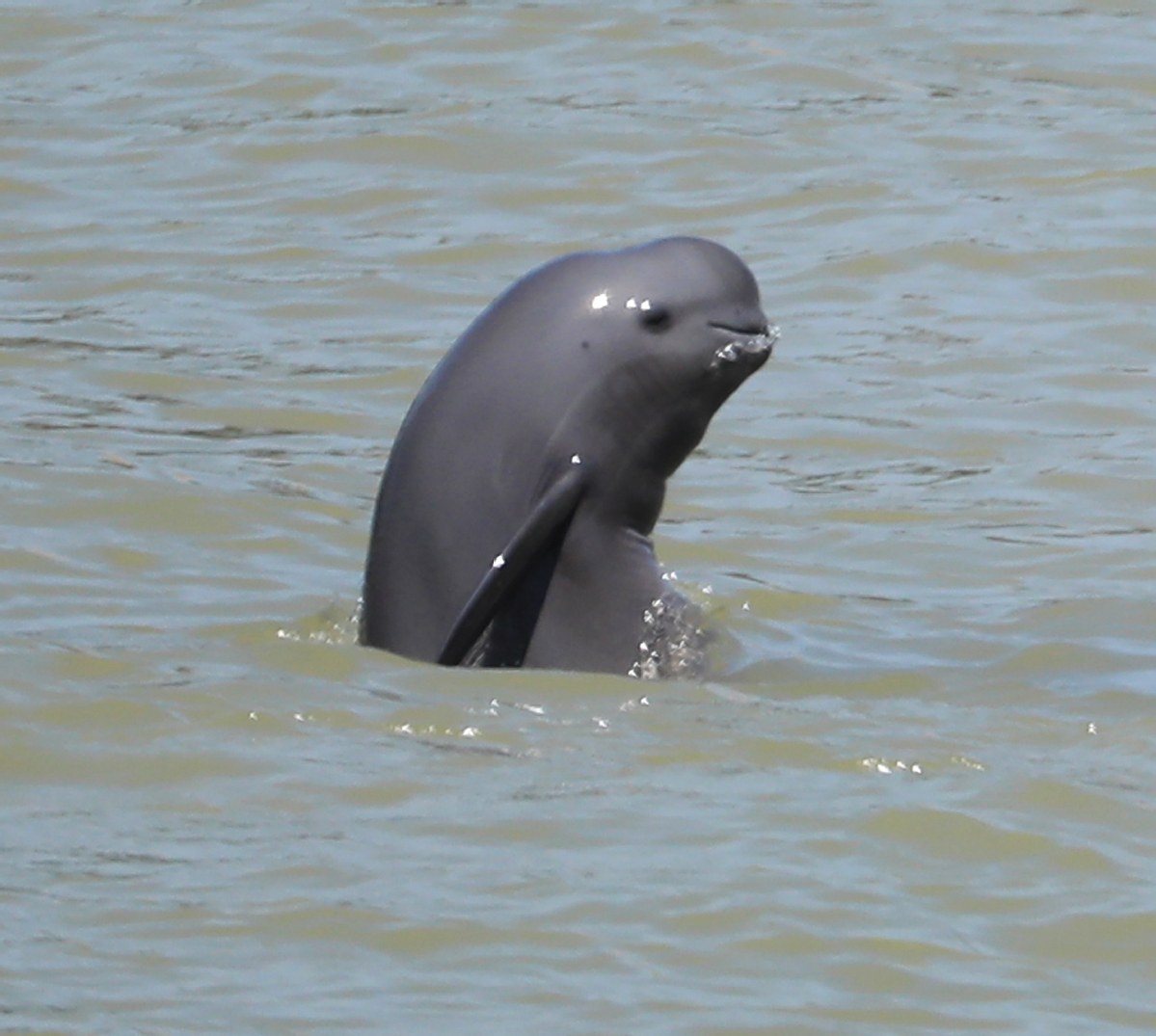
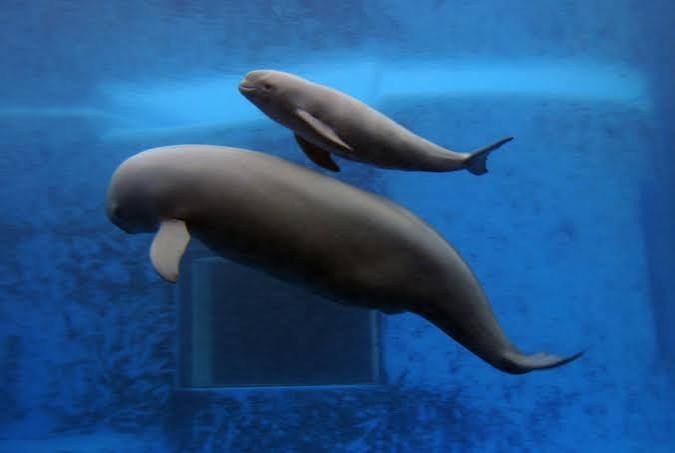
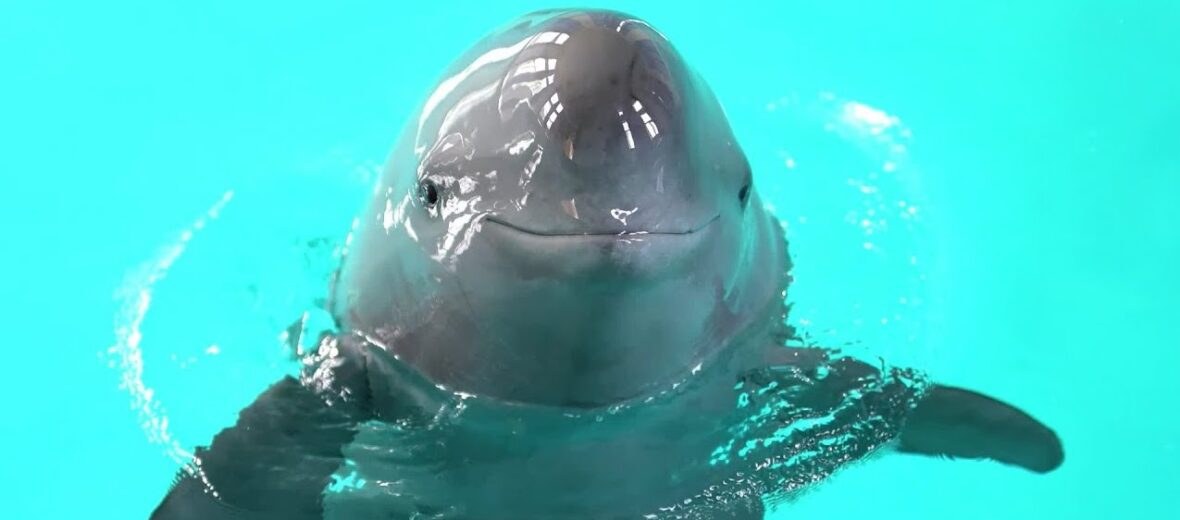
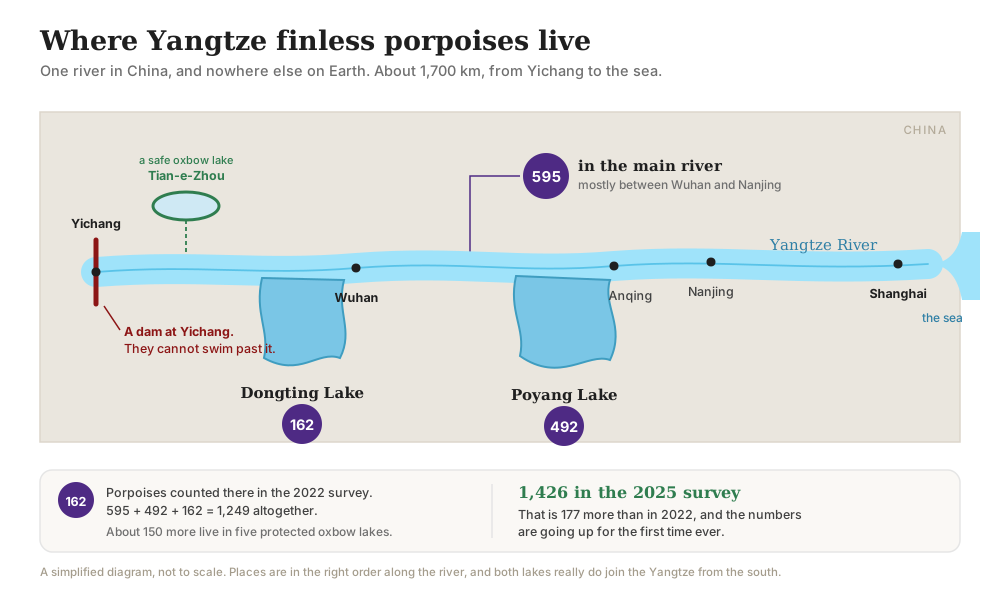
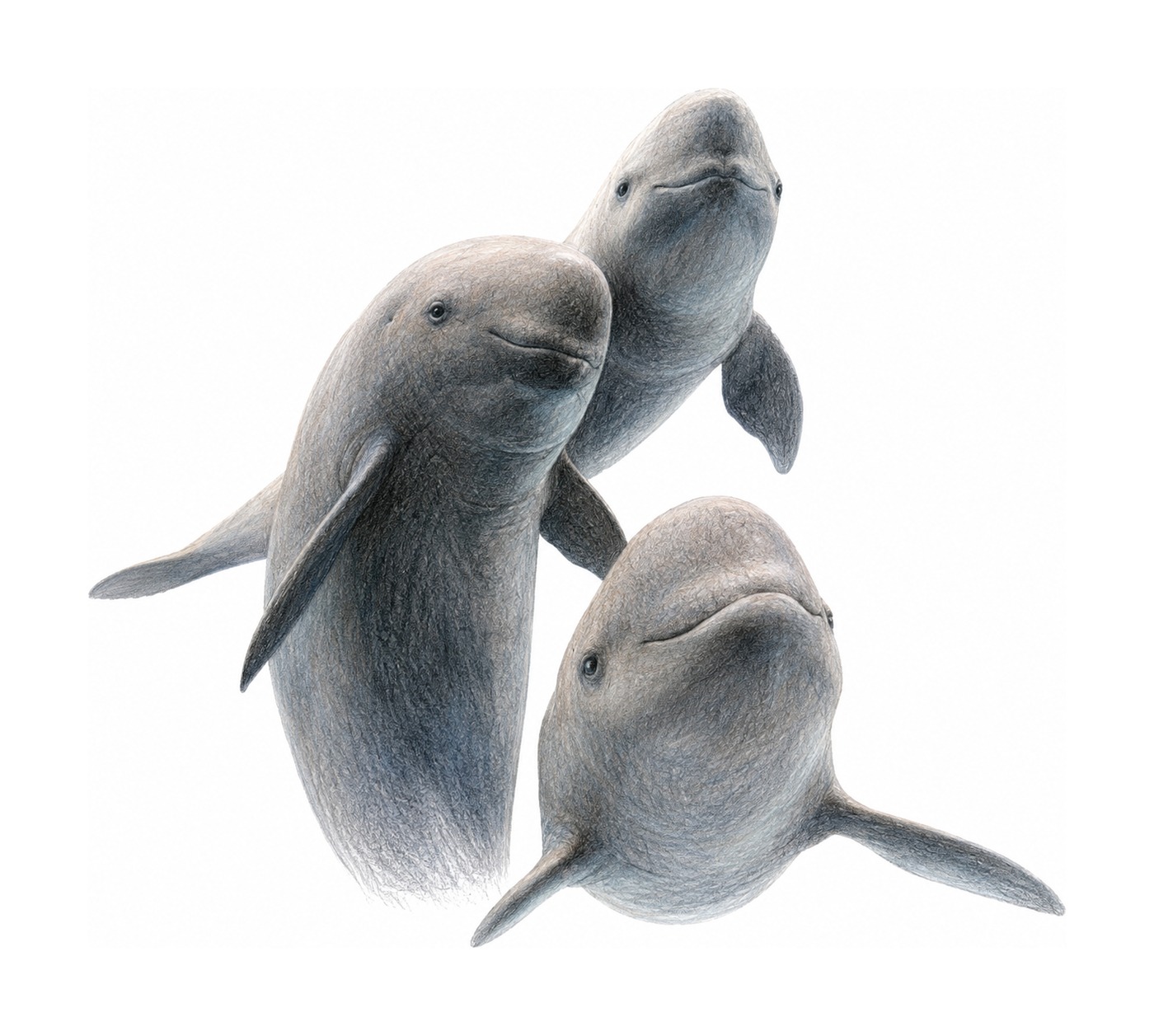
Bao is the only porpoise on Earth living in fresh water, the last mammal left in the Yangtze, and for the first time ever there are more of him than last time anybody counted.

Read about the yangtze finless porpoise
Endangered

Mountain Gorilla

Rwanda, Uganda and DR Congo · Ages 12 to 13

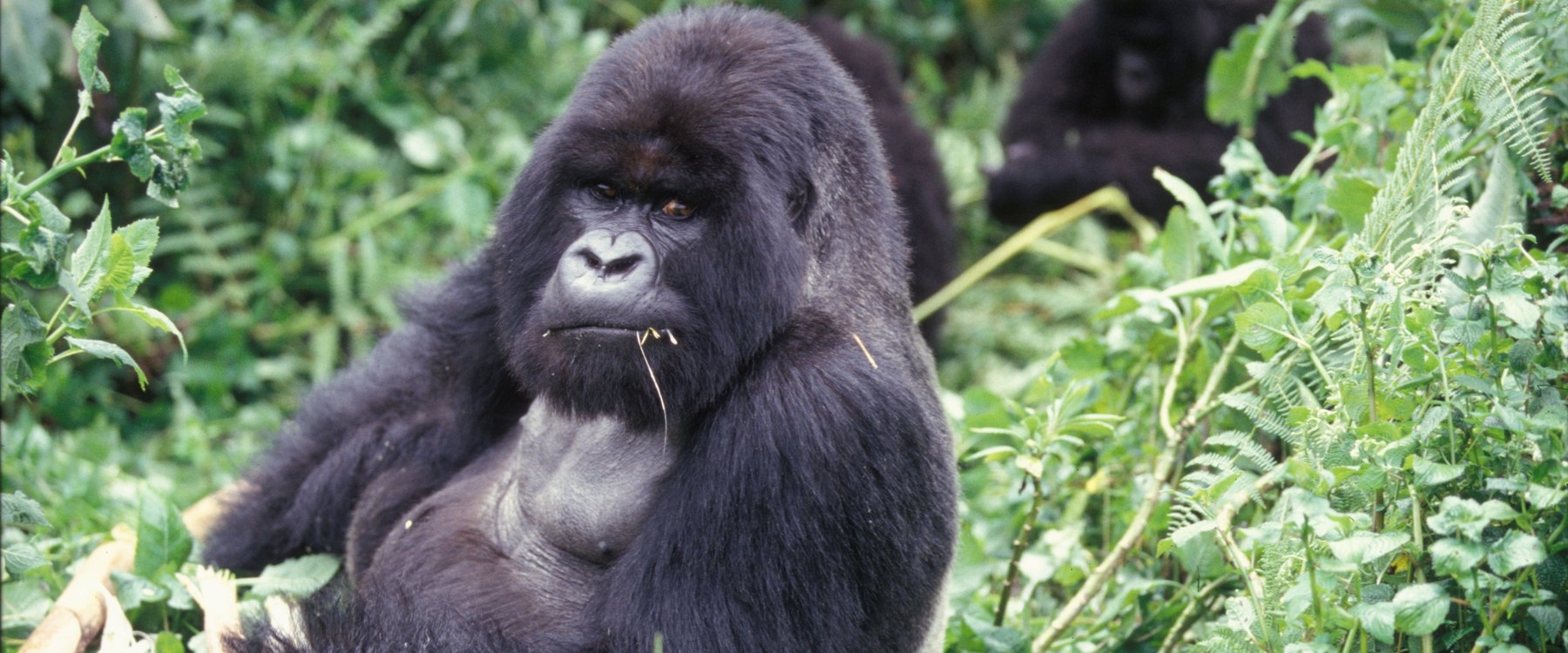
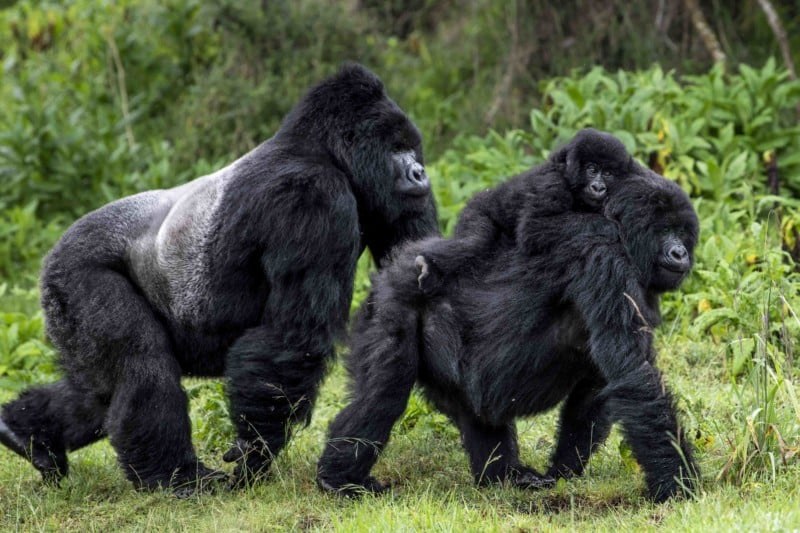
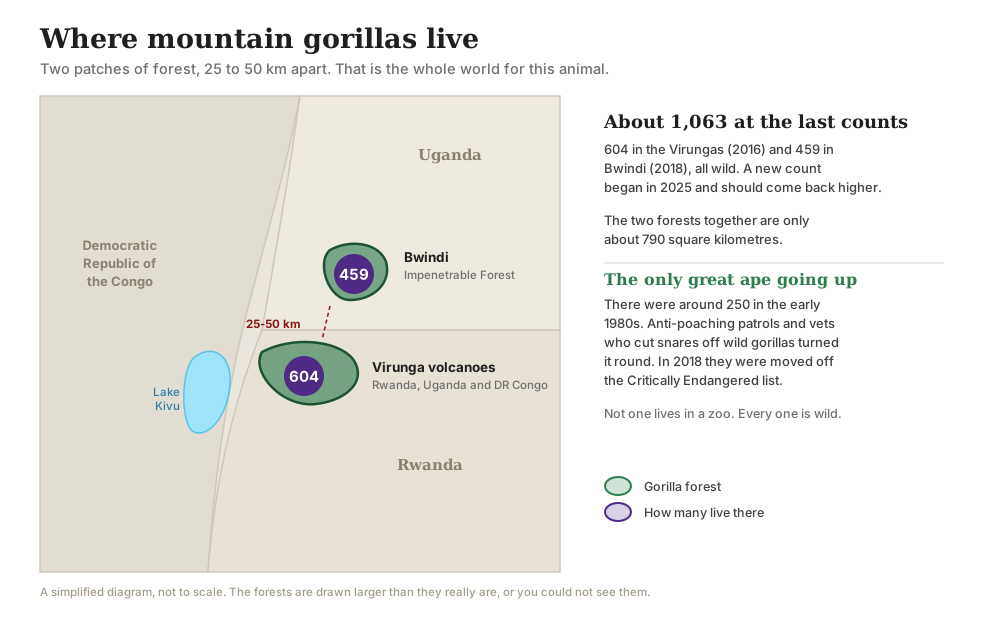
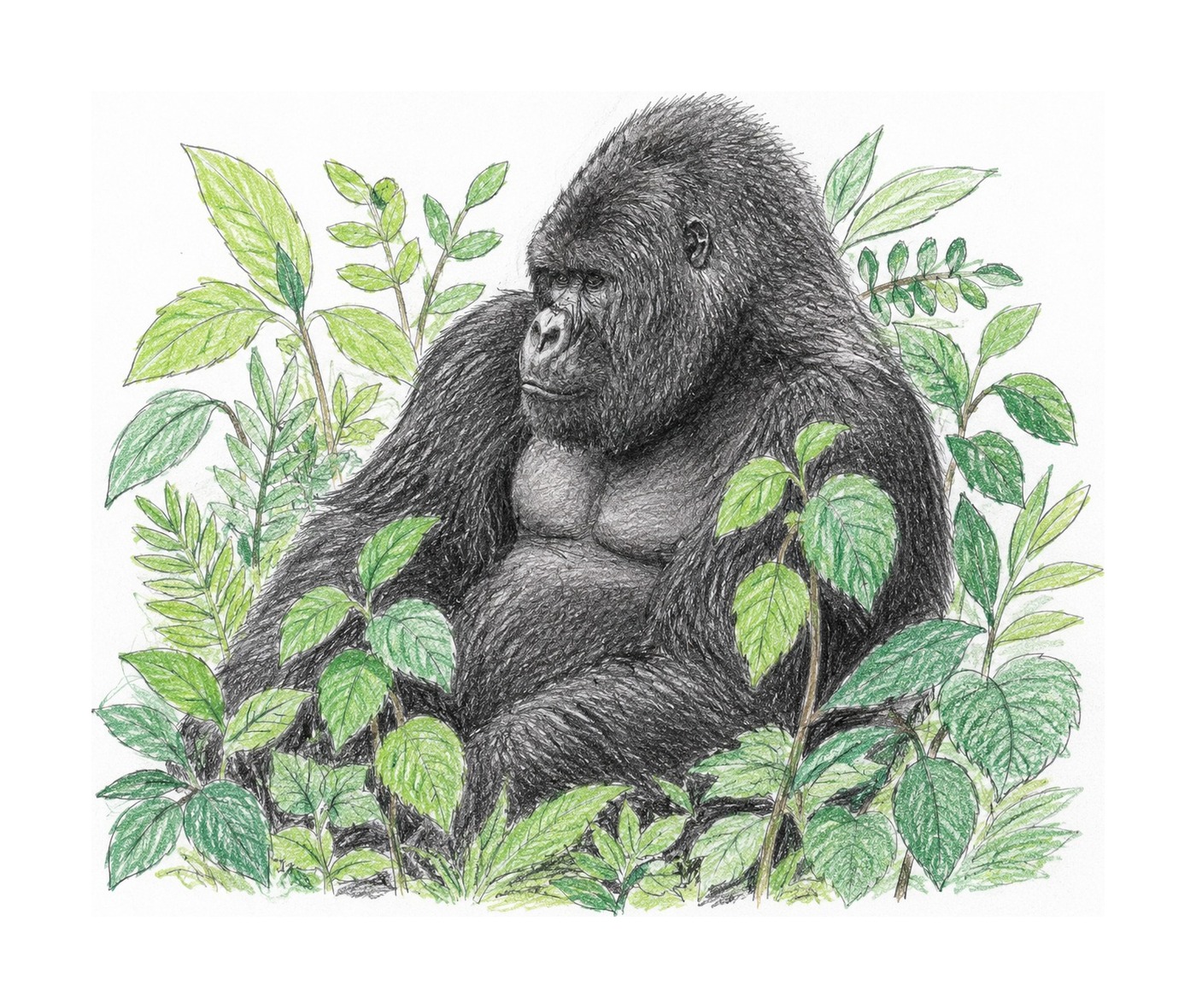
Bahati is known to science by the wrinkles above his nostrils. He leads eleven gorillas up a volcano, and his kind are the only great apes whose numbers are climbing.

Read about the mountain gorilla
Critically Endangered

California Condor

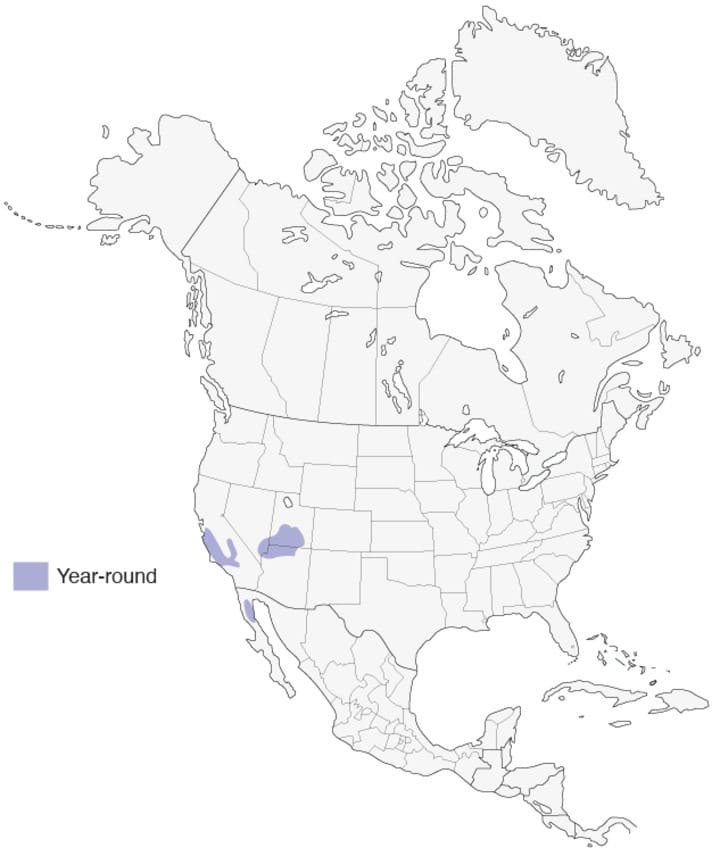
United States and Mexico · Ages 12 to 13

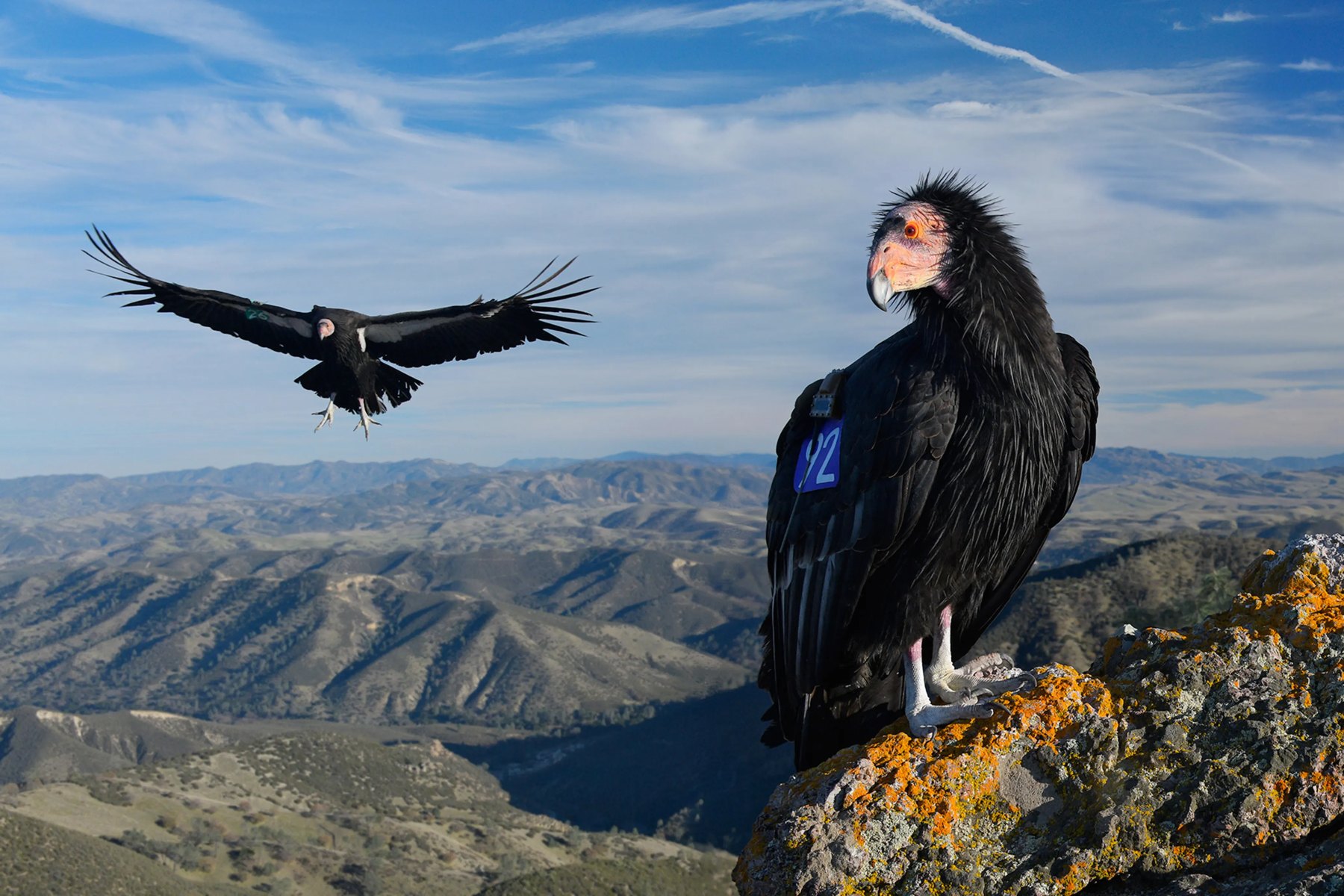
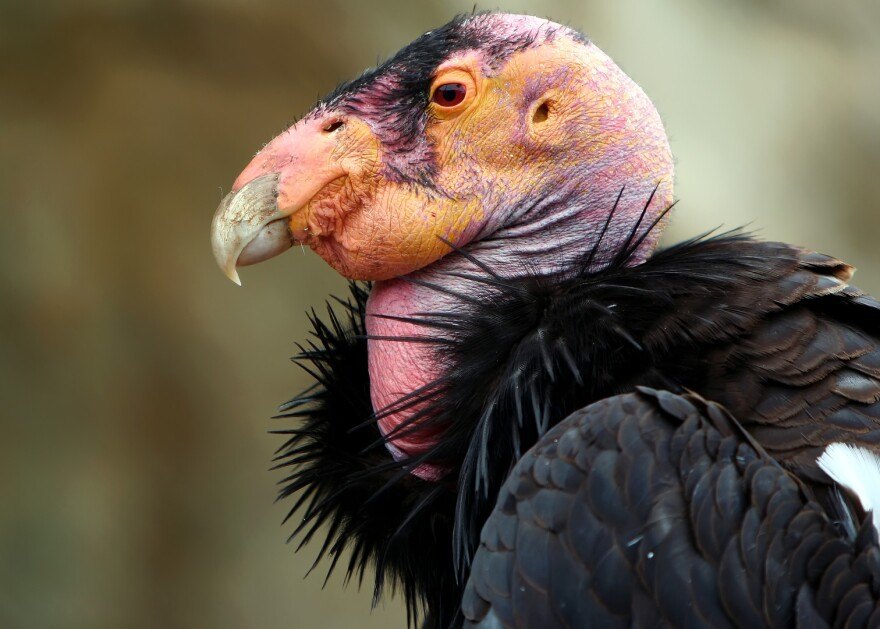
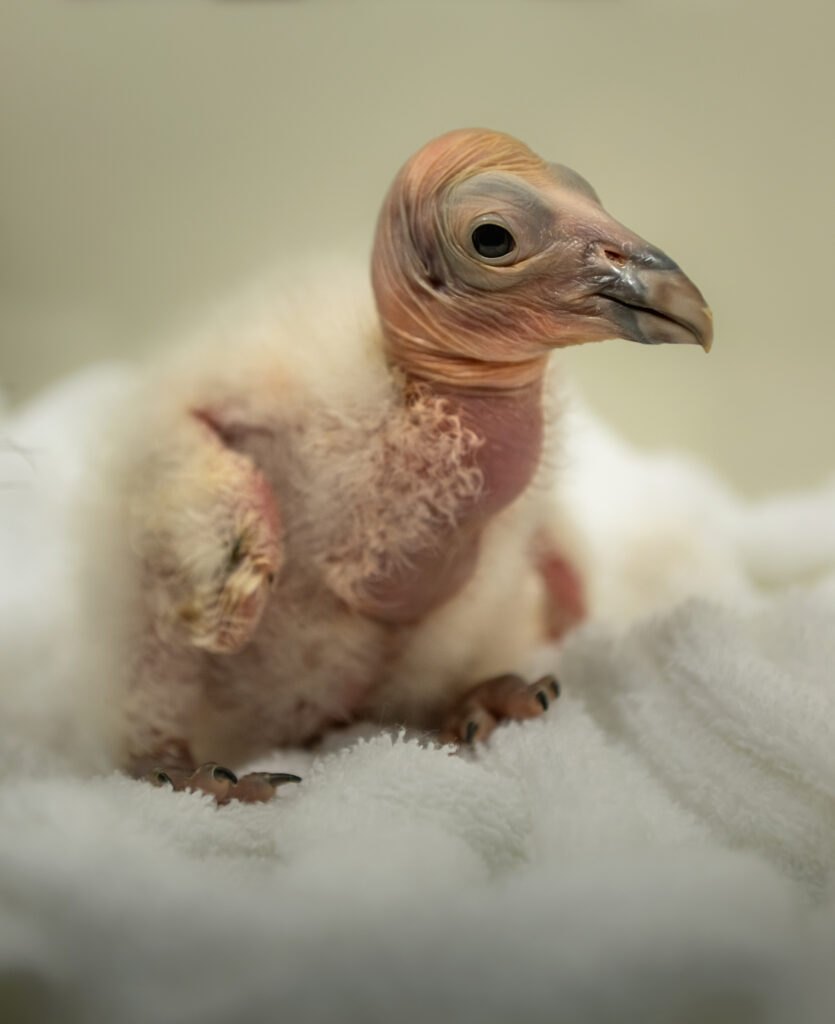
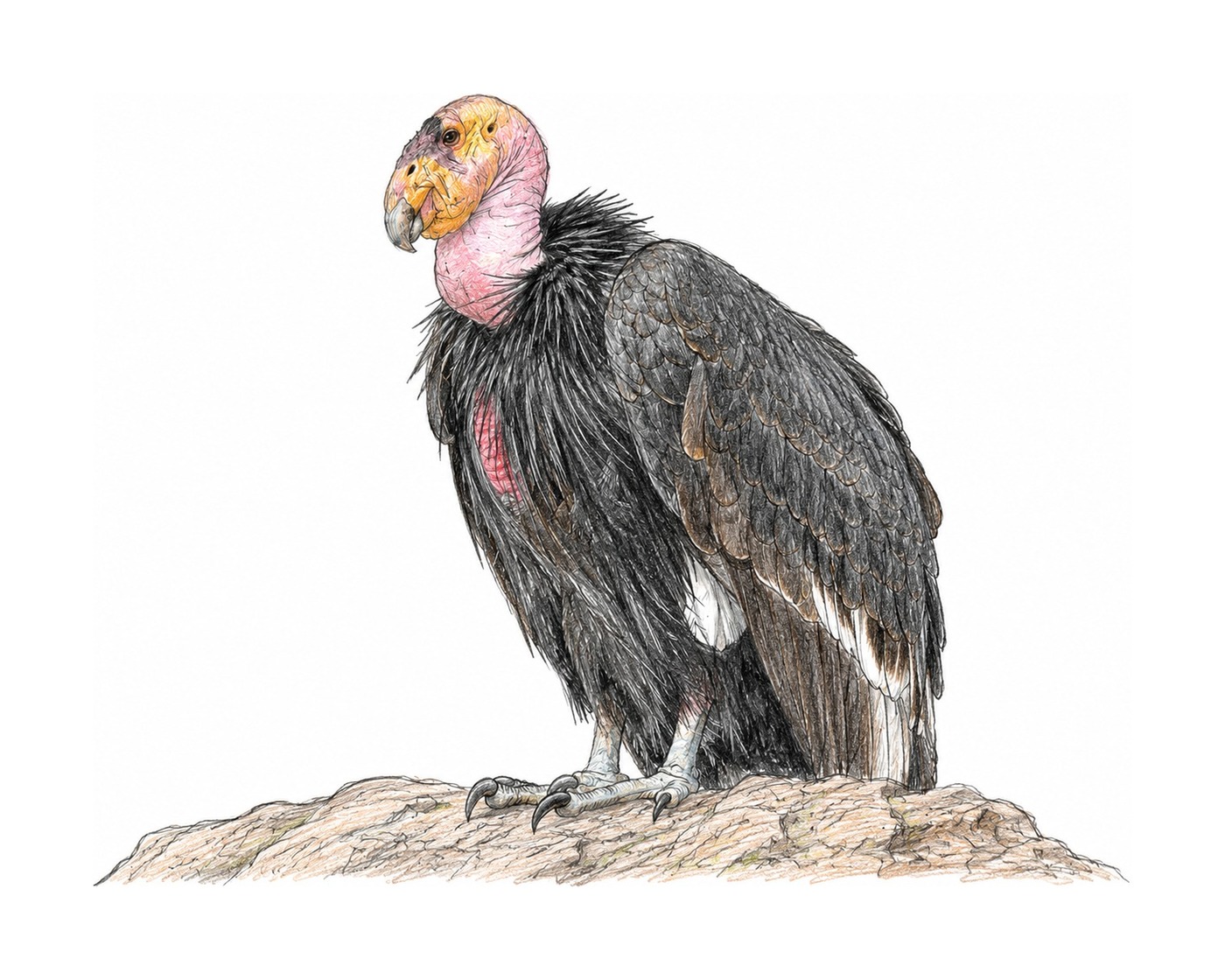
Juno has no voice box and talks with her face instead. In 1982 there were 22 condors left on Earth. There are 607 now.

Read about the california condor
Critically Endangered

Hainan Gibbon

Hainan Island, China · Ages 12 to 13

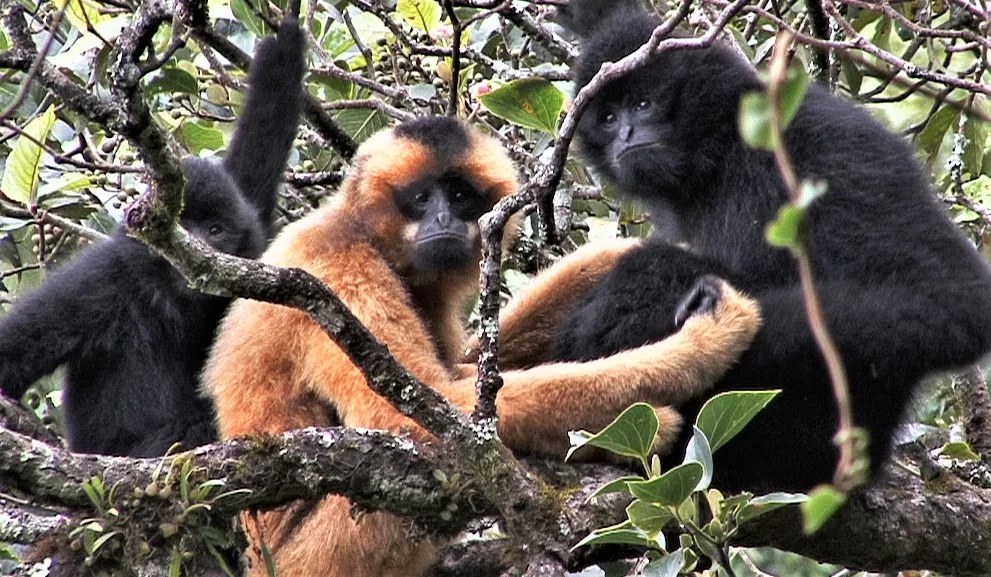
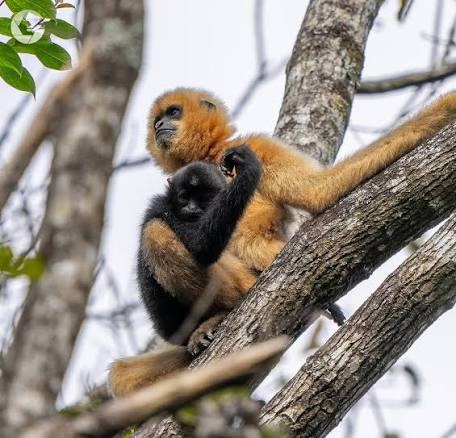
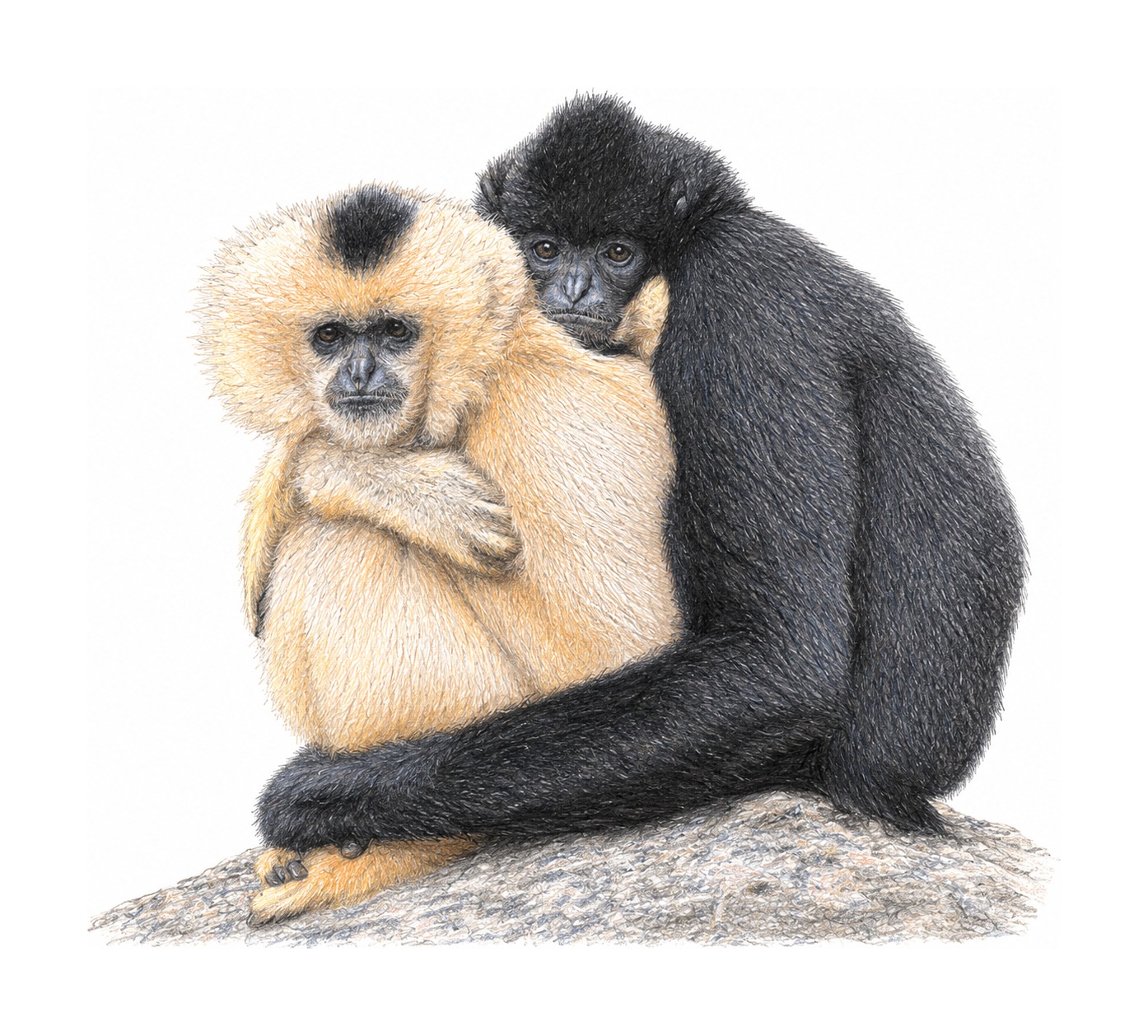
Jin belongs to the rarest primate on Earth. Her family is counted by ear, at dawn, by people sitting in the dark with notebooks.

Read about the hainan gibbon
Critically Endangered

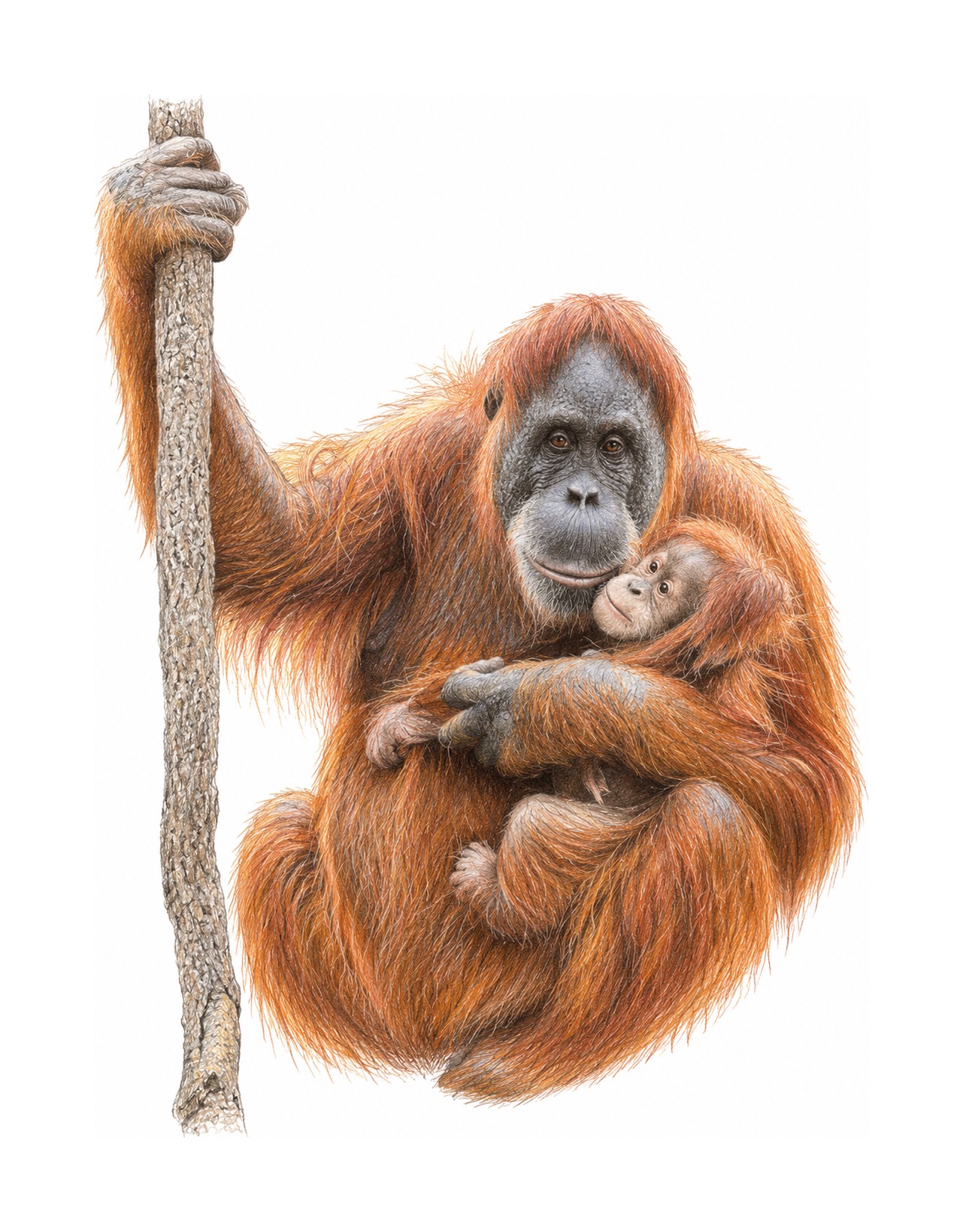
Sumatran Orangutan

Sumatra, Indonesia · Ages 14 and up

Bulan was taken from her mother as an infant and had to be taught how to be an orangutan. In May 2026 a field team confirmed she had a wild-born son.

Read about the sumatran orangutan
Critically Endangered

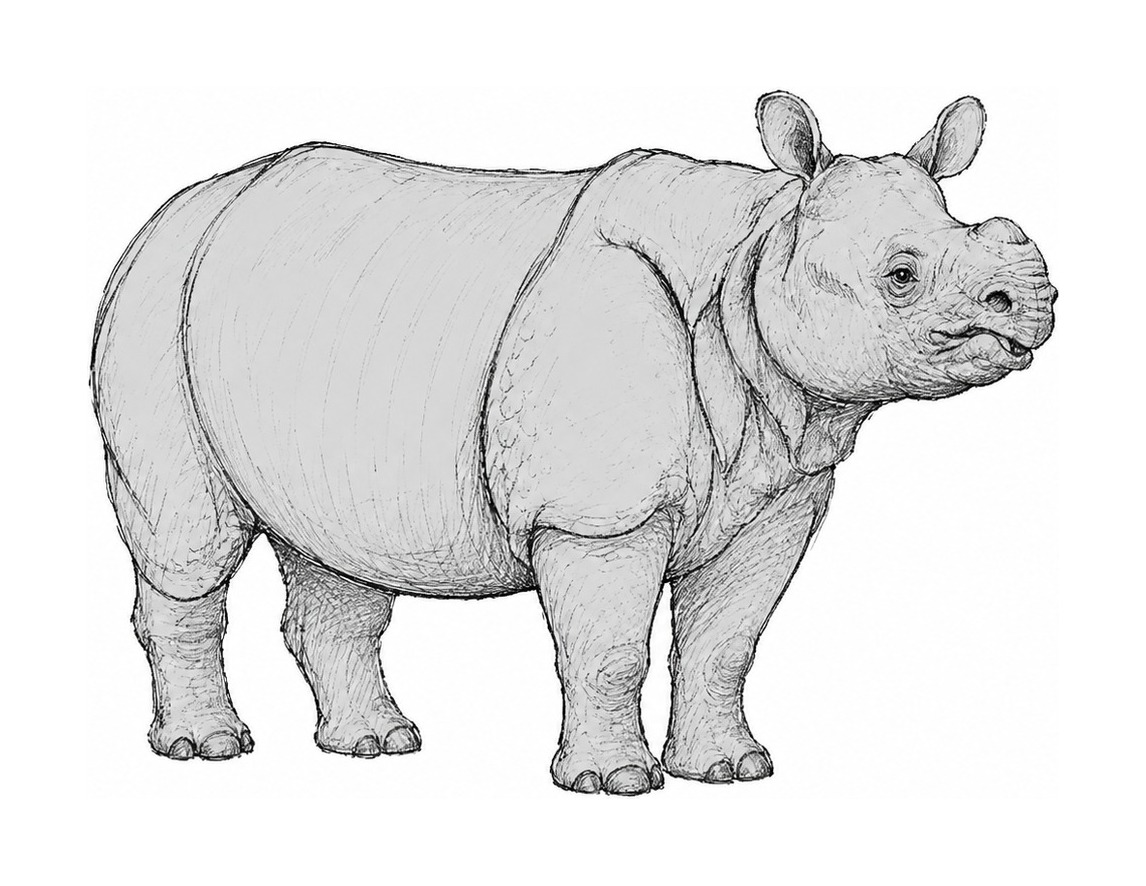
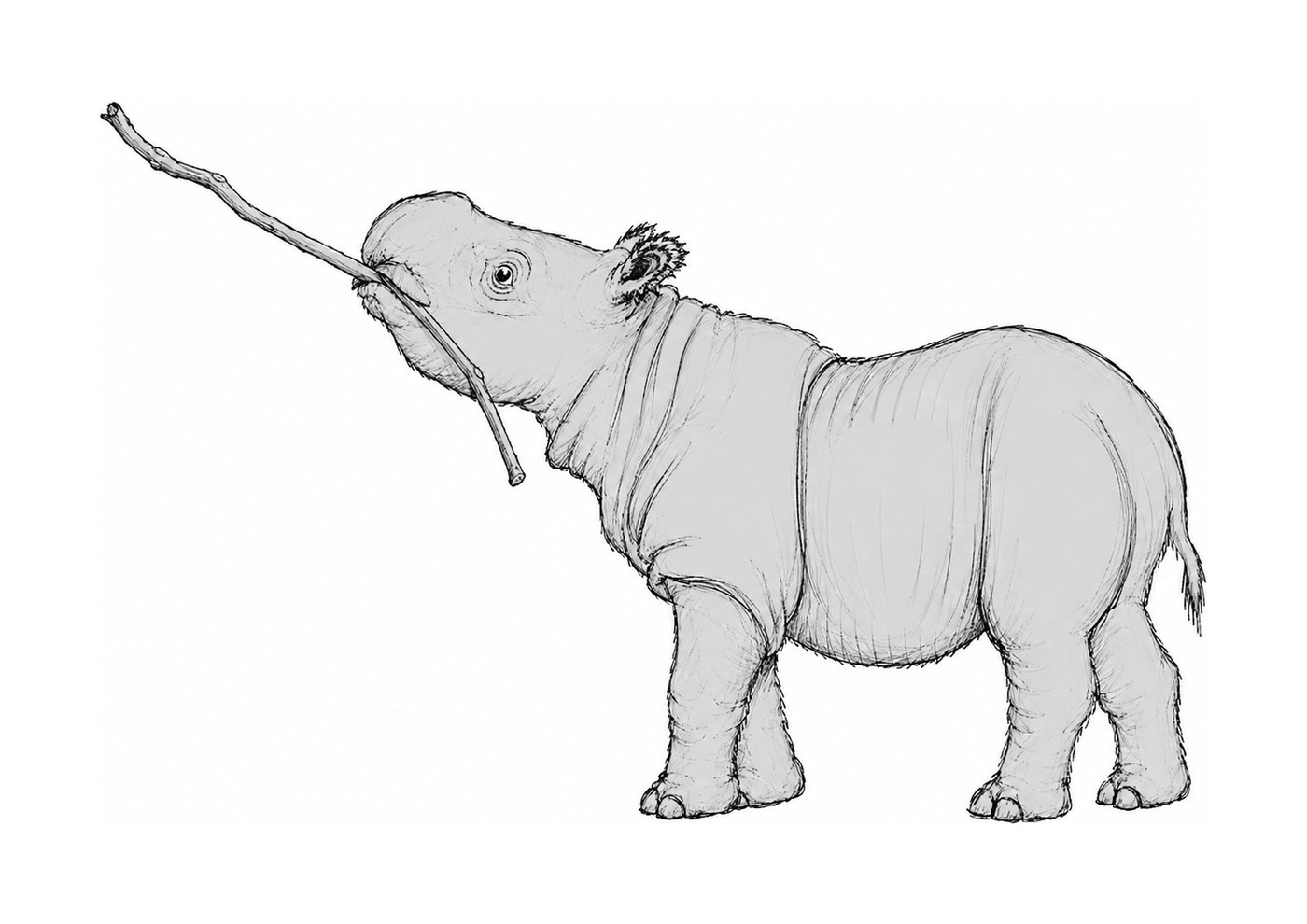
Javan Rhino

Java, Indonesia · Ages 14 and up

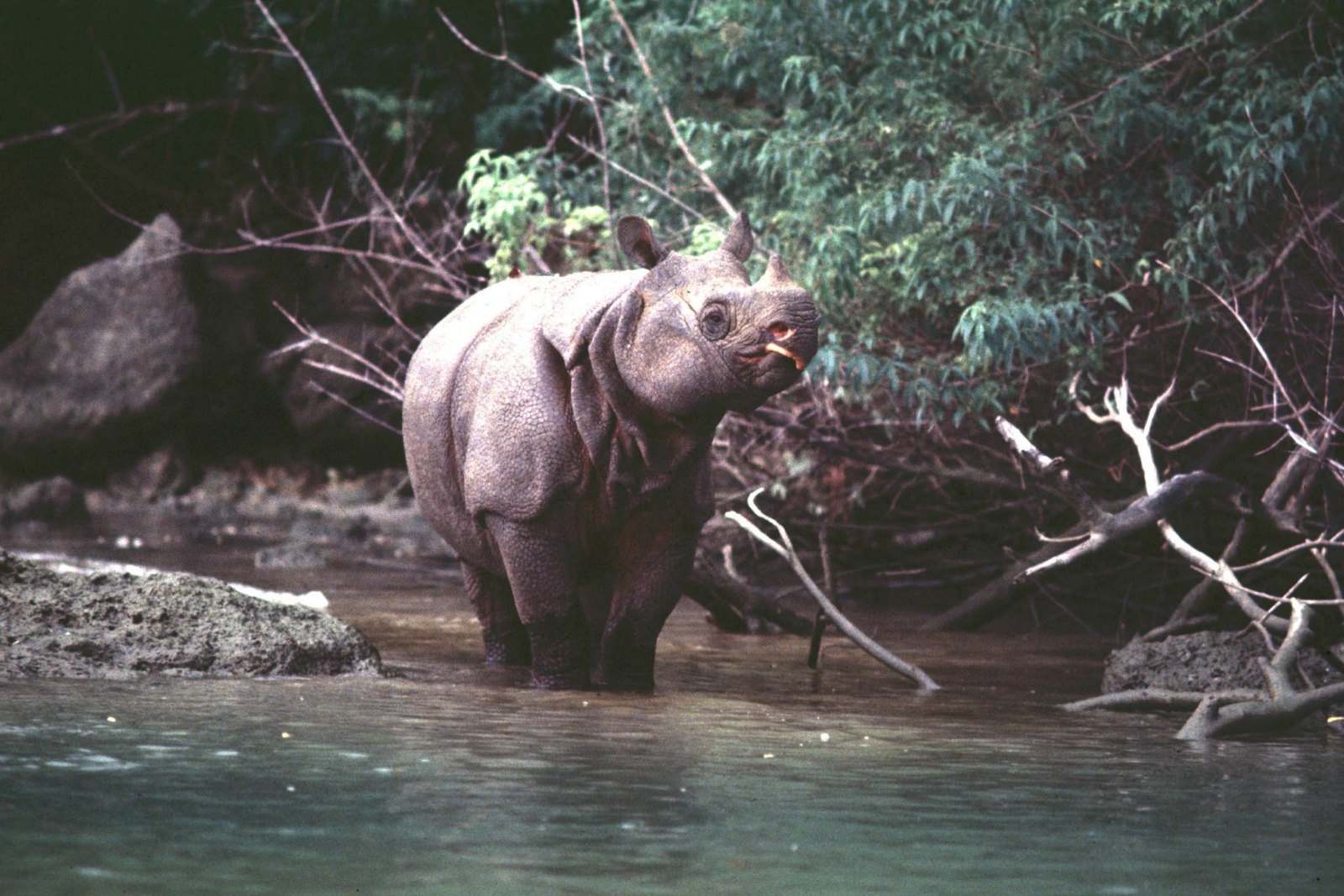
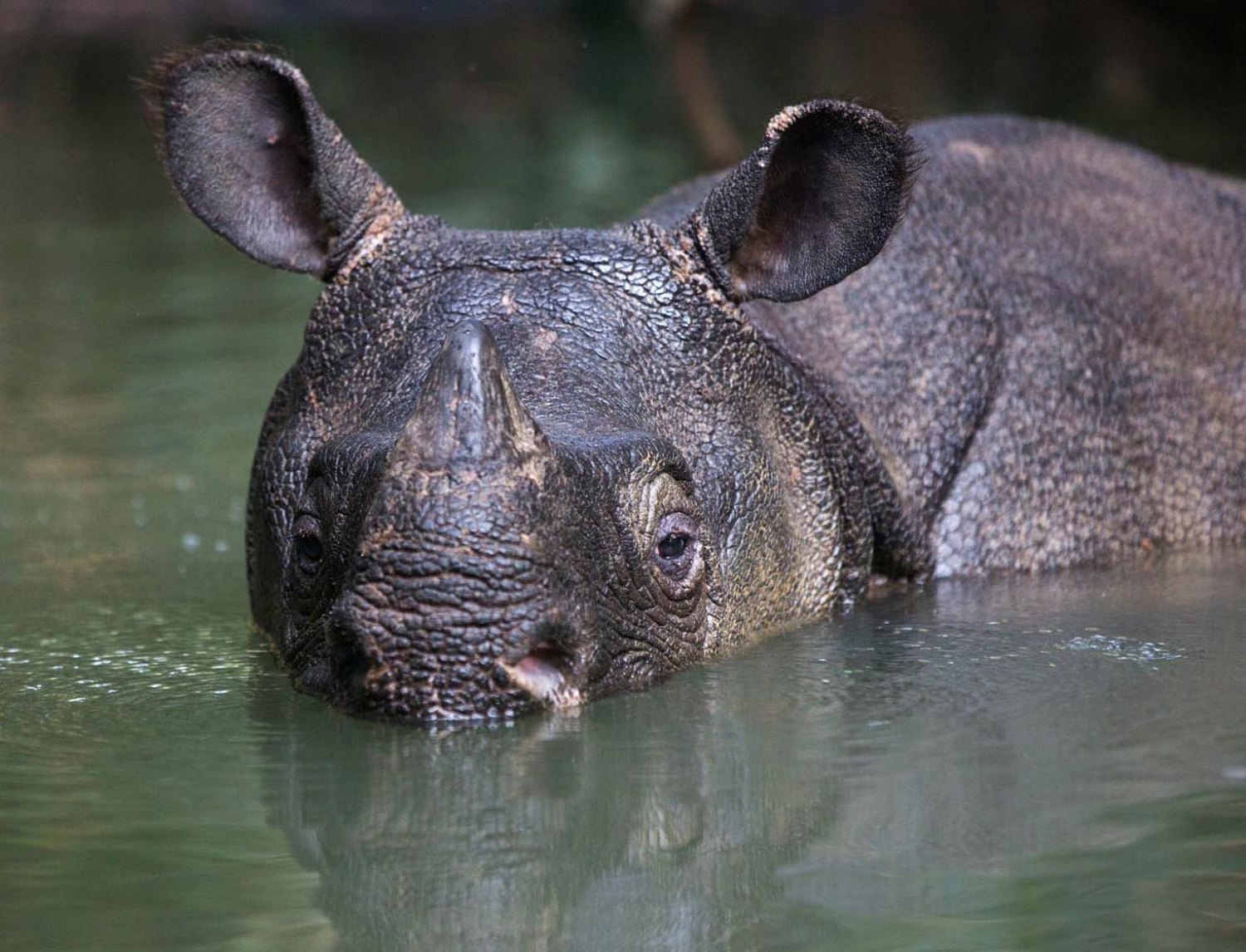
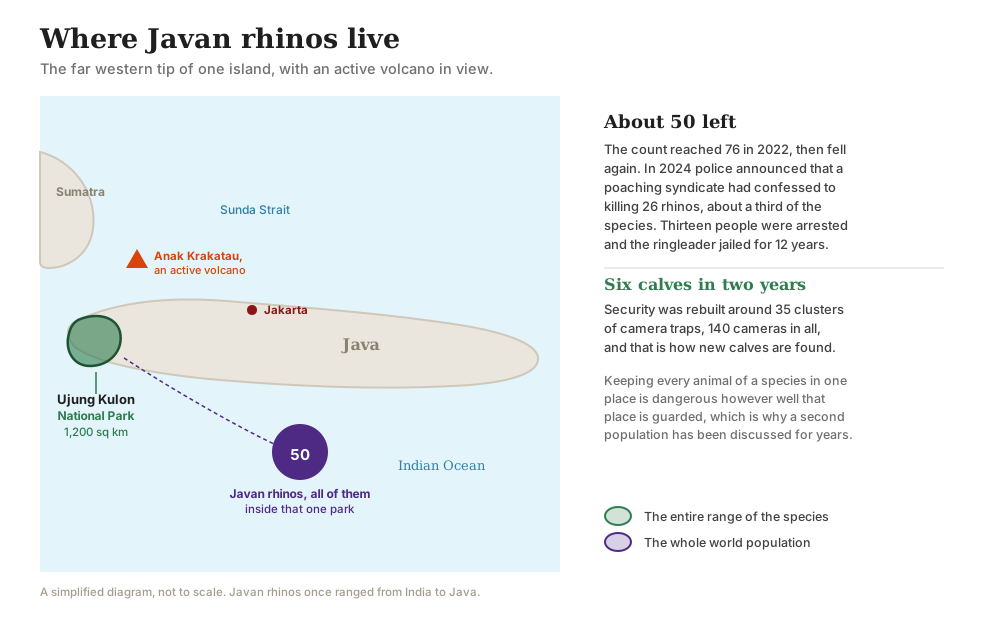
Arum is the rarest large mammal on Earth, and there is no photograph of her taken by a person standing in front of her. A camera trap found her with a calf.

Read about the javan rhino
Critically Endangered

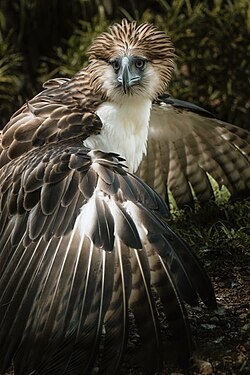
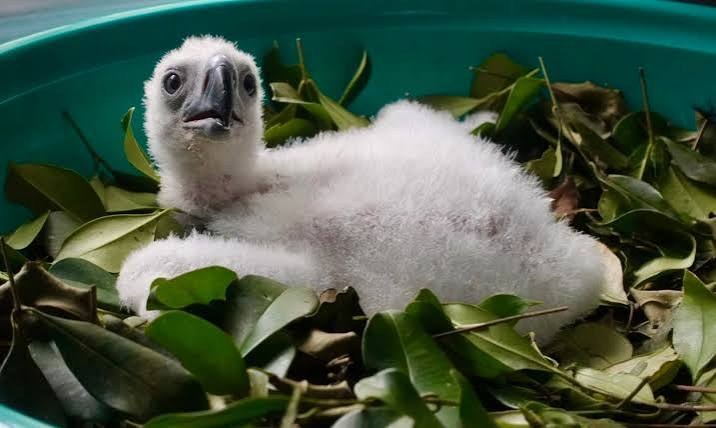
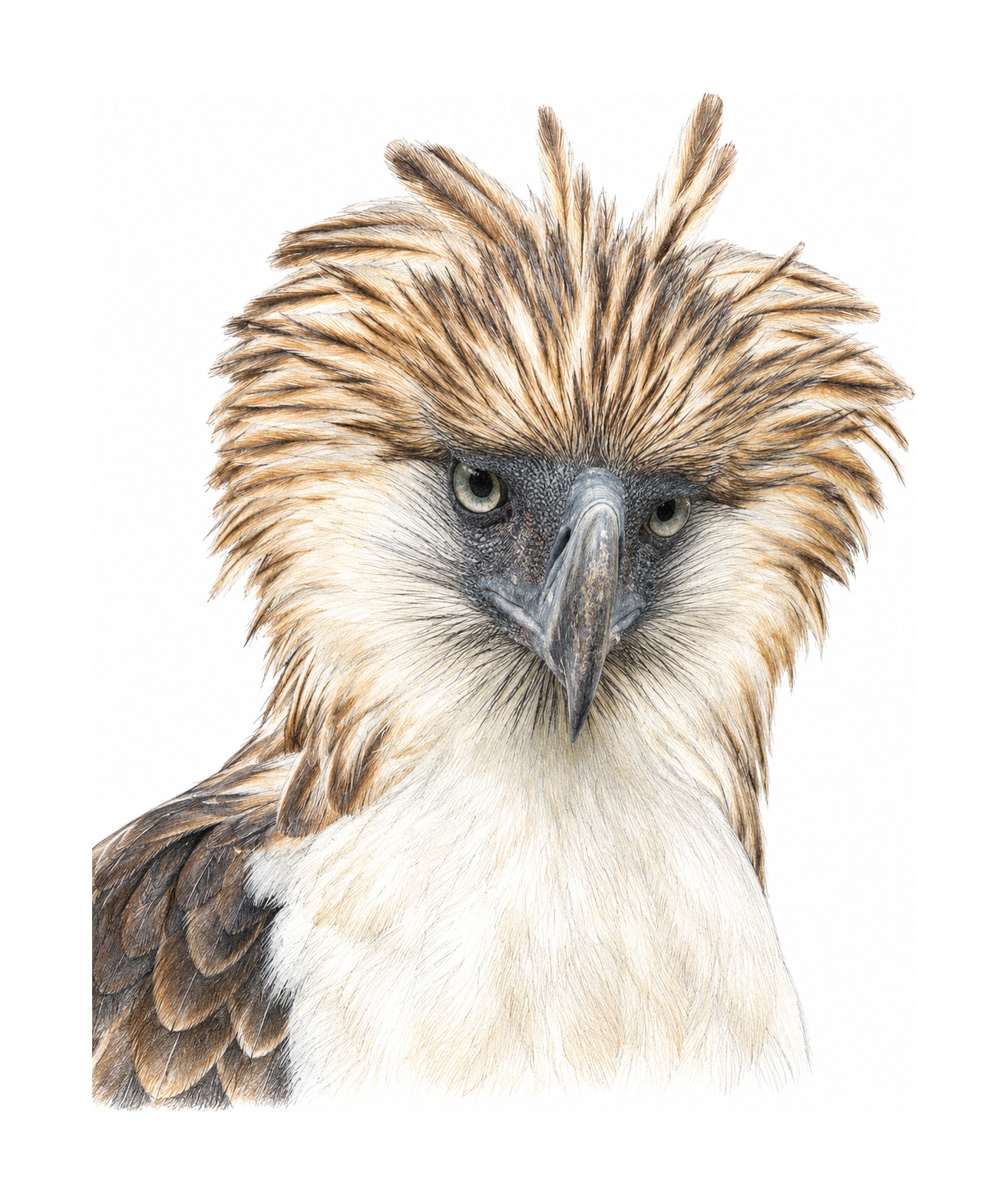
Philippine Eagle

Philippines · Ages 14 and up

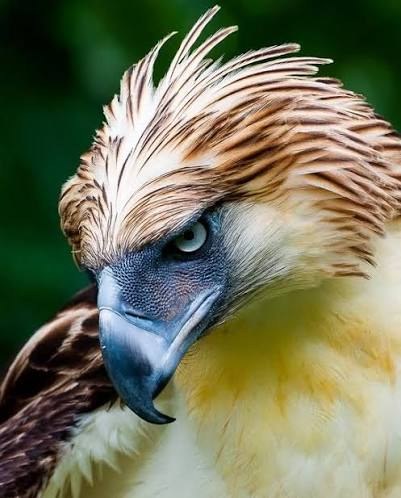
Lakpue was taken from his nest by poachers and released onto an island where his species had been lost. There was nobody there to learn from.

Read about the philippine eagle
Critically Endangered

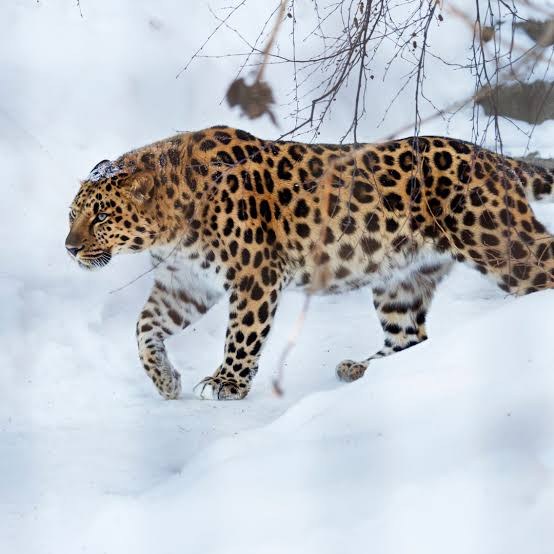
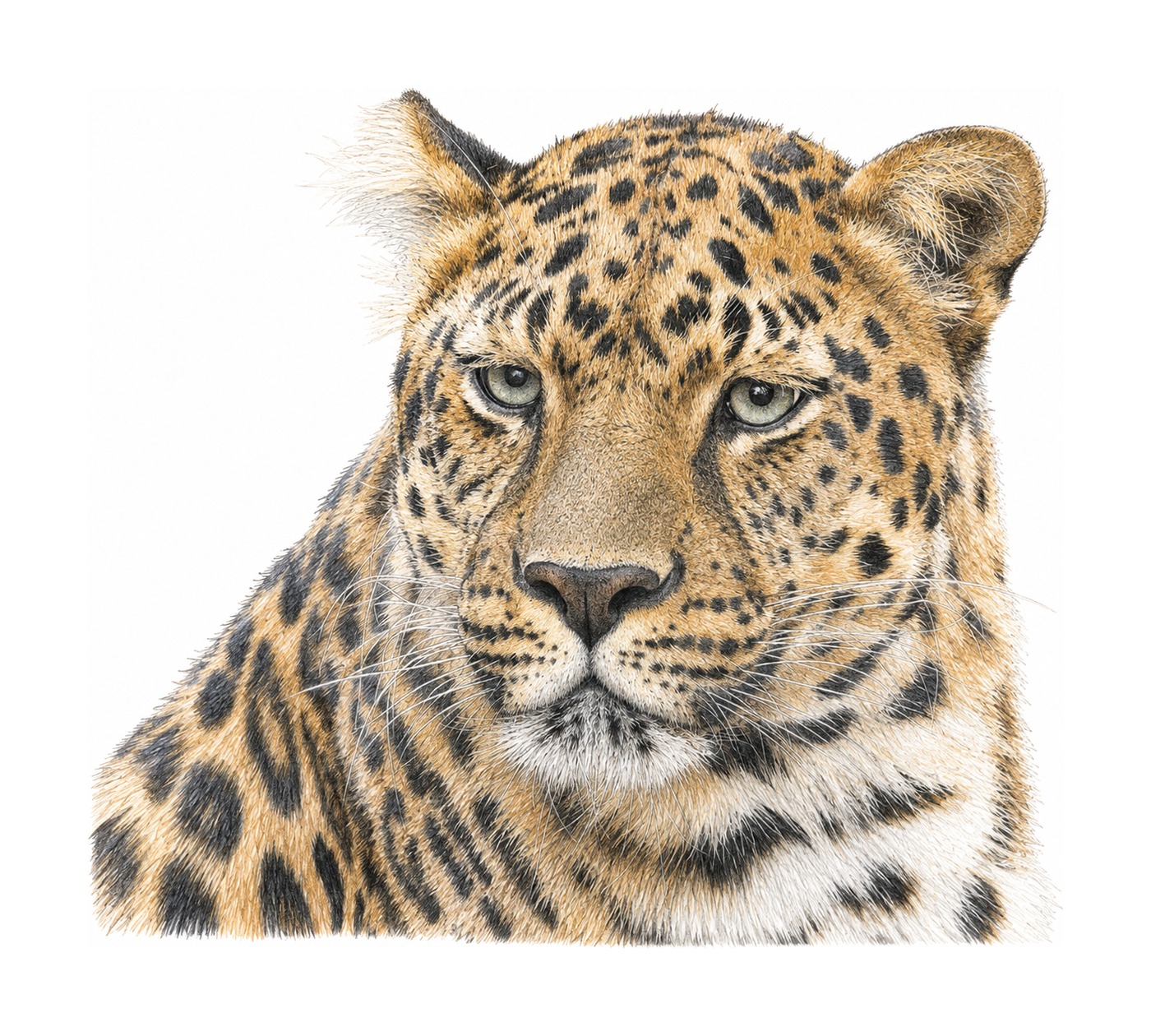
Amur Leopard

Russia and China · Ages 14 and up

Zima is one of the rarest big cats alive. On paper she is two leopards, because both Russia and China have her in their files.

Read about the amur leopard
Critically Endangered

Sumatran Rhino

Sumatra, Indonesia · Ages 14 and up

Gema is an Ice Age animal walking around a rainforest. She is hairy, she sings like a whale, and the greatest danger she faces is that there is nobody left to find.

Read about the sumatran rhino
Critically Endangered

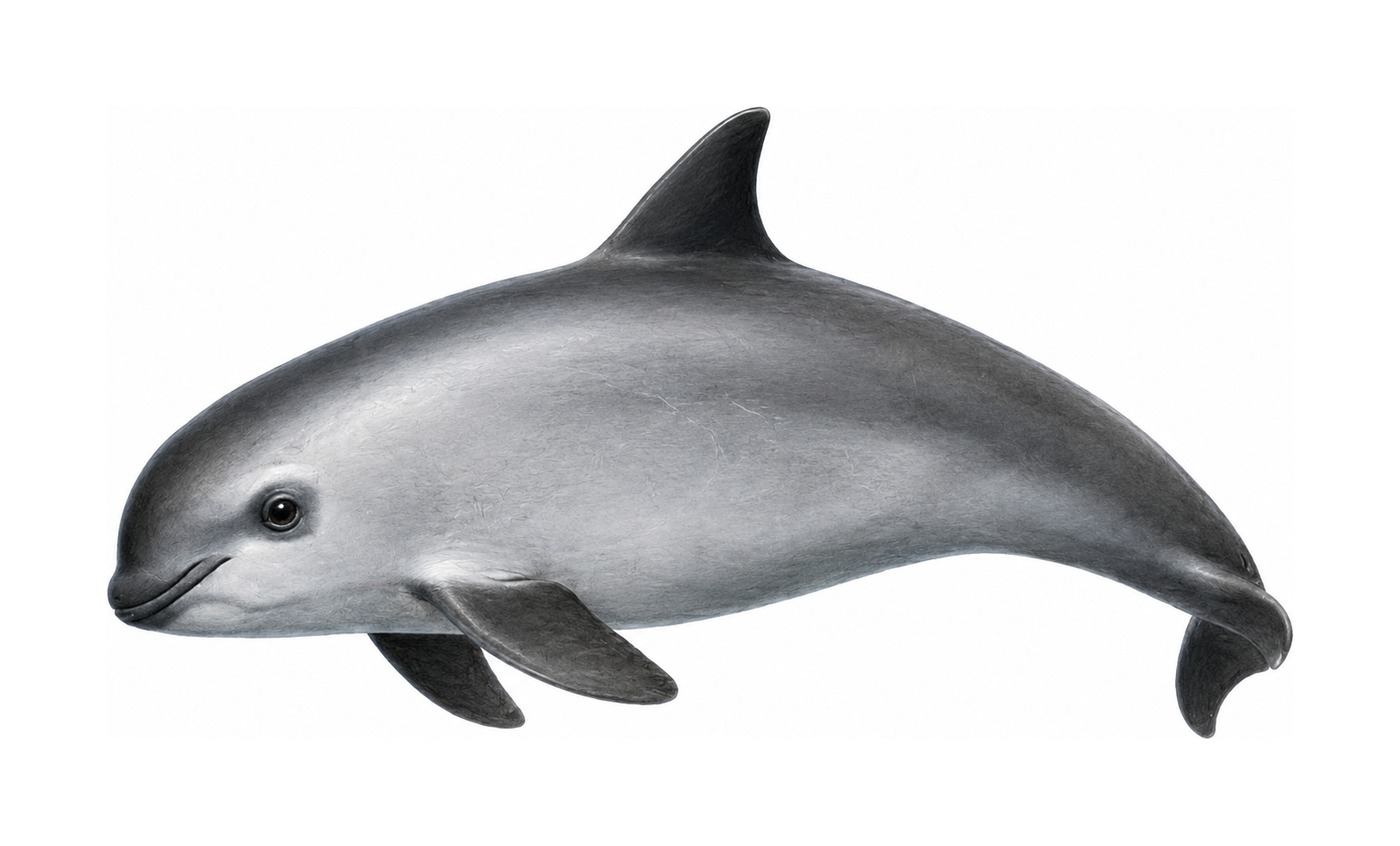
Vaquita

Gulf of California, Mexico · Ages 14 and up

The smallest cetacean on Earth, dying entirely by accident. A 2022 genome study found the vaquita is not doomed by inbreeding, which means the problem is made of human decisions.

Read about the vaquita

Read the full stories

Open any animal to read its story, its facts, where it lives and how it is doing. Three of them can be read in French as well as English.

African Wild Dog

African Wild Dog

Open the African Wild Dog section

Mina the African Wild Dog

African Wild Dog - Mina the African Wild Dog

Hi, I am an African wild dog and my name is Mina. I live in a pack with my mother, my father, me, and my two sisters (Melinie and Elle), and ten other wild dogs. Our leader is a female dog named Aliana. We are always hiding and running. We sometimes have to starve! We are losing our food because the animals we hunt are losing their habitat. We are carnivores, which means we eat meat. We hunt animals like antelopes and wildebeests. We don't see many packs in Africa. Hunters come and kill some of the packs, or the packs lose their habitat. Mama always tells me that we have to believe in ourselves and keep going. We are one of the only species that cares for the old, the sick, and the injured, because for us family is family. There are only about 6,600 wild dogs left in the wild. If we go extinct, then there will be no dog left with only four toes on its front feet! Every other dog has five, so we are one of a kind. We live for about 10 or 11 years and weigh from 44 to 66 pounds! We are only found in Africa. We live in packs with an average of 10 members. One litter can have as many as 16 puppies! The pups get to eat before the alpha. We also are not picky eaters. We eat almost anything! We are in competition for food with lions because we both eat just about the same things. We are one of the most endangered animals in the world!

There are only about 6,600 wild dogs like me left. To tell the truth, I am really scared. What if a hunter got my pack? What if we could not find enough food and we starved to death? What if we caught one of the bad diseases? I want some miracle to save us! Mama says we have to be our own miracle. Mama is always correct. One day we were walking through the woods when I saw something shiny. "Stop!" I barked. Everyone stopped, and I told them to avoid the trap. They all listened, and then we heard barking and voices, and then a buzzing sound filled the air along with the smell of cut wood. We ran fast down the stretch of forest around the city. We hurried to find another safe forest before it got dark. We finally reached another forest, but it was dark outside, so we would have to make a temporary den. Mama told me and my two sisters that we had to take care of one another while they were gone. So we huddled together and cuddled while Mama and Papa scouted with the rest of the pack. We were starting to get restless, and since we were all bored, we just talked. The adults came back, and they found a patch of grass, and then they made the den. We cuddled up and slept. In two weeks we would leave this pack and start our own great packs! I want to be a pack leader, but Mama says it is hard work, so I have to try hard. Aliana teaches us how to hunt in the morning, and I am the best!

Aliana says I will be the best pack member ever, and I smile. She also pulls me aside and tells me I might become the pack leader. "Ding, help!" Aliana cries out. "I am stuck!" I jump up to see what's wrong, and I see that it is only a net, so I bite the net to save her. I am glad she is okay. We hurry back to the camp, where my siblings ask if I am okay. I just nod. I think about how close that was! "Dinner!" Aliana's voice rings through the trees. We bolt off in search of food, and we split up at the bend. Then, around a tree, I spot a wildebeest! I smile. Aliana will be proud. I bark to the pack, which comes, and we chase our prey. Finally the wildebeest gets tired and slows down, letting us catch up. We capture our prey and feast! Aliana is very proud of me.

We then hear voices. We all expect to hear the buzz of the saw, but this time we hear something different, something worse. "Bam, bam, bam!" The bullets are big and black, flying over our heads. We run. The hunters chase our pack, aiming at us. Aliana barks and tells some of us to slack behind and go under their legs and run. She tells the rest of them to slack behind but go around them. We thankfully escape. The hunters are close on our tails, literally! We go into a cave, and they pass by. We run the other way, and finally we reach home. I am more scared than ever. We go to bed, but tonight I wake up. I crawl over to Mama and Papa and snuggle in between them. I sleep peacefully for the rest of the night. In the morning we dart around our den and hide, waiting for breakfast to visit us, but none comes. "We won't get breakfast today," announces Aliana. "Awww," we all cry.

"Well," says Mama, "the hunters are killing all of them!" She continues, "We won't survive long like this." Mama looks worried. I cuddle closer to her. She goes on, "This forest has no food. I think..." She does not look happy about what she is going to say. "I think we have to..." She trails off. I know she cannot finish the sentence, but before I can finish it for her, Aliana does. "Leave," she says. I know.

We left the den, but shortly after, we heard voices. "Not again!" my two sisters and I whined, and we rolled on the ground. "Get up and stop whining," Mama ordered. "Get up and run, get up and hide." She sounded mad, but not at us. She was mad at the hunters. "Wait," I said. "They don't want us. They want some other animal called a painted hunter. We are not painted, and no animal here is painted, so we should help them." I started to trot off, but Mama grabbed my tail. "No," she said. "We are the painted hunters." "We just have two names," added Papa. "Plus," agreed Mama, "humans have no mercy on us. To them we don't look cute at all." But they say all dogs are cute! My siblings are cute! "Come, my darling," said Aliana. "Your mother is right. Let me tell you a secret. Only alpha dogs have puppies, but your mother acted so much like a mother to you that she let you call her Mom." "Oh," I said. "She loves me a lot, and I don't want to leave my pack and start my own pack." "You must," Aliana replied. "Let's join the others." We ran with the pack, and we marked our territory, and we slept in the den. I crawled once again in between Mama and Papa. This time, though, Mama sat up and curled around me, snuggling me tight. "Good night, Mina," she whispered softly into my ear. "You are my adorable."

My pack lived until the very end, and so did Aliana's. But what about our whole species? This next part makes me wag my tail. In a place called Gorongosa, in Mozambique, there were no wild dogs at all for a very long time. Then people brought fourteen of us back, and after that a few more packs to keep them company, and everybody had so many puppies that in a few years there were more than a hundred, and now there are around three hundred! People have brought us back to Majete and Liwonde in Malawi too, and to reserves in South Africa. In Botswana and Zimbabwe and Zambia and Namibia there are still big packs running free, and the biggest group of us anywhere lives in a place in Tanzania called Selous, and there are people who help farmers keep their cows safe so that nobody has a reason to hurt us. So we are still here, and we do not have to disappear. Mama says we have to be our own miracle, and she is always correct. You can be one of our miracles too. Will you help save our species?

Fun facts
African Wild Dog - Fun facts

Here are some fun facts about African wild dogs!

  1. These dogs are one of the few animals that take care of the old, the sick, and the injured.
  2. African wild dogs are the only dogs with four toes on their front feet. Every other dog has five!
  3. The African wild dog's scientific name is Lycaon pictus!
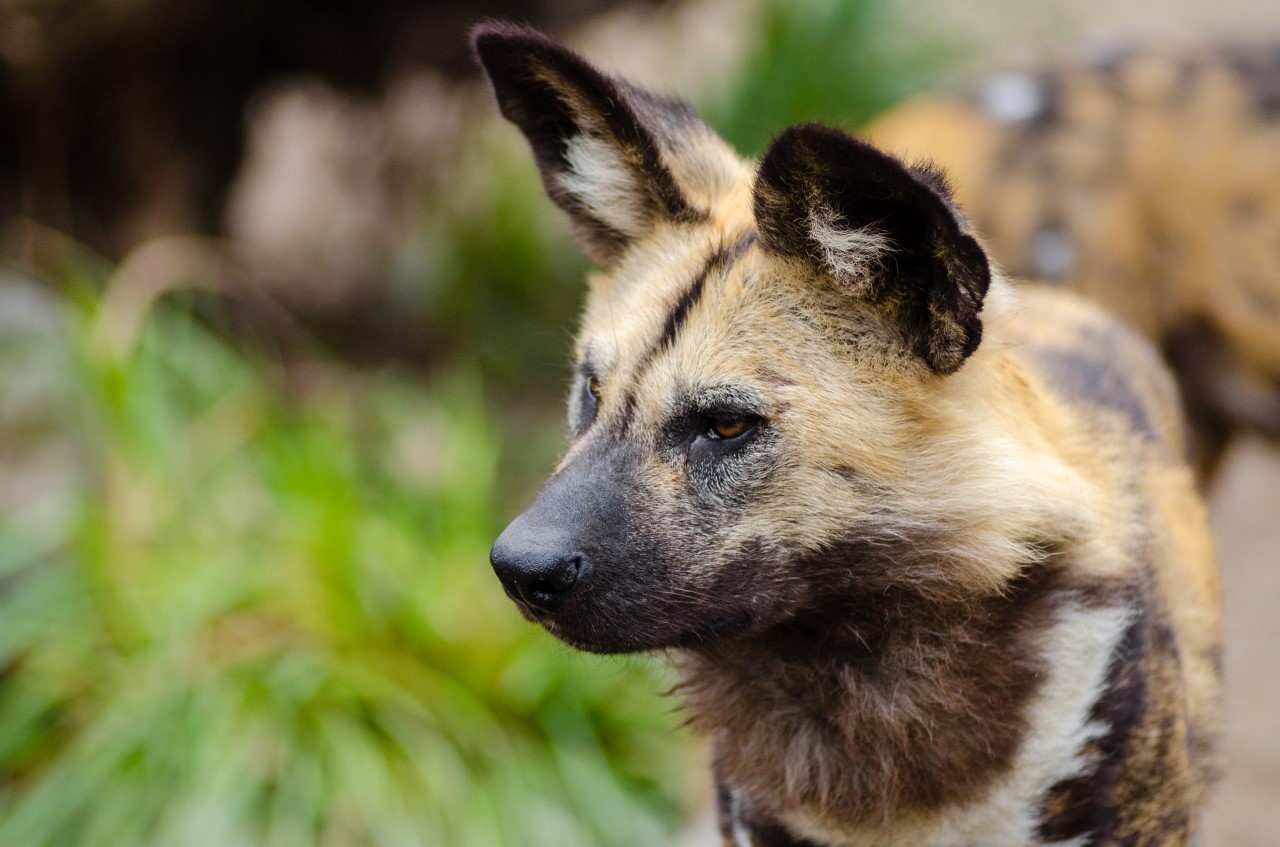
  4. African wild dogs have many names, including painted dogs, painted hunters, and painted wolves. These are all referring to their coats, because the coats have splotches of red, brown, black, white, and gray! No two coats are the same.
  5. The pups get to eat before the alpha!
  6. A litter can have as many as 16 pups.
  7. All pack members take care of the old, the sick, the injured, and the young!
  8. These dogs are very social and live in a pack with an average of 10 members.
  9. These animals nest in a different place each night, unless they have a newborn litter.
  10. These dogs catch their prey by chasing it until it gets too tired to run, and then these fierce dogs eat it!

Where they live

These dogs live in Africa. Most of them live in southern and eastern Africa, in Botswana, Zimbabwe, Zambia and Namibia, and the biggest single group of all lives in the Selous area of Tanzania. They are gone from most of the rest of the continent, which is why the map below highlights only the part they still hold.
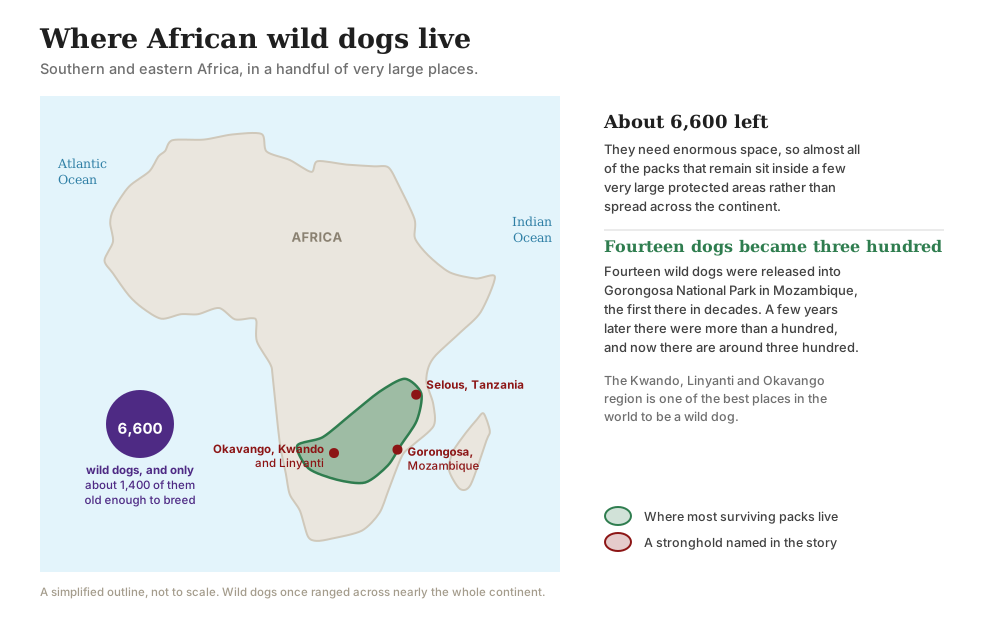
African Wild Dog - map of where they live
The green shape is where nearly all the packs that are left actually live. The red dots are the three places named in the story.

How many are left?

The good news

There are only about 6,600 African wild dogs left, and scientists say only about 1,400 of those are fully grown adults that can have puppies. That is why the IUCN calls us Endangered. Nobody can say a date when we will all be gone, and I am glad, because that is not how it works. Numbers can go up too, and ours have. The Kwando, Linyanti, and Okavango region in southern Africa is one of the best places in the world to be a wild dog, and people are putting us back in places we had disappeared from. Fourteen of us were released into Gorongosa National Park in Mozambique, the first wild dogs there in decades, and more packs were brought in after them. A few years later there were over a hundred, and now there are around three hundred. That is what happens when people decide to help.

How you can help

You can help! Here is what actually works for wild dogs.

  1. Support snare removal patrols. Wire snares set for antelope are one of the biggest killers of wild dogs, and teams that walk the bush pulling them out save whole packs.
  2. Get your dog vaccinated. Rabies from village dogs has wiped out entire wild dog packs, including one in Kenya that lost 21 of its 23 members in six weeks. Vaccinating dogs that live near wild dog country is one of the clearest wins there is.
  3. Wild dogs get shot for kills they did not make. People blame them for livestock taken by hyenas and leopards, so groups that help farmers protect their herds cut down the revenge killing aimed at the wrong animal.
  4. Tell people wild dogs are not pests. A lot of people still call them vermin, and that is where the shooting starts.
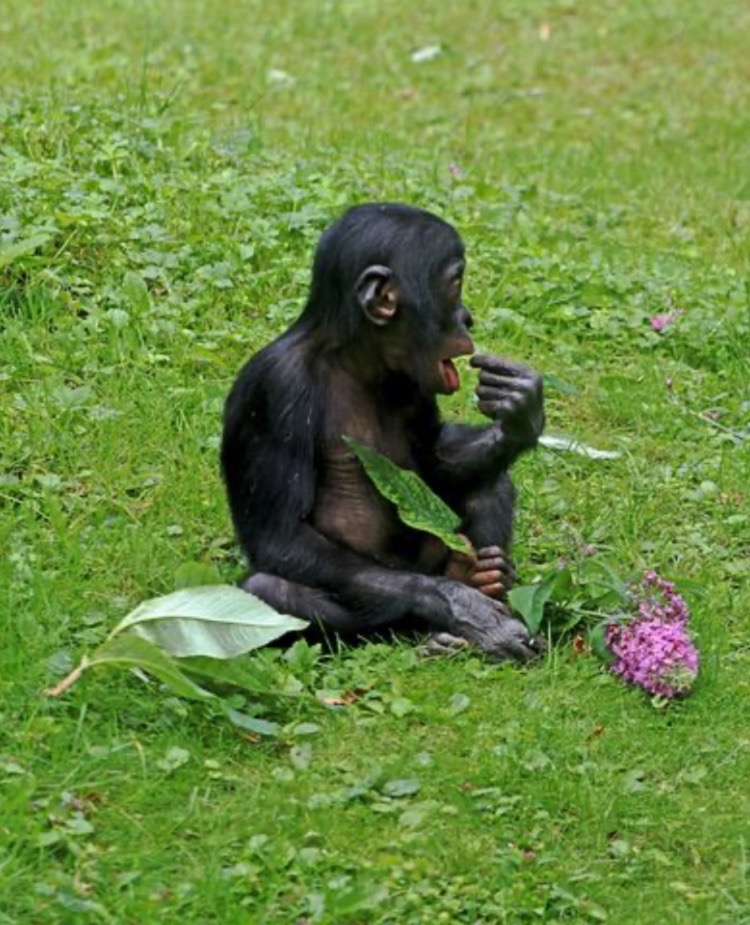
Bonobo

Bonobo

Open the Bonobo section

Eliana the Bonobo

Bonobo - Eliana the Bonobo

Every one of us crowded around Evelyn. Evelyn smiled at me, but I saw the pain in her eyes. Our gatherers came back and gave Evelyn her food, which was mostly fruit. My mom stayed close to Evelyn, trying to ease the pain. We knew Evelyn was strong, as she was one of our leaders, but we were still worried. My best hope was that it would be over soon, but for now, we would have to get her everything she needed.

Okay, let's backtrack a little. My name is Eliana. I am a bonobo. I live with my troop, which has 12 members, almost 13, I hope (Evelyn, me, and my mother included). I live in the Central Congolian tropical forests. It is really beautiful there, and there are still parts that are beautiful. Humans are cutting down the forest's trees. They are also killing bonobos. They are capturing some, killing others for bushmeat, and taking away our forests, which means less food. This is a risk we face every day, but nothing terrible has happened to my troop yet. For now, we are okay, and we are doing everything we can to survive and help each other thrive.

Now, back from where we left off. I had been waiting by Evelyn's side the whole day, so I wandered away from the group when I heard a commotion. I ran back to Evelyn's side, and there in front of me was Evelyn, and in her arms was a baby girl! My mom was next to Evelyn, looking relieved and cheerful. Since my mom joined the troop, Evelyn and my mom had been close. Evelyn always looked after my mom, and while Evelyn was in labor, my mom looked after her. Everyone was happy, and we started to build the nest for tonight, and just as we finished, we heard the noise. "Bam, bam, bam!" Gunfire. Humans were shooting at us.

Big black bullets fell around us. One nearly got Mom's tail, and another nearly got Evelyn's newborn baby! Evelyn put the baby on her back, and the troop ran away as fast as we could. Finally we lost them, and we arrived in a small clearing. No one was killed, and some were injured, though not too badly. In other troops it had been worse, and their members had been killed and captured. We tended to the wounded as we always did, and we started to relax. Parents played with their little ones while older kids rolled around and played tag, not unlike humans, I might add. I wish humans would see that we are really similar to them, and that we have feelings, and that we care about the family and friends they are taking away from us. Come to think of it, I had not seen another troop in a while. Troops were dying out quickly, from habitat loss to starvation to poachers, and I was scared that soon there would be no bonobos left. Would humans care when we were gone?

I got up and walked over to Evelyn. She was murmuring softly to her baby bonobo. "Colletta, that's your name. It means people of victory. You will be a victor. You will be safe."

Slowly we went back to the nest we had made earlier. It would be safe now. Humans scarcely camped near our forests. We were relieved to find our nest okay, save for the stray bullets littering the floor. For dinner, though we were tired and afraid, we scavenged as much as we could, but the trees to the north were gone, and it was getting dark, so no one wanted to risk setting off a trap. We climbed into the nest and fell asleep to our parents breathing.

I woke up to the sound of the adults talking, and to loud footsteps down below. The adults woke the rest of the troop up, and we climbed out of the tree. The sun was just beginning to rise, and I could hear the crickets chirping. We climbed down the tree fast, helping each other, and we darted into the forest, and then we hid and watched as the two-legged beasts known as humans sawed down our tree and the three more trees around it. We turned and walked away deeper into the forest, and I thought that we would need a miracle to save our kind.

I found something out later, though, and it changed how I felt: the miracle already started, and humans are the ones doing it. Not far from my forest there is a place called the Bonobo Peace Forest, which is a whole network of reserves that the Congolese people in the villages look after themselves, and it keeps a huge amount of forest safe for bonobos. One of those places is called Kokolopori. The Bongando people were protecting it before their country made it official in 2009, and they take care of it. There is even a sanctuary near Kinshasa called Lola ya Bonobo, where humans take in bonobos who lost their families, and they teach them how to be bonobos again, and then they let them go free in a forest called Ekolo ya Bonobo. Some of those bonobos have had babies out in the wild. Babies! So the miracle is real, and it is made out of people. Will you be one of them?

Fun facts

Bonobo - Fun facts
Bonobo - Fun facts
Bonobo - Fun facts
Bonobo - Fun facts
Bonobo - Fun facts
Bonobo - Fun facts

Here are some fun facts about bonobos!

  1. Bonobos and chimpanzees both share 98.7% of their DNA with humans.
  2. Though bonobos and chimpanzees look similar, bonobos are typically smaller and darker than chimpanzees.
  3. Bonobos are very peaceful and are led by females. Bonobos rarely fight when they are mad. Instead, they comfort each other.
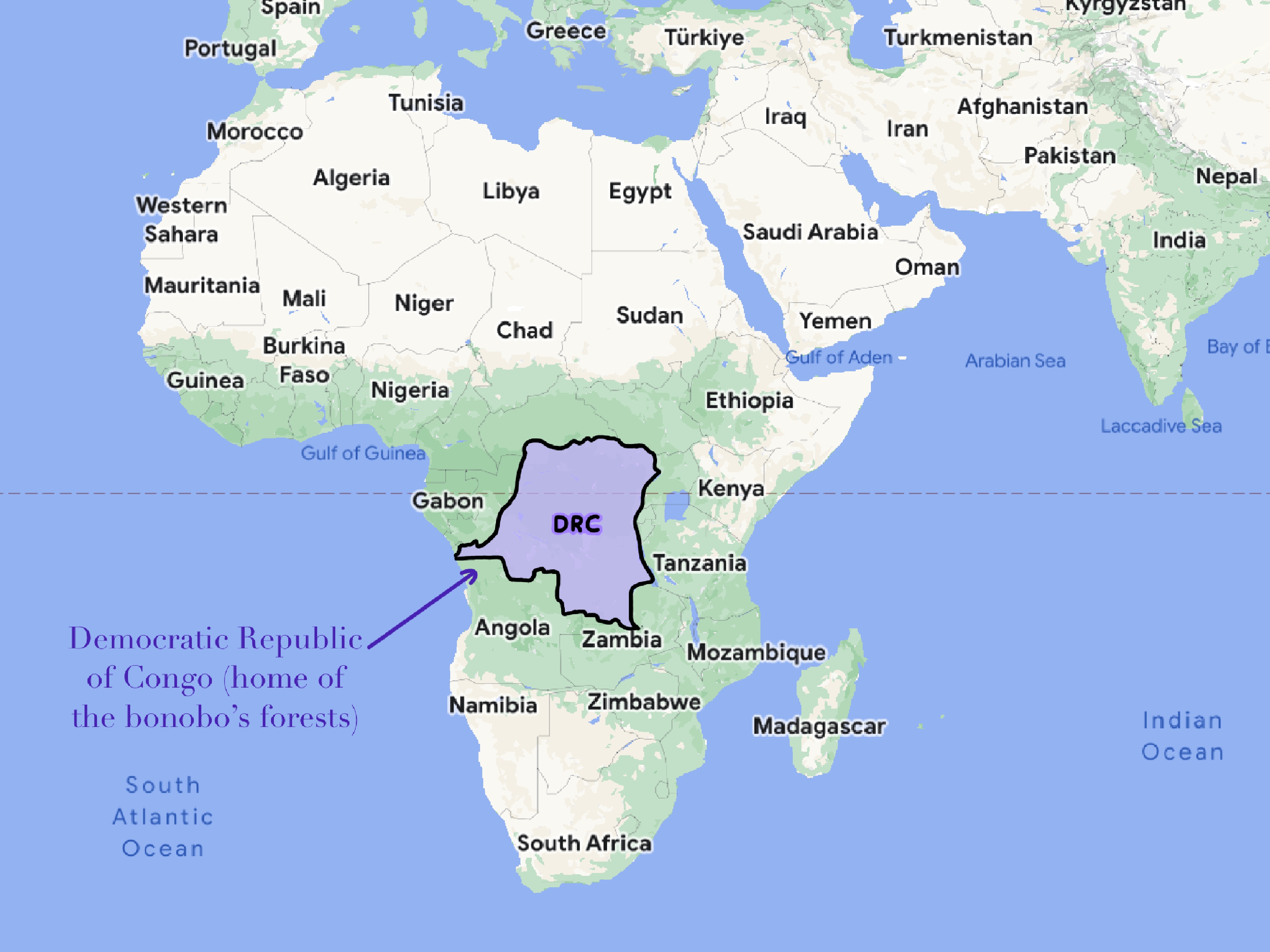
  4. Wild bonobos live only south of the Congo River, in the Democratic Republic of Congo, in African rainforests.
  5. Nobody knows the exact number of bonobos, and scientists think the population has been declining for the last 30 years. They think it could keep going down for the next 45 to 55 years because of the bonobos' low reproduction rate and other threats like poaching and habitat loss.
  6. Bonobos look for food on the ground, for worms, and in the trees, for fruit.
  7. Bonobos sleep in large groups, making nests in trees.
  8. They use tools to forage for food.
  9. Bonobos give birth every 5 years.
  10. Bonobos play some of the same games as humans.
  11. Females usually have their first babies when they are 14 years old.
  12. Females help when a member of the troop is giving birth, like midwives.
  13. Bonobos care for their babies until they are four years old. Males stay with their moms their whole lives, while females leave to join another troop.
  14. Females take care of the kids while males give food and protection.
  15. Bonobos are estimated to number at least 15,000 to 20,000 in the wild, and possibly a lot more, because most of their forest has never been surveyed.
  16. Deforestation and agriculture have destroyed a large amount of the bonobos' forests, and even though it is illegal, bonobos are still poached and captured.
  17. Scientists once watched two wild female bonobos adopt infants from other groups, which is a rare behavior among wild animals!
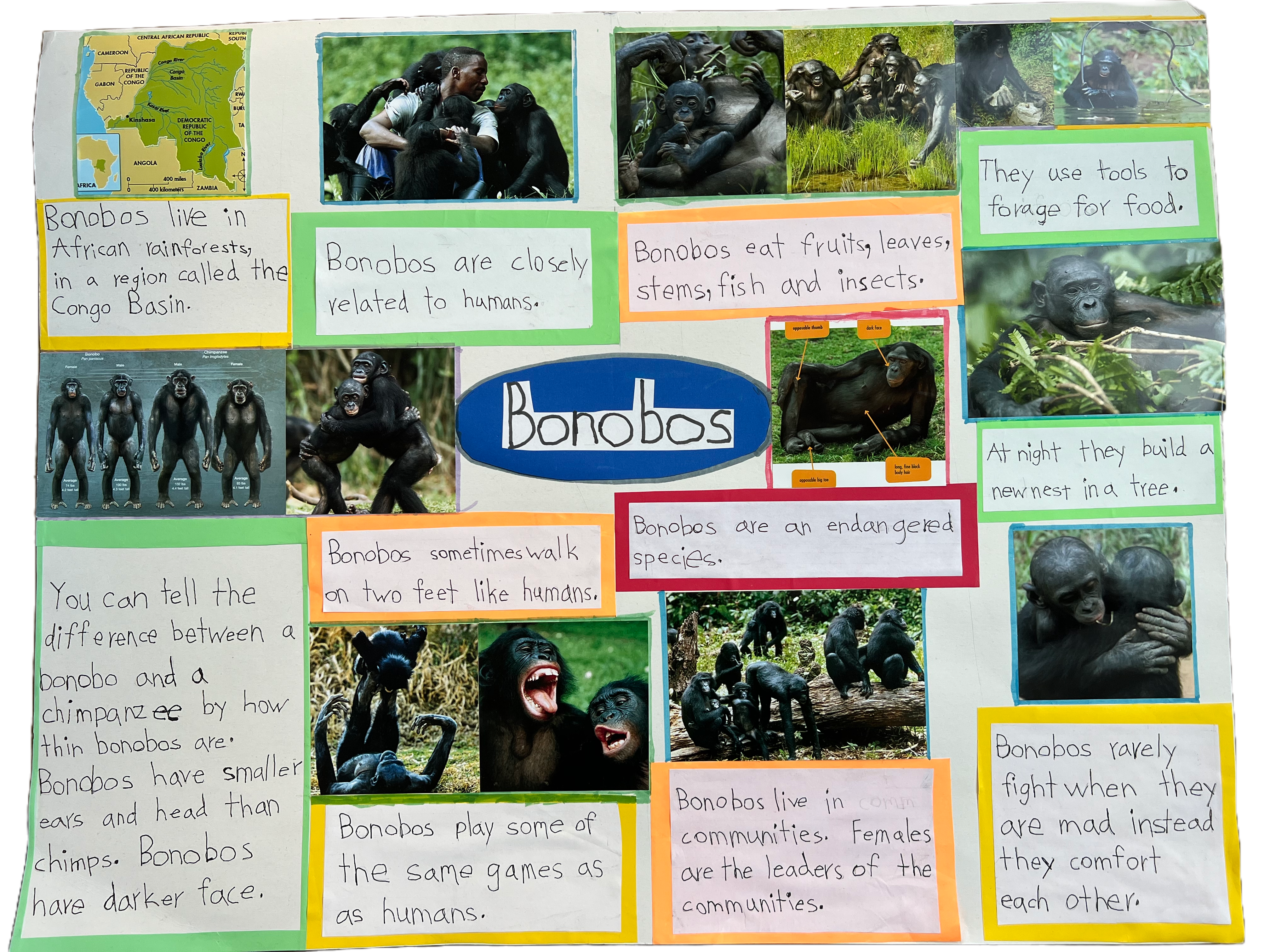
The bonobo poster Anika made for school in 1st grade, right around when we started with this website.

Where they live

Bonobos live south of the Congo River, in the Democratic Republic of Congo, in African rainforests. Below is a world map, with the area where they live circled.

Bonobo - map of where they live
Map of the world

How many are left?

The good news

Nobody knows exactly how many bonobos there are, because they live deep in a rainforest that is very hard to walk around in. The best guess is at least 15,000 to 20,000 in the wild, and possibly many more, because most of their forest has never been properly searched. The IUCN calls them Endangered. Since we cannot count them all, nobody can honestly predict a date when they would be gone, so instead, here is what people are doing about it. The Bonobo Peace Forest is a network of reserves in the Democratic Republic of Congo that local Congolese communities created and manage themselves, and it protects a big piece of bonobo home. Kokolopori Bonobo Reserve was protected by the Bongando people for years before it became official in 2009, and they still run it. And a sanctuary called Lola ya Bonobo has been rescuing orphaned bonobos since 1994, and since 2009 it has been releasing some of them into a forest called Ekolo ya Bonobo, where some of them have had babies in the wild. That is the best kind of number to go up.

How you can help

You can help! Bonobos live very far away, but some of what happens to their forest starts here.

  1. Look for the FSC label on paper, notebooks and wooden things, and check the grade. FSC 100% means all the wood came from a certified forest, while FSC Mix can include up to 30% that was only risk-checked. It is still better than no label at all.
  2. Never share or like videos of pet monkeys and apes. Every one of those videos makes somebody else want one, and a baby bonobo only becomes a pet after its mother is killed.
  3. Support reserves that are run by the Congolese communities who live there. The Bonobo Peace Forest works because the people in the villages are the ones protecting it, every day.
  4. Learn where bonobos actually live. They are only found south of the Congo River, in one country, and most of their forest has never even been properly surveyed.
Monarch Butterfly

Monarch Butterfly

Open the Monarch Butterfly section

Anika the Monarch Butterfly

Monarch Butterfly - Anika the Monarch Butterfly

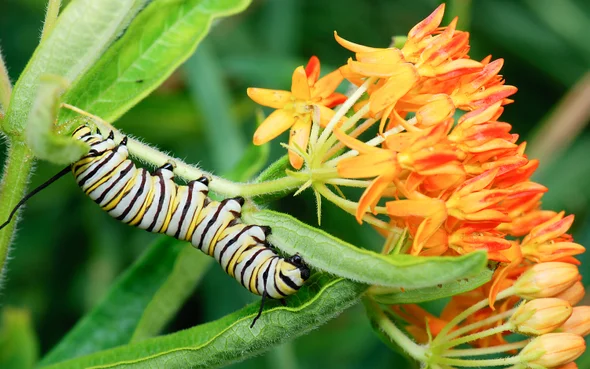
I wake up. I am inside a little weird ball thing. I start to chew on it and finally escape. I am hungry, so I eat the weird thing. "Take that, whatever you are," I squeak. I look down at myself. I am a caterpillar. I am full. I don't know what I am doing, but slowly I spin a pad of silk, attach it to my hind legs, and then, you won't believe this, I walk out of my own skin. I eat the skin, of course. I don't want anyone to see it. Then I slowly start munching on the milkweed that I had been sitting on top of. Milkweed is good. Life is amazing. "I need a name. Something to call me," I squeak. I keep eating and thinking, and finally I decide. "Anika! I want to be named Anika. It's a pretty unique name, and I like it very much. It's my name now!" I smile to myself. I slowly crawl to the next leaf and nibble on it. That's when I see it. To the north of me are milkweed plants behind a fence. They are far enough away that I am safe, but I can see that a weird creature is spraying something on the plants, and that's when I realize the truth.

The stuff that they are spraying? If a caterpillar eats that milkweed, it will die. You can tell by the way the plants look, wrong, and by how there are caterpillars there, unmoving, just there. "It is going to be okay, Anika. Just watch which milkweed you eat, and you will be okay," I squeak to myself.

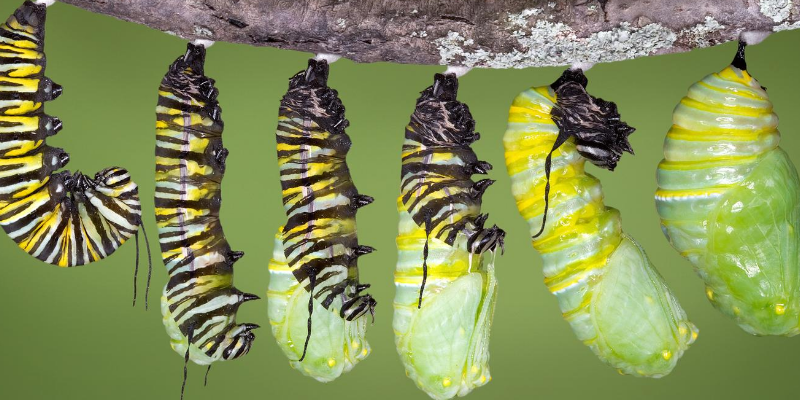
So my life goes on, and I stick to my milkweed plant. Every day I do the same thing. I would be bored, but I keep myself entertained by telling myself jokes and talking to myself. I do the weird thing where I step out of my skin five times, and each time I am bigger! I like doing fun things! Finally, on the 18th day, I sing to myself, "I eat, then I sleep, then it goes on repeat." I take a bite of the leaf and keep singing, "But today that's all going to change, hooray!" I climb off my host plant, sad to let it go, but then I remember that it will be safer. "I am going to do something fun," I sing. I find another milkweed plant, check if it is safe by looking around for the giant, and then try the leaf. It tastes as good as ever! I climb up to a nice sturdy leaf, and then I slowly attach my back legs to the leaf and curl into a kind of J shape with my body.

One week later.

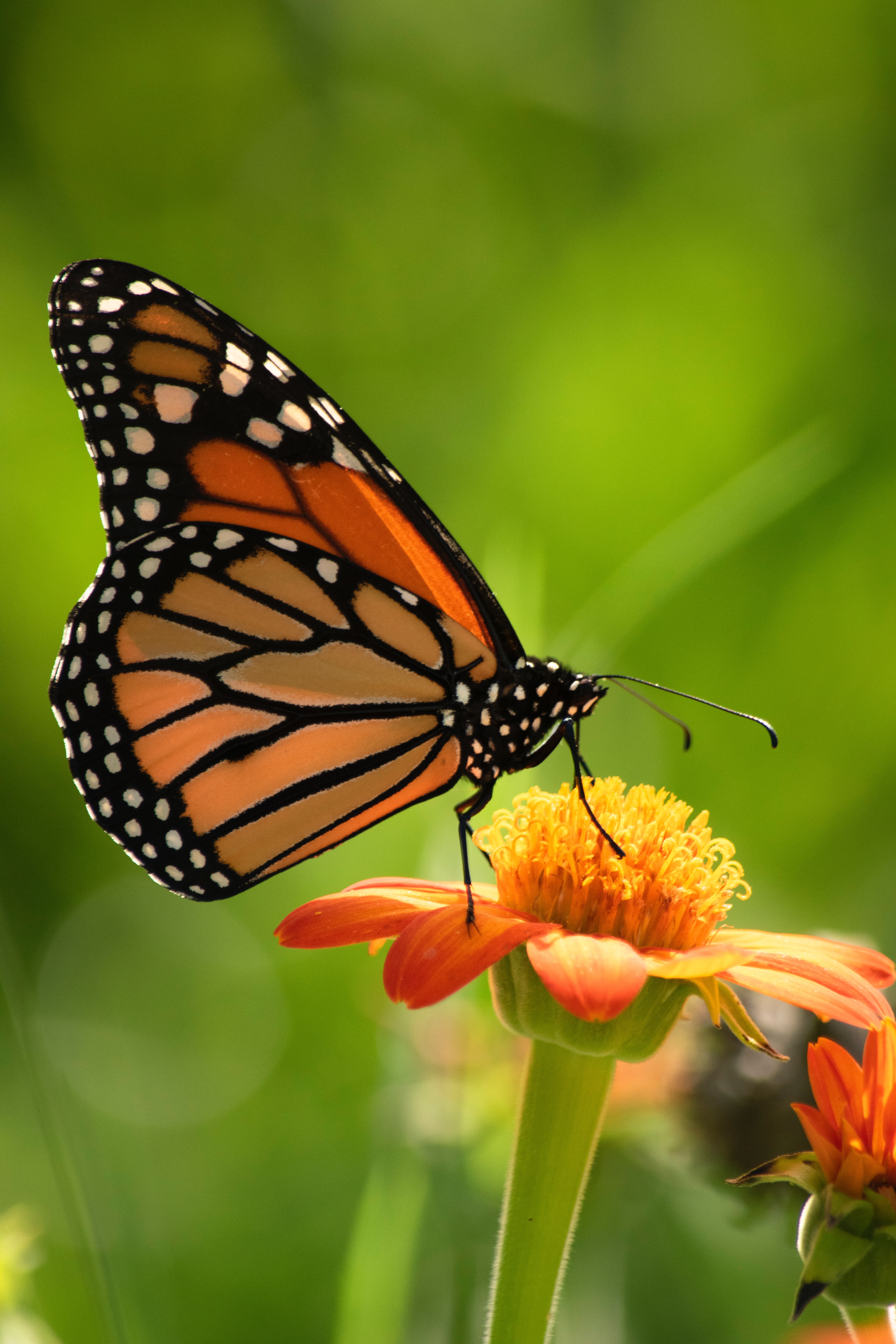
I shake in my chrysalis, and out I go. I am hanging on the clear thing I was just inside. I unfurl my wings. "Am I still Anika? Or someone else? Well, I like Anika, so I think I will stick with her," I chirp. I smile. I know one thing for sure. I have wings! Beautiful orange wings with black veins and white spots. "I butterfly!" I chirp. "Get it? Because I better fly, I butterfly!" Yes, I am definitely Anika. I even still talk to myself. I just look different. I let my wings get ready, and then I take off, flying through the morning air with the wind rustling the trees. I am not the only one. There are more of us. I hear one of them talking about migrating. I think I might go with them. I want to migrate to Mexico! Days pass, and I drink the sweet nectar from all kinds of plants, being careful not to eat or drink anything around the human hideout. Others are not so lucky, and it is not their fault, it is the humans'. There are few of us left by the time we migrate. I learn the name of what they are spraying, pesticides and chemicals, and these are the things killing my kind. I worry a lot about our safety, but I keep talking to myself and telling jokes. I visit my host plant once or twice for the fun of it, but other than that, I don't really think much about my past. I have lots of fun in the day, flitting from flower to flower, but rarely communicating with other butterflies. On the final day of the trip we set off for Mexico. We flew early, and it took two months in all, but it was a wonderful experience, until I heard two butterflies behind me talking, saying it was a shame. They said that people count us by measuring how much forest we cover when we all pile onto the trees in Mexico for the winter, because nobody could ever count every single butterfly. In the winter of 1996 we covered a little over 18 hectares of forest. In the winter of 2013 we covered only 0.67 hectares. They also said that the monarchs who spend the winter in California instead of Mexico used to be in the millions back in the 1980s, and that in one very bad year people counted fewer than 2,000 of them, and that the counts there are still terribly low. That is not all the monarchs on Earth, but it still made my wings feel heavy.

Think about it. When was the last time you saw a monarch butterfly? When was the last time you saw a monarch butterfly in the wild? For a whole day I thought all of us would be gone soon. Then those same two butterflies told me the rest of the story, and the rest of the story is better than I expected. The year after that terrible California count, people there counted more than 200,000 of us. From fewer than 2,000 to more than 200,000, in one year! It did not stay that high, and the California counts since have been some of the lowest ever, so I will not tell you that part is fixed. But in Mexico we have been climbing. The last winter measured was the biggest in years, almost 3 hectares of forest full of butterflies, which is more than three times the winter before last. We are not safe yet, and our numbers go up and down the way a butterfly does, but we can come back, and we have done it before. My name is Anika, and I am telling you, all of you kids out there: plant milkweed, keep the poison away from it, and we will keep coming back to you.

Fun facts

Monarch Butterfly - Fun facts

Here are some fun facts about monarch butterflies!

  1. A monarch butterfly's bright colors warn predators that it is poisonous!
  2. Butterflies get their poison from milkweed, the only plant the caterpillars eat.
  3. Animals that eat monarchs don't die, but they do get sick, which makes them want to avoid monarchs in the future.
  4. Milkweed is the only plant that monarch butterflies will lay their eggs on, but millions of acres of milkweed have been destroyed.
  5. Monarch caterpillars can eat a whole milkweed leaf in five minutes or less.
  6. Monarch butterflies complete a migration each year. These butterflies leave North America and travel to Mexico or California, and some fly close to 3,000 miles.
  7. Monarchs return to the same forests every year, and some can even find the same tree their ancestors landed on.
  8. Around the end of winter, the butterflies in Mexico and California mate, and the females go north, leaving eggs on milkweed, while the males die.
  9. Monarchs live all over the Americas, and also in Australia, New Zealand, Hawaii and some Pacific islands, and even on a few islands off Spain and Portugal.
  10. The monarch butterfly is the state insect of Texas, Minnesota, Idaho, Illinois, and Alabama, and the state butterfly of Vermont and West Virginia.
  11. The monarch butterfly's scientific name is Danaus plexippus. Danaus and Plexippus were both people in Greek myths, and a scientist named Carl Linnaeus gave the butterfly that name in 1758.
  12. Males have black dots along the veins of their wings, and they are slightly bigger than females.
  13. Males attract females with scent glands in their hind wings.
  14. Most adult monarchs live for only four to five weeks, but the generation that flies to Mexico for the winter lives for six to nine months, which is how they make the whole journey.
  15. The word chrysalis comes from the Greek word chrysos, meaning gold. There are gold spots on a monarch's chrysalis, and they come from the carotenoid pigment in the milkweed they eat.
  16. A female monarch butterfly can lay from 300 to 500 eggs in a two-to-five-week span!
  17. Monarch caterpillars eat their eggshells.
  18. Monarchs make a pad of silk, attach it to their hind legs, and then walk out of their skin. They do this to grow, and then they eat the skin so as not to leave any trace of themselves being there. They do this five times in their lives.
  19. Caterpillars grow enormously fast, putting on around 2,000 times their starting weight during their 10-to-14-day caterpillar stage.
  20. A group of butterflies is called a flutter.
  21. Pesticides and other chemicals people use while farming crops have killed milkweed as well as butterflies.
  22. Monarchs are very sensitive to temperature and weather changes, so climate change is also affecting them a lot.
  23. You can help by planting milkweed in your yard.

Where they live

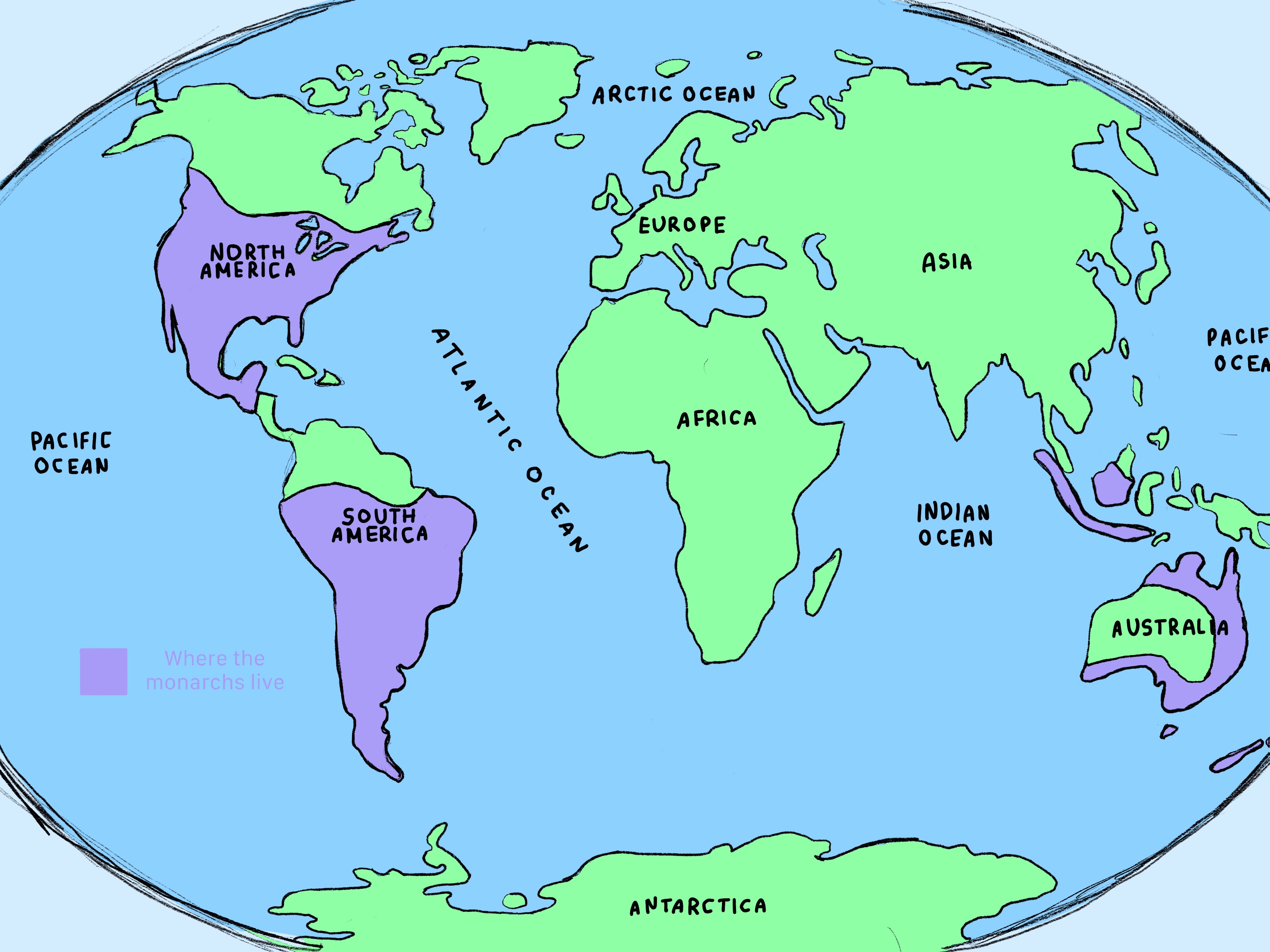
Monarchs live all over the Americas, and also in Australia, New Zealand, Hawaii and some Pacific islands, and even on a few islands off Spain and Portugal. Below is a world map, with the area where they live colored purple.

Monarch Butterfly - map of where they live
Map of the world

How many are left?

The good news

Nobody counts monarchs one by one, because how would you? Instead, for the monarchs that spend the winter in Mexico, scientists measure how many hectares of forest the butterflies cover when they all pile onto the trees. The biggest winter ever measured was 1996 to 1997, when they covered about 18 hectares. The smallest was 2013 to 2014, at only 0.67 hectares. It was 0.9 hectares in 2023 to 2024, 1.79 the winter after that, and 2.93 hectares in 2025 to 2026, which is a 64% jump and the best figure in years. The monarchs that spend the winter in California are counted separately, and their news is not as good. There used to be millions of them in the 1980s. In 2020 volunteers counted fewer than 2,000, in 2021 they counted more than 200,000, and the last two winters were back down to around 9,000 and 12,000, some of the lowest counts ever recorded. So the eastern monarchs are climbing and the western monarchs are still in real trouble, which is exactly why planting milkweed is worth doing.

How you can help

You can help! This is one of the few endangered animals you can help from your own garden. Just get the details right, because the wrong milkweed is worse than none.

  1. Plant milkweed that is native to your own area, and ask a local native plant nursery which one that is. In the southern United States and coastal California, do not plant tropical milkweed. It stays green all winter, which keeps monarchs breeding when they should be migrating and lets a parasite build up on the plants.
  2. Ask whoever looks after your garden to stop using weed killer and bug spray, especially anything with neonicotinoids in it. An untreated flower bed with no milkweed helps monarchs more than a sprayed milkweed patch does.
  3. Plant flowers that bloom in late summer and autumn, like goldenrod and asters. Monarchs do not set off with fat already stored, so they fuel the whole trip at flowers along the way.
  4. Leave a corner of the garden messy. Tidy gardens are terrible for butterflies.
  5. Join a monarch count. Real scientists use the numbers ordinary people report, and kids can do it.
Asian Elephant

Asian Elephant

Open the Asian Elephant section

Willa and Ellie, the Sister Asian Elephants

Asian Elephant - Willa and Ellie, the Sister Asian Elephants

The sun on my back was warm, and the grass was swishing around me while I watched the sun. "Willa, Willa, Willa!" my little sister Ellie called. "Come in the water." Ellie is 2 years old, and I am 4 years old. We live in a herd of 6 elephants: me, Ellie, Mamma, Aunt, my cousin Milla (3 years older than me), and Grandma. We live on a beautiful grassland. I fill my trunk up with water and spray it over me, and then, after the herd is done, we go to the field and graze. I eat mostly grass and some leaves. Suddenly we hear a sound, and then big machines appear, destroying the land and plowing the grass. Mamma and Aunt look frightened and Milla looks shocked, but Grandma? Grandma is furious, and she takes action, telling us all to run. Ellie grabs a bunch of grass and puts it in her mouth, and then we all run fast. Finally we stop near a pond of fresh water with grass around it.

"Everything is okay," Mamma says, averting her eyes. "Look, it is time for bed. Let us sleep." Milla picks up some grass and puts it in her mouth. Ellie does the same. So do I, thinking about the horrid things that ruined the land. Those things scared my mother, and nothing ever scares my mother. I had never seen anything like them, so I try to piece together what they were. Finally I close my eyes, but all I dream of are those machines tearing apart the land, getting rid of the beautiful plants.

I wake up before the sun. My herd and I graze. No one mentions yesterday, but I can tell it is on everyone's mind. We eat a lot, then get water, then keep eating. My sister is not cheerful, and Milla is not playfully teasing her, or talking, or even making anyone smile. We don't talk much, and we do everything like usual, but it feels weird. Finally, when I can't stand it anymore, I am about to ask, but then Ellie looks so upset already that I don't know if I should. I know one thing, though. If something is trying to get rid of us, it is making a mistake. We help the grasslands grow by eating seeds and then dropping them off somewhere else. Without us there would be fewer plants, which means fewer other plant eaters, which means no predators, because the predators would not have food, which means nothing that eats the predators would survive either. In the end, everything would go extinct.

I keep eating grass, and I eat some bark too. Then I hear something fly past my ear. My mom is horrified. We all run as fast as we can, through the pond and into a clump of trees. Whatever is shooting at us is not trying to kill us. They are trying to sedate us! We run fast as they chase us, and we finally get away. We find some water and drink, and then whoever is chasing us finds us and starts shooting at us again. We finally get a safe distance away and find somewhere safe. We stand on alert for a bit, then relax, knowing that they are gone for sure. We look around and see that we are in a nice clearing with a pond and grass. It feels like a mirage after what we have just been through, but I am grateful nonetheless.

"What were those things?" Ellie asks quietly. Milla cuddles close to Ellie, and then Grandma lies down. We all come really close to her, not expecting to hear an answer, and she begins to tell us everything. About humans. About how the males' tusks are wanted, and how our skin is wanted. About how they put elephants in a box and make them do tricks, and about how humans are taking all the land and farming on it. She tells us about how they capture the ones who try to take food from the land that was once ours. She tells us how there are only half of us left compared to when her grandmother was young. Then she says to us, "The humans, they can take our lives, they can take our families, they can take our homes, but not without a fight."

And then Grandma tells us the other half, the half I was not expecting. She says that in a place called India, where about half of all wild Asian elephants live, the humans made a plan called Project Elephant, and now there are 33 whole Elephant Reserves that are meant for us. She says they are stitching our old paths back together, the corridors, so that a herd can walk from one forest to another without ever crossing a farm. She says that the humans in India named us their National Heritage Animal, which means we belong to everybody, and everybody has to look after us. She says that in Thailand elephants do not have to drag logs around anymore. And she says that in a park in Nepal called Bardia, there were once only about two of us, and now there are more than a hundred.

So I want to tell you: where the fields were full of us, there are now empty grounds. Where there used to be grasslands and ponds, there are now farms with sharp wire around them. The earth has warned you again and again, and I will not act like it hasn't. It is not too late, though, because some of you are already fighting for us, and it is already working. So fight with them. Fight to save the earth, fight to save our home, fight to save your home, fight to save us. If all of us fight together we can fix this mistake, and the best part is, we have already started.

Fun facts

Asian Elephant - Fun facts

Here are some interesting facts about Asian elephants!

  1. Elephants are the largest land mammal on earth! Asian elephants are slightly smaller than African elephants.
  2. Asian elephants are the largest mammals in Asia!
  3. Elephants can't jump.
  4. Elephants need to drink at least once a day, so they are always close to a source of fresh water.
  5. Baby elephants lose their first set of teeth, just like humans!
  6. The Asian elephant's scientific name is Elephas maximus.
  7. Around one third of Asian elephants live in captivity.
  8. The average lifespan of an Asian elephant is up to 60 years.
  9. An elephant uses its trunk as its nose, with extra features such as smelling and breathing, like us, but also things like trumpeting, drinking, and grabbing things!
  10. Asian elephants like to fill their trunks with water and spray it all over themselves to cool down.
  11. These elephants use rumbles, bellows, growls, and moans to communicate with each other. Some of these calls can be heard from a mile away.
  12. A group of elephants is called a herd.
  13. These elephants are really social and form groups of six to seven females that are related. They are led by the oldest female, while adult males go off on their own.
  14. Asian elephants, like African elephants, occasionally join other herds to form bigger herds, but those don't last long.
  15. Asian elephant herds are smaller than African elephant herds.
  16. You can tell the difference between Asian and African elephants by the Asian elephant's slightly rounder and smaller ears.
  17. Asian elephants live in wet and dry forests and grasslands in 13 countries, from South to Southeast Asia.
  18. Though these mammals prefer forage plants, they have adapted to surviving on whatever resources are available to them.
  19. Two-thirds or more of an Asian elephant's day is spent feeding on grasses, but they also eat tree bark, roots, small stems, and leaves.
  20. These elephants love bananas, rice, and sugarcane.
  21. These elephants are herbivores, meaning they only eat plants.
  22. An adult elephant can eat 300 pounds of food a day!
  23. Asian elephants can grow about nine feet tall at the shoulder, and most adults weigh around 3 to 4 tons, which is as heavy as two or three cars. A lot of an Asian elephant's time is spent looking for food, and these elephants sometimes travel 50 miles a day.
  24. The Asian elephant population has shrunk by at least 50% over the last three generations, which is about 75 years.
  25. There are estimated to be roughly 40,000 to 50,000 Asian elephants left in the wild, and about half of them live in India!
  26. Some threats to wild Asian elephants are habitat loss, where deforestation is the main problem, and human-elephant conflict, because elephants look for space and take crops from the farms close to their homes.
  27. Most illegal ivory comes from African elephants, though Asian elephants still face that threat. The trade in elephant skin has grown, and many of these animals are poached.
  28. Young wild elephants are trafficked from Myanmar to Thailand for tourism.
  29. Asian elephants are usually trained with bullhooks, a long wooden stick with a metal hook at the end. The way it is done is different with every handler, though most use fear-based methods.
  30. You can help! Don't ride an elephant. The saddles rub sores into their backs, and an elephant only carries people after being broken in through fear.
  31. If you see an Asian elephant, or any animal, being mistreated, raise your voice safely. Teach people to treat animals humanely.

Where they live

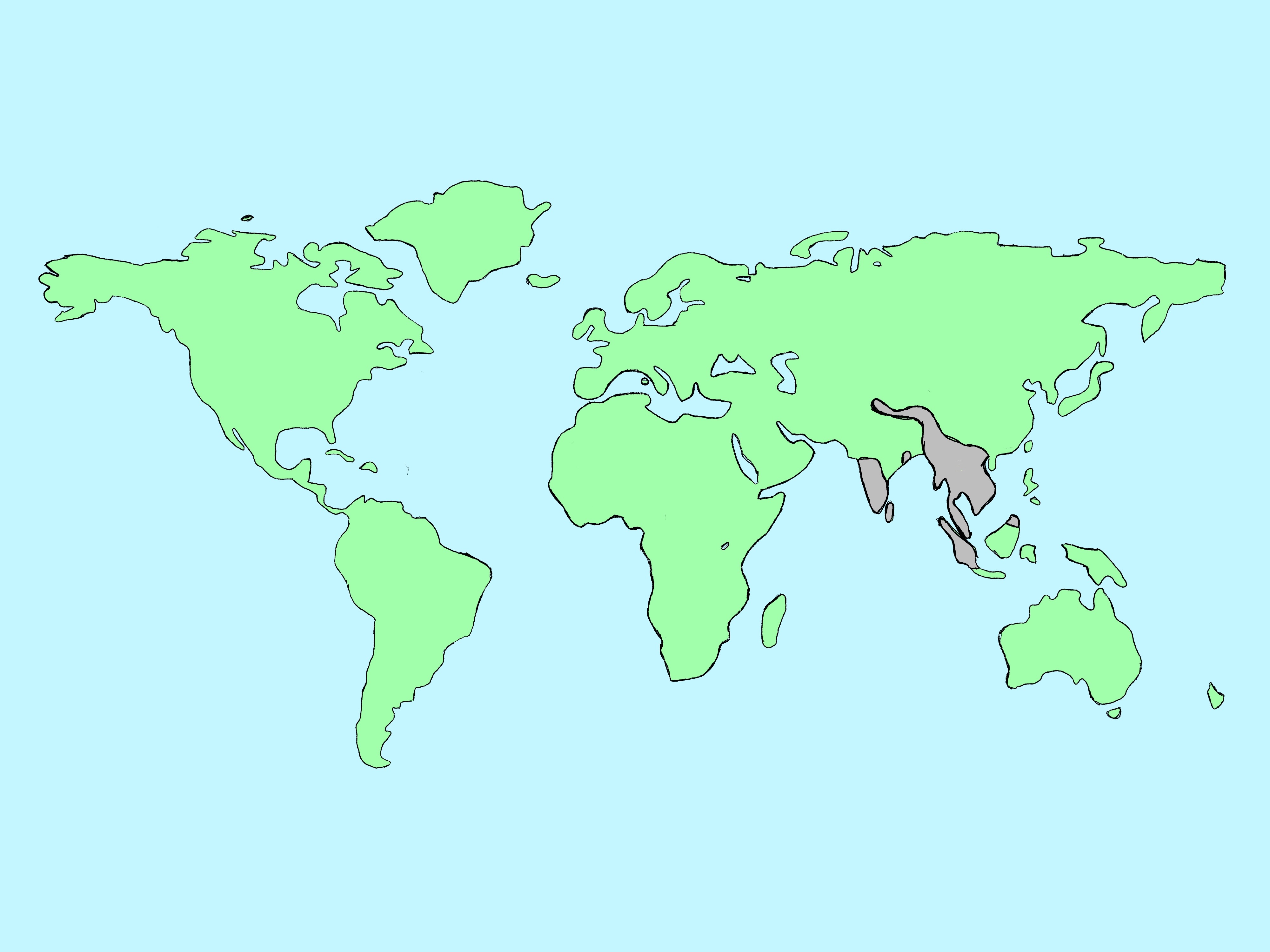
Asian elephants live in forest areas in India and all over Southeast Asia. Below is a world map, with the area where they live colored brown.

Asian Elephant - map of where they live
Map of the world

How many are left?

The good news

There are roughly 40,000 to 50,000 Asian elephants left in the wild, and the IUCN calls them Endangered. Their numbers have dropped by at least half over three generations, and India's newest count came out lower than the one before it, so this is not a story where everything is fine. Now the good news, and it is just as honest. About half of all the wild Asian elephants in the world live in India, and India started Project Elephant in 1992, which now supports 33 Elephant Reserves. People are protecting elephant corridors, which are the paths that connect one patch of forest to another so that herds are not stuck in one place. Asian elephants were named India's National Heritage Animal in 2010. Thailand stopped using elephants for logging almost everywhere. And in Bardia National Park in Nepal, elephants went from about two animals to more than a hundred. So nobody can give you a date when Asian elephants will disappear, because a lot of people are working very hard to make sure that day never comes.

How you can help

You can help! Don't ride an elephant, and don't go to elephant shows.

  1. Never ride an elephant. The saddles cause sores that do not heal, and in one study of nearly 200 elephants working in tourism, most had them. Worse, an elephant only carries people or does tricks after being broken in through fear.
  2. If you see an Asian elephant, or any animal, being mistreated, raise your voice safely and tell an adult who can report it.
  3. Elephants need to walk between forests. Support the groups protecting elephant corridors, because a herd trapped in one patch of forest ends up raiding farms, and then people and elephants both get hurt.
  4. Look for certified sustainable palm oil on food labels. Certification is not perfect, but boycotting palm oil is worse, because the oils that replace it need even more land.
  5. Teach people to treat animals humanely. Most of the harm comes from people who genuinely do not know.
Kakapo

Kakapo

Open the Kakapo section

Pudding the Kakapo

Kakapo - Pudding the Kakapo

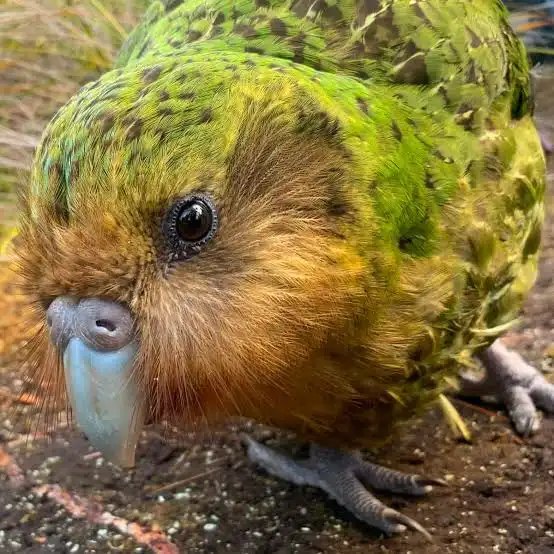
Hello. My name is Pudding, and I am a parrot who weighs as much as a house cat.

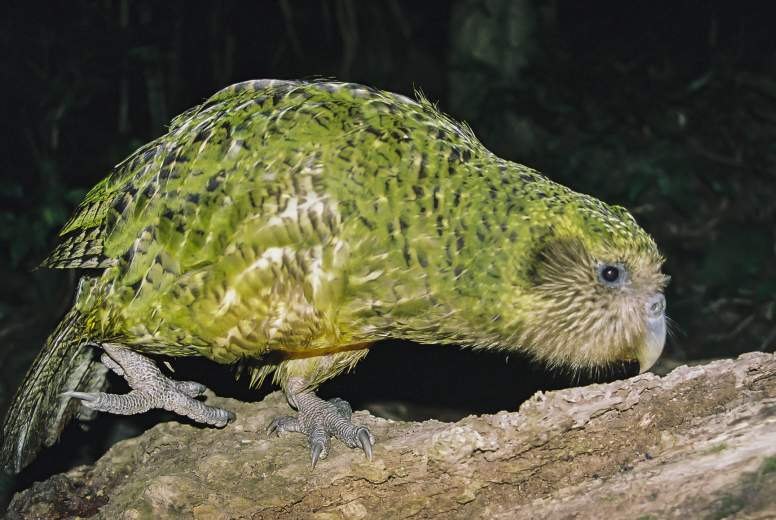
I bet you just made a face. Everybody does. When people hear the word parrot they think of a skinny colorful bird sitting on a pirate's shoulder saying rude things. I am mossy green and speckled and round, and I have a flat face with whiskers on it, like an owl who just got bad news. The biggest boy kakapos weigh four kilograms. That is nine pounds. That is one whole cat, and not a small one.

Also I cannot fly. Not one inch. I am the only parrot on the entire Earth who can't. Here is what I do instead. I climb all the way up a giant tree, which takes approximately forever, and then I jump off with my wings spread out and float down like a fuzzy green parachute. My friends call this flying. It is not flying. It is falling, but on purpose.

You know what else is weird about me? I smell. Not bad! I smell sweet and dusty at the same time, sort of like a flower that has been living inside an old sock. My feathers match the ferns so well that birds who hunt with their eyes go right past me, and when something scary comes, my big plan is to freeze. Totally still. Like a statue of a fern. This works great on birds. It works terribly on cats and stoats, because they hunt with their noses, and remember, I smell like a flower in a sock.

Here is my favorite part of being me. When it is time to find a girlfriend, I dig a bowl in the dirt, sit in it, blow myself up like a balloon, and go BOOM. Then I do it again. For eight hours. Every night. For two or three months. Girl kakapos hear me and walk kilometers through the forest to come find me, and I do not have to move at all. I am a very loud vending machine.

We only do all this when the rimu tree makes a big pile of berries, which is every two to four years. Yes. A tree is in charge of my love life. Nobody asked me.

I might live to be ninety, so I have time. And things are going great! In 1995 there were only 51 kakapos left in the whole world. Now there are more than 236 of us on the official list, and the number goes up every few weeks as this year's chicks get old enough to count, because this year was the biggest baby season anybody has ever counted: 80 nests, 256 eggs, 106 chicks hatched, and 91 of them made it all the way to fledging. The first chick born after four years with no babies got named Tiwhiri-A1. And in 2023 ten of my brothers moved to a fenced mountain sanctuary on mainland New Zealand, where no kakapo had lived for almost forty years. Seven of them kept climbing the fence like absolute legends, so they got sent back south, but three are still up there with rangers bringing them snacks, and two of them, Taeatanga and Tautahi, have been booming their hearts out. That is the first booming heard on the mainland in more than a hundred years.

So keep booming, boys. Somebody is walking kilometers to find you.

Fun facts

Kakapo - Fun facts
Kakapo - Fun facts
Kakapo - Fun facts

Okay, the kakapo might be my favorite animal ever, so here are twelve things about this giant green weirdo.

  1. The kakapo is the heaviest parrot in the world. Big males hit 4 kilograms, or 9 pounds, which is about one house cat.
  2. It is the only parrot on Earth that cannot fly at all.
  3. To get down from a tree it climbs to the very top and parachutes with its wings spread out.
  4. Kakapos are nocturnal, so they sleep all day and wander around all night.
  5. They have flat faces with whiskers, so they look way more like owls than parrots.
  6. Their green speckled feathers match ferns so perfectly that you could walk right past one.
  7. Kakapos smell sweet and musty. Nice for finding friends, very bad when cats and stoats are sniffing around.
  8. When a kakapo gets scared it freezes and does not move one single muscle.
  9. They might be the longest living birds anywhere, up to 60 or even 90 years old.
  10. Males dig a bowl in the ground, puff up like a balloon, and boom for up to eight hours a night for two or three months straight.
  11. Females walk kilometers through the forest to find a booming male.
  12. Every single kakapo alive has its own name and its own record, like a permanent doctor's appointment.

Where they live

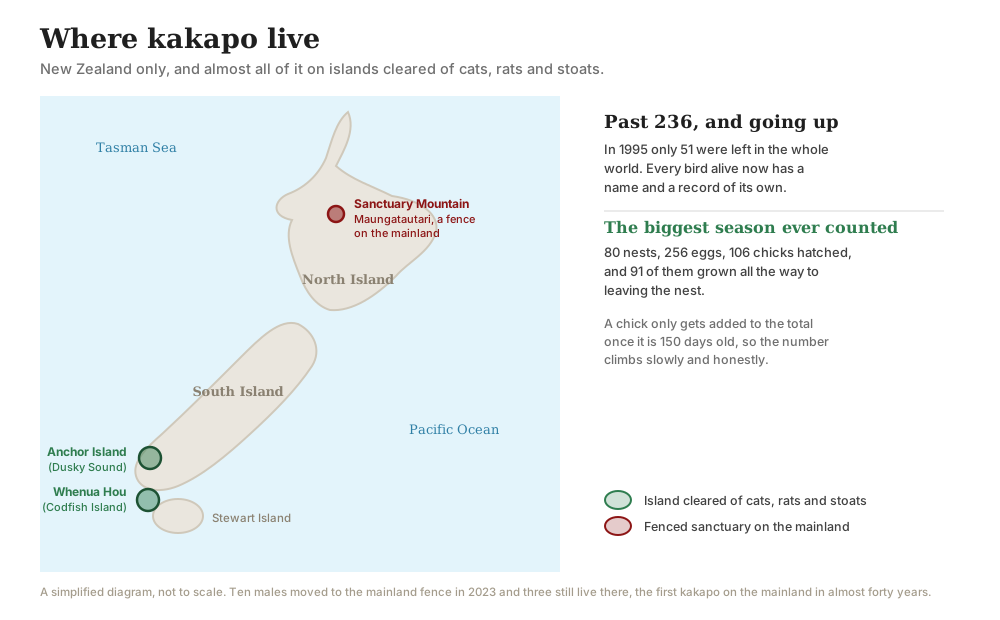
Kakapos only live in New Zealand and nowhere else. Most of them live on special islands like Codfish Island and Anchor Island, where scientists got rid of all the cats, rats and stoats. In 2023 ten males also moved to a fenced sanctuary called Sanctuary Mountain Maungatautari, on the mainland. A few of them kept climbing the fence, so seven went back south, and three still live there with rangers giving them extra food.

Kakapo - map of where they live
The green circles are the islands where kakapo live now, after cats, rats and stoats were cleared off them. The red circle is the fence on the mainland.

How many are left?

The good news

In 1995 there were only 51 kakapos left, which is fewer than the kids in two classrooms. Today there are more than 236 kakapo on the official list, and the number keeps climbing, because a chick only gets counted once it is 150 days old, and this season's 91 chicks are reaching that age right now. The 2026 breeding season was the biggest one ever recorded: 80 nests, 256 eggs, 106 chicks hatched and 91 fledglings. Since every kakapo has a name, we even know the first chick after the four year gap: Tiwhiri-A1. They are not safe yet, but they are going up instead of down.

How you can help

You can help! Here is what a kakapo would ask you to do.

  1. If you have a cat, the thing that actually works is a brightly patterned collar cover, which cuts the birds a cat catches by nearly half. Bells help less than the covers do, and scientists still argue about how much they help. Feeding a cat proper meaty food and playing with it every day also cuts its hunting.
  2. Keep cats in at dawn and dusk during bird nesting season, and inside at night.
  3. Never let a pet go free outside. Not a rat, not a rabbit, not anything. Every predator on those New Zealand islands arrived because a person brought it.
  4. Support the island projects that clear out rats, stoats and feral cats. That is boring, expensive, unglamorous work, and it is the single reason kakapos are still alive.
  5. Learn a kakapo's name. There are only a couple of hundred and they all have one, which is the strangest and best fact about them.
Axolotl

Axolotl

Open the Axolotl section

Tito the Axolotl

Axolotl - Tito the Axolotl

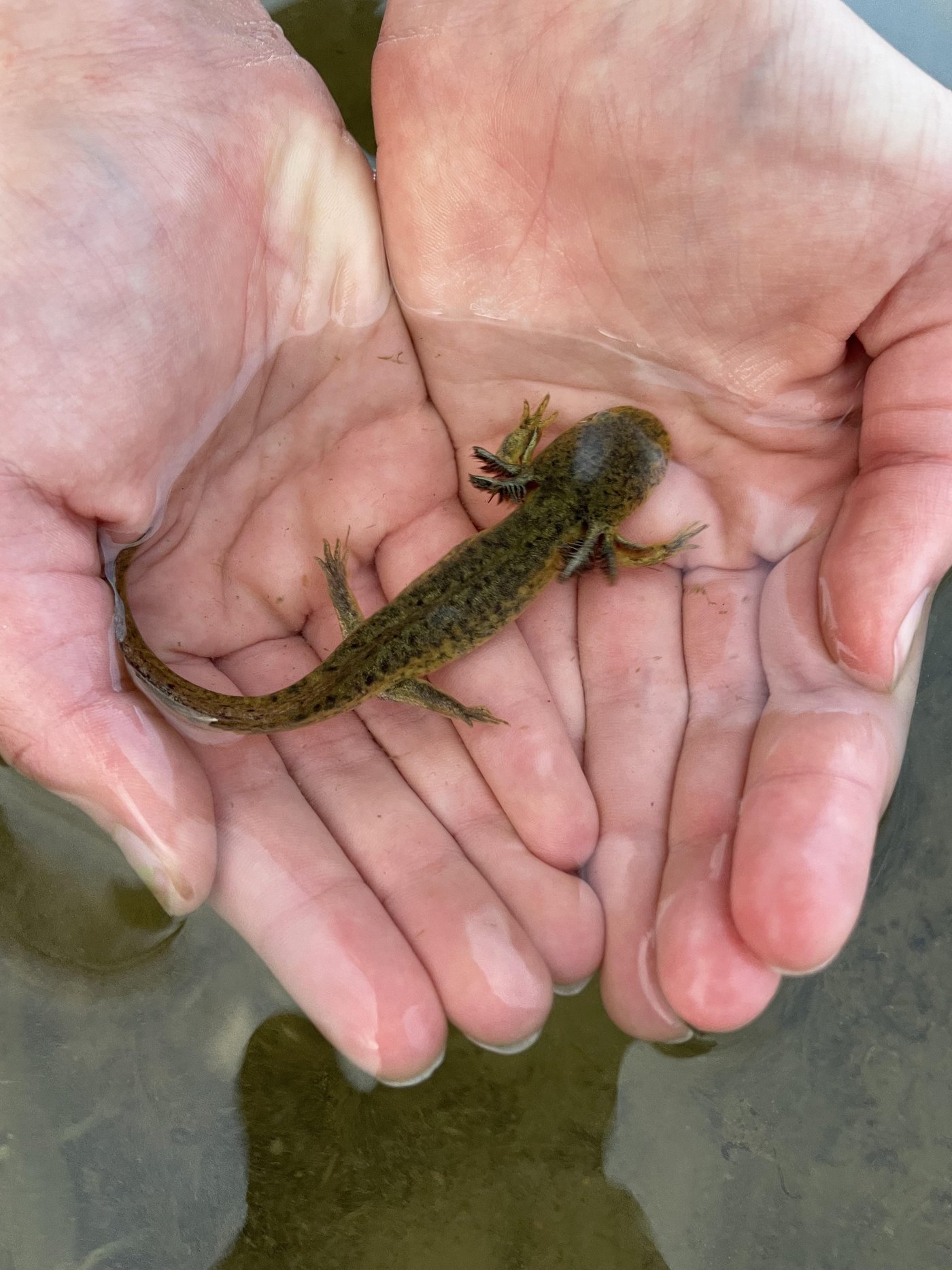
Hi. My name is Tito, and I am a baby forever.

Most salamanders start out underwater with feathery gills and then they grow up, lose the gills, and crawl onto land to go be boring. Not me. I keep my baby body my whole entire life and I stay underwater the whole time. I am basically a tadpole who never got the message.

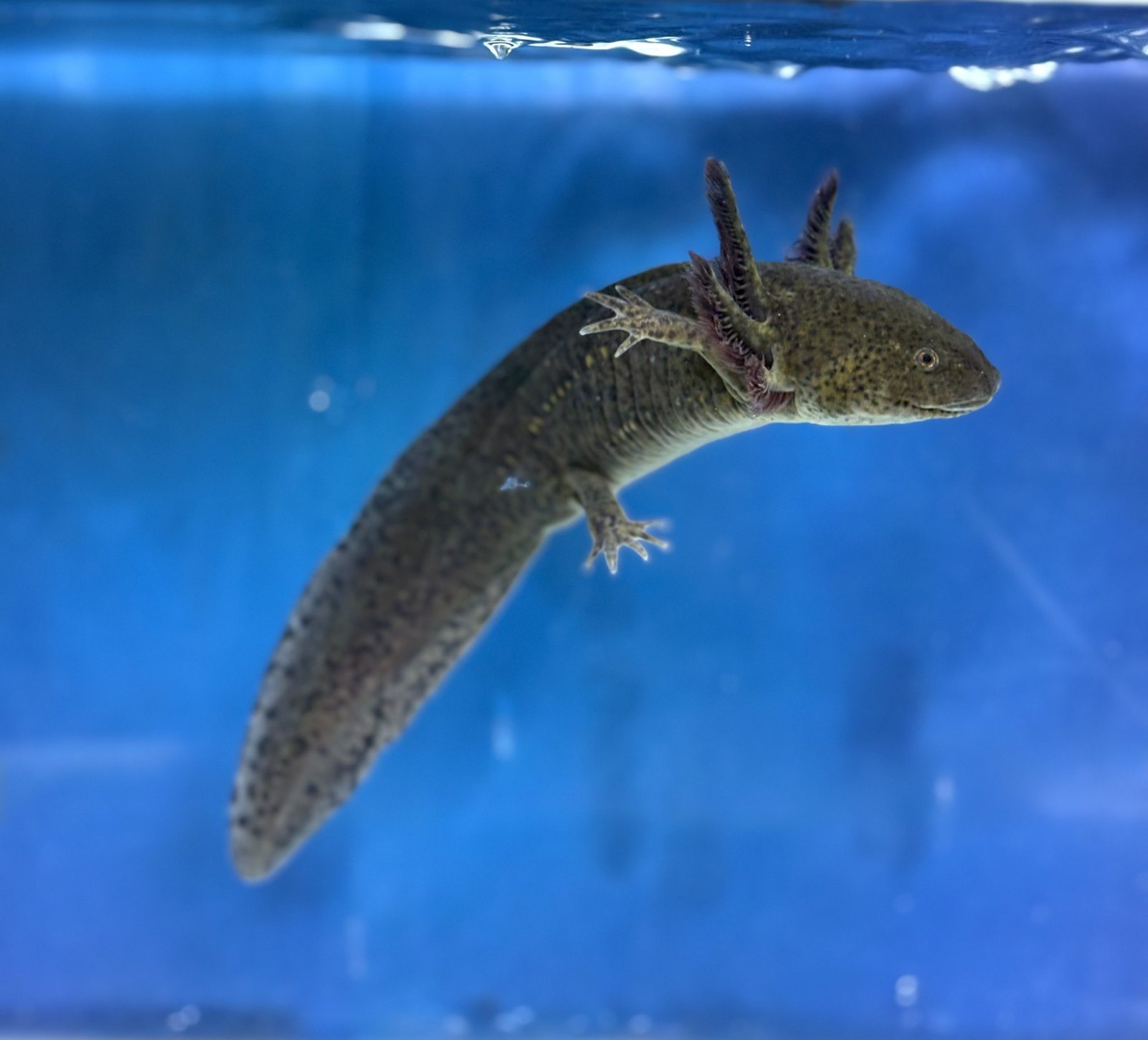
Those pink feathery branches on my head are not a fancy hairstyle. Those are my gills. I also have real lungs, AND I can breathe through my skin, so I have three ways to breathe. Three! You have one. I don't know what I'm getting ready for.

Here is my best trick, and honestly it is a really good trick. If something bites my leg off, I grow a new one in about a month, with no scar at all. I can regrow my tail. I can regrow parts of my heart, my spinal cord, and even my brain. You can take the same leg off me over and over and I will just keep making legs. Scientists stare at me a LOT. I understand why.

I also smile all the time. I can't stop, my mouth is just shaped that way, and I don't have eyelids so I can't even blink at you. That is why I look happy and slightly creepy in every single picture. I have tiny little stub teeth but I don't really chew. I open my mouth and slurp my food in like a vacuum cleaner. It's not polite. It is extremely fast.

Wild axolotls like me are dark speckly brown and black. The bright pink ones you see in videos live in tanks. I got named after Xolotl, the Aztec god of fire and lightning, who turned himself into a salamander to hide, which is exactly what I would do. I'm also printed on the Mexican 50-peso bill, so people carry me around in their pockets without even knowing it.

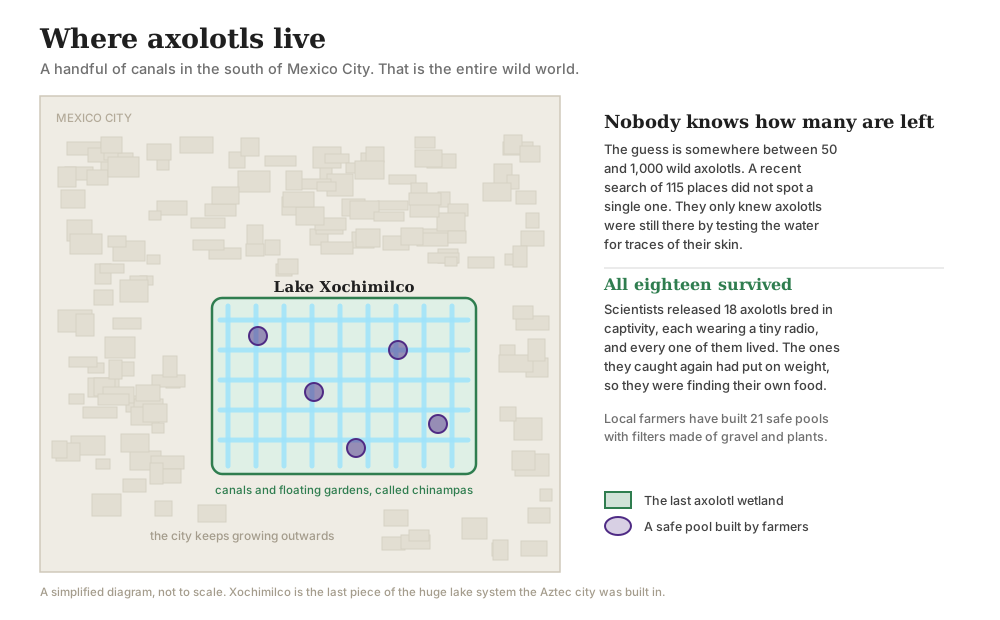
Now the sad bit. I live in exactly one place on this planet: the canals of Lake Xochimilco in southern Mexico City. The water got dirty, and somebody put carp and tilapia in it, and those fish eat our eggs. Scientists think there might be somewhere between 50 and 1,000 of us wild. They honestly aren't sure. A big search of 115 spots did not spot a single one of us, and the only way they knew we were still there was by testing the water for little traces of our skin. That makes my stomach hurt.

But wait, because it gets better! Scientists at a university called UNAM took 18 axolotls born in captivity, gave them tiny radio backpacks, and let them go into wetlands they had cleaned up. They checked twice a day for 40 days, and all 18 lived. Every single one! The ones they caught again had gotten fatter, which means they were catching their own food like proper axolotls.

Even better, the farmers there, called chinamperos, who grow vegetables on floating gardens the way people did way back in Aztec times, built 21 safe pools for us with filters made of wood, gravel and plants. The filters clean the water and keep the big fish out. The water got clearer, their crops grew better, and the little native fish came back.

So yes, I'm still smiling. And this time not only because of my face.

Fun facts

Axolotl - Fun facts
Axolotl - Fun facts

Here are twelve axolotl facts, and at least four of them are going to sound fake.

  1. Axolotls never grow up. They keep their baby body and stay underwater their whole life.
  2. They can regrow a whole leg in about a month, with no scar at all.
  3. They can also regrow their tail and parts of their heart, spinal cord and brain.
  4. You can take off the same leg again and again and they will keep growing it back.
  5. The pink feathery branches on their head are gills.
  6. They breathe three different ways: gills, lungs, and straight through their skin.
  7. Axolotls have no eyelids, so they can never blink.
  8. Their mouth curves up, so they look like they are smiling all the time.
  9. They have tiny stub teeth but they mostly just suck food in like a vacuum.
  10. They are named after Xolotl, the Aztec god of fire and lightning, who disguised himself as a salamander.
  11. Wild axolotls are dark speckled brown and black. The famous pink ones are pets and lab animals.
  12. Axolotls are on the Mexican 50-peso banknote.

Where they live

Axolotls live in one single spot on Earth: the canals of Lake Xochimilco in the south of Mexico City. That water is the last leftover piece of the big lake system the Aztec city was built in. It is full of little farm plots that float, and canals with boats going by, right in the middle of one of the biggest cities on the planet.

Axolotl - map of where they live
The green box is the last of the wetland. The blue lines are the canals, and the purple dots are safe pools the farmers built.

How many are left?

The good news

Nobody knows exactly how many wild axolotls are left, which is scary on its own. Scientists guess somewhere between 50 and 1,000, and a recent survey of 115 sites did not see a single one, finding them only by testing the water for traces of their skin. In 2025 they published a study where they released 18 captive-bred axolotls with radio transmitters into cleaned-up wetlands, and all 18 survived, and the ones they caught again had gained weight. Local farmers have also built 21 refuges with natural filters that clean the water and block the invasive fish. The wild numbers are low, but for the first time people know how to put axolotls back.

How you can help

You can help! Most of helping an axolotl is about keeping water clean.

  1. Keep water clean. Never pour paint, oil or cleaning products down a drain or a storm grate. Storm drains usually run straight to the nearest river without being cleaned first, and axolotls take in some oxygen through their skin, so whatever is in the water gets into them.
  2. Take old medicines to a pharmacy take-back bin instead of binning them, because water treatment does not remove most medicines. A few dangerous painkillers are meant to be flushed if there is no take-back nearby, so ask an adult rather than guessing.
  3. Never release a pet fish, turtle or axolotl into a pond, lake or river. It is not how the carp and tilapia got into Lake Xochimilco, which were stocked there on purpose decades ago as cheap food, but releasing pets is exactly how it happens somewhere else next.
  4. If your family keeps an axolotl, make sure it was bred in captivity, and never let it go outside.
  5. Pick up litter near water. Plastic in a canal is plastic in an axolotl's home.
Black-Footed Ferret

Black-Footed Ferret

Open the Black-Footed Ferret section

Noodle the Black-Footed Ferret

Black-Footed Ferret - Noodle the Black-Footed Ferret

Hi. I'm Noodle. Please keep your voice down, I was sleeping.

I sleep twenty-one hours a day. Twenty-one! And I spend about ninety percent of my whole life underground in a dark tunnel. Some animals climb mountains. I have a nap schedule.

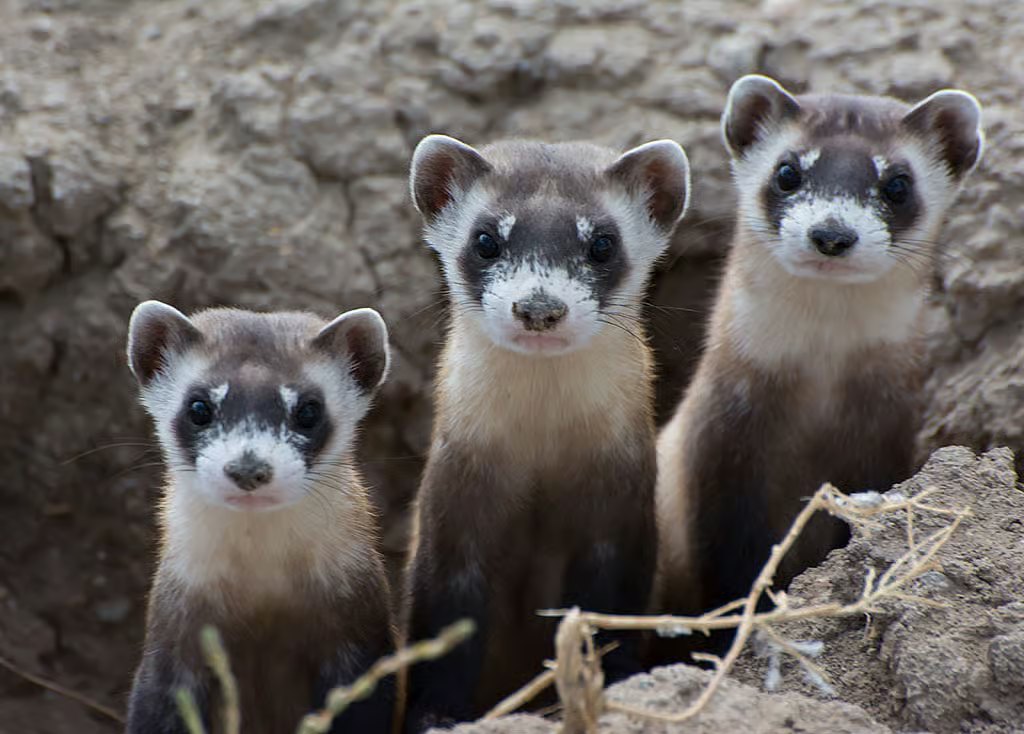
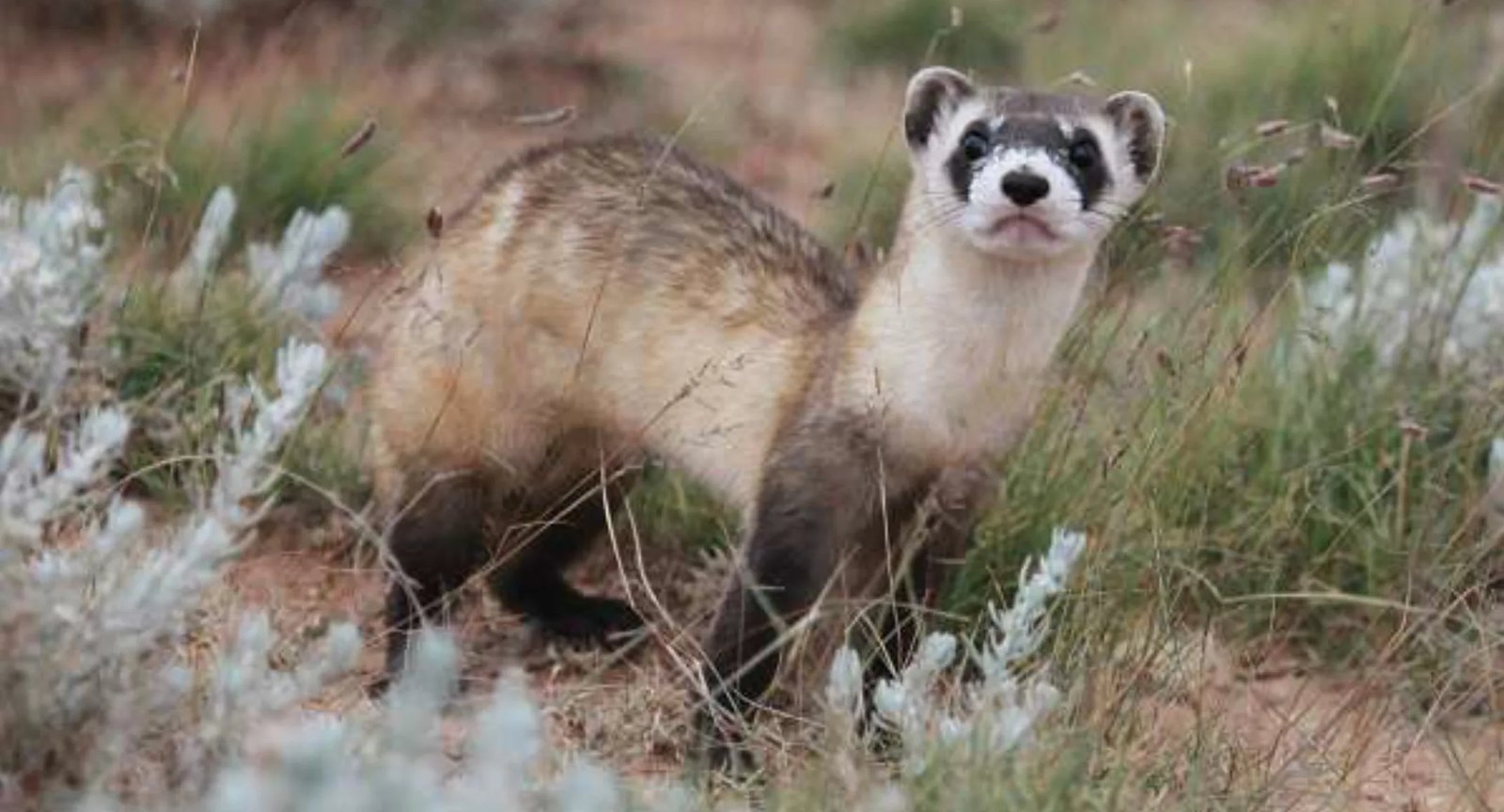
I'm the only kind of ferret that actually comes from America, and I live out on the big flat prairies in the west. I'm only about nineteen to twenty-four inches long counting my tail, and I weigh less than a house cat. I have a black mask across my eyes, black feet, and a black tip on my tail, so I look like I put on a robber costume and then got tired halfway through.

Now let's talk about my house. I did not build it. I have never dug anything in my life. I move into a tunnel that a prairie dog dug, and then, um, I also eat the prairie dogs. They're about ninety percent of my whole diet and I go through more than a hundred of them in one year. I know! I know. I'm the landlord AND I eat the tenants. Please don't tell them I told you.

Here's another weird thing about me. My eyes glow bright green in a flashlight. Scientists find us at night by driving across the prairie with spotlights, looking for two little green dots floating in the dark. That's how they count us. Two green dots. Floating. In the dark. If you didn't know what we were you would move away and never come back.

Our babies are called kits and their eyes stay shut until they're thirty-seven days old. When we're happy we bark and chatter and make a chuckling sound, and we do a dance where we hop all over the place with our mouths hanging wide open. It looks completely ridiculous. I do it anyway.

Okay, now the scary part. People thought we were all gone. Twice! Scientists said the black-footed ferret was extinct. Then on September 26th, 1981, a ranch dog named Shep killed a strange animal near Meeteetse, Wyoming, and the ranchers looked at it and it was one of us. A dog found my entire species. By 1987 there were only 18 of us left anywhere, so scientists took every single one into captivity, and only 7 of those ever had babies.

Those 7 ferrets have around 9,000 grandkids and great-grandkids now. People have let us go at more than 30 different places, and about 300 of us are living wild at the dozen or so spots that stuck. Before we get released we go to boot camp in a practice pen so we learn how to hunt. In 2020 scientists even made a clone named Elizabeth Ann using frozen cells from a wild ferret named Willa, who died back in the 1980s. Elizabeth Ann isn't alive anymore, and neither is a second clone named Noreen, but they proved it could be done. A third clone named Antonia had real live babies of her own, named Sibert and Red Cloud, and then more kits after that.

Seven ferrets and one nosy dog. That's all it took to save us. Okay. Nap time.

Fun facts

Black-Footed Ferret - Fun facts

Twelve facts about the sleepiest bandit on the prairie.

  1. The black-footed ferret is the only ferret that is native to the Americas.
  2. It sleeps up to 21 hours a day.
  3. It spends about 90% of its life underground.
  4. It never digs its own home. It moves into a prairie dog burrow.
  5. Then it eats the prairie dogs. One ferret eats over 100 of them a year.
  6. Prairie dogs are about 90% of everything a ferret eats.
  7. Ferrets are only 19 to 24 inches long including the tail, and weigh 1.4 to 2.5 pounds.
  8. They have a black mask, black feet and a black tail tip, like a tiny robber costume.
  9. Their eyes shine bright green in a flashlight beam.
  10. Scientists count them at night by driving around with spotlights looking for green eyes.
  11. Baby ferrets are called kits and their eyes stay closed until they are 37 days old.
  12. Happy ferrets bark, chatter, chuckle, and do a hopping dance with their mouth wide open.

Where they live

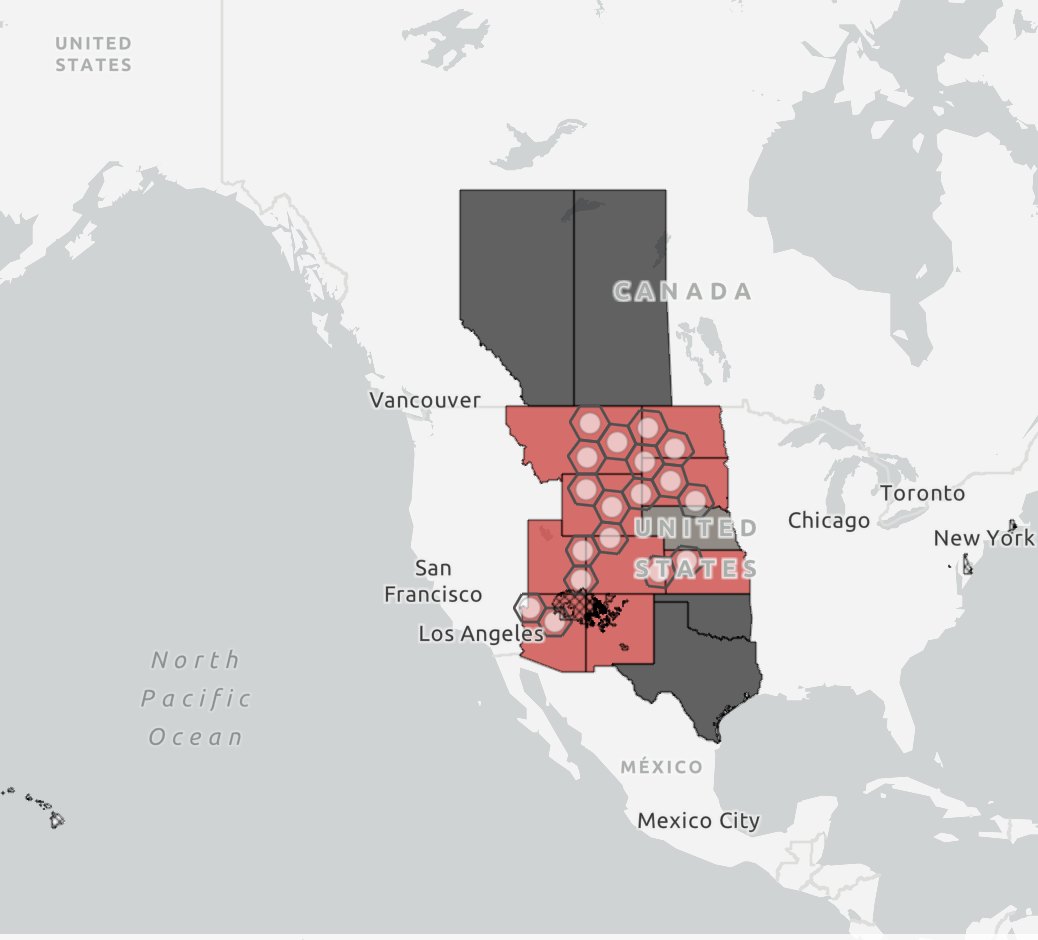
Black-footed ferrets live on the prairies of the western United States, which are huge flat grasslands with a lot of sky. They only live where there are prairie dog towns, because that is their house and their dinner. If the prairie dogs disappear from a place, the ferrets can't stay there.

Black-Footed Ferret - map of where they live
The red states are where black-footed ferrets used to live. The little marked spots are the places people have put them back.

How many are left?

The good news

This species was declared extinct twice, which has to be some kind of record. By 1987 only 18 were left, and all of them were taken into captivity, and only 7 of those ever bred. Those 7 ferrets have produced roughly 9,000 descendants. Today about 300 live in the wild across 30 release sites, and scientists have even cloned ferrets from cells frozen in the 1980s, including Antonia, who has since had kits of her own.

How you can help

You can help! Almost everything a ferret needs is really about prairie dogs.

  1. Stick up for prairie dogs. Ferrets cannot live anywhere prairie dogs have been poisoned or shot out, because prairie dogs are both their house and about ninety percent of their food.
  2. Support the plague program. A flea-borne disease called sylvatic plague is now the biggest thing standing between ferrets and recovery, and the answer is unglamorous: vaccinating animals and dusting burrows for fleas.
  3. If you live where prairie used to be, plant native prairie grasses instead of lawn. Prairie is one of the most damaged habitats anywhere and almost nobody talks about it.
  4. Support the breeding centers. Every wild black-footed ferret alive descends from seven animals, so those centers are the whole safety net.
Iberian Lynx

Iberian Lynx

Open the Iberian Lynx section

Rufo the Iberian Lynx

Iberian Lynx - Rufo the Iberian Lynx

My name is Rufo, and I have a beard.

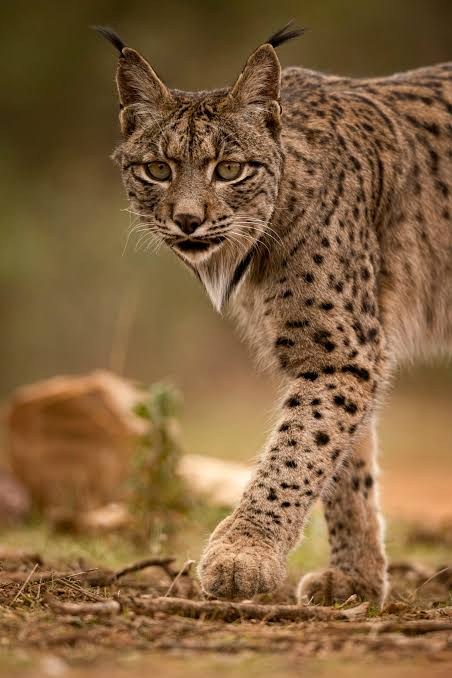
I like to start there, because people always expect a wild cat to be huge and terrifying, and then they meet me. I weigh about eleven kilograms, which is roughly half of what my enormous cousin the Eurasian lynx weighs. I have long skinny legs, a small head, leopard spots, and a short stubby tail that looks like somebody dipped the end of it in black paint. My ears have dramatic black tufts sticking straight up off the tips. And around my face I have a ruff of long hair hanging down like a real beard, so basically I look like a very serious old man who got shrunk and then covered in spots.

I live in southern Spain and southern Portugal, in Mediterranean scrubland, which sounds boring but isn't. It is dry sunny hills full of tough little bushes and cork oak trees, with grassy clearings in between where the rabbits come out to eat. There are only four kinds of lynx in the entire world, and I am the rarest one, which people say to me like it is a compliment.

Now I have to explain the rabbit situation, because if I am being honest, my whole life is the rabbit situation. Over ninety percent of what I eat is European rabbit. Not mostly rabbit. Pretty much only rabbit. A grown lynx eats about one rabbit a day, and a mother with kittens needs three, which means she spends her entire life running late for dinner. Other cats eat whatever wanders past them. I have a menu with one item on it and I refuse to apologize for that.

You can probably guess the problem. When the rabbits get a disease, and rabbits get diseases fairly often, I do not have a backup plan. That is the thing about being fussy. It works great right up until it doesn't, and then the whole species is in trouble at the same time.

In 2002 there were fewer than a hundred of us left alive, in two patches of Spain so far apart that the lynx in one patch could never reach the lynx in the other. Portugal had zero. None at all. If you had asked anybody back then, they would have quietly told you we were finished.

Then in 2005 the first cubs were born in a breeding program, to a mother named Saliega who had been rescued herself when she was only a month old. I think about that a lot, honestly. A rescued kitten grew up and started the comeback. Since 2010, more than 400 lynx have been carried out into the hills in boxes and let go. In June 2024 the scientists who keep the official lists moved us off Endangered and down to Vulnerable, and they called it the greatest recovery any cat species has ever had.

Here is where we are now. There are 2,663 of us, 2,269 in Spain and 394 in Portugal, with 542 mothers and 952 cubs born in a single year. In 2005 we had 449 square kilometers of land to live in. By 2022 that had grown to over 3,300, and we have spread further since.

That is a lot of room for one small cat with a beard and a one item menu. I fully intend to use all of it.

Fun facts

Iberian Lynx - Fun facts

Twelve facts about the rarest cat with the best facial hair.

  1. The Iberian lynx is small for a wild cat, only about 10 to 13 kilograms, which is half what a Eurasian lynx weighs.
  2. It has a ruff of long hair around its face that looks exactly like a beard.
  3. It has dramatic black tufts on the tips of its ears.
  4. Its tail is short and bobbed with a black tip, and its legs are surprisingly long.
  5. It has leopard-style spots and a small head.
  6. More than 90% of its diet is European rabbit.
  7. An adult eats about one rabbit a day, and a mother with kittens needs three.
  8. Because it eats almost nothing else, a rabbit disease can starve the whole species at once.
  9. It lives in Mediterranean scrubland, which is dry hills of tough shrubs and cork oaks.
  10. There are only four lynx species on Earth and this one is the rarest.
  11. The first cubs born in the breeding program, in 2005, had a mother named Saliega who was herself rescued as a one-month-old kitten.
  12. In June 2024 the IUCN moved the Iberian lynx from Endangered down to Vulnerable, calling it the greatest recovery of a cat species ever achieved by conservation.

Where they live

Iberian lynx live in southern Spain and southern Portugal and nowhere else on the planet. Their home is Mediterranean scrubland, which is sunny dry hills covered in tough shrubs and cork oak trees. What they really need is clearings in between the bushes, because that is where rabbits graze, and rabbits are the whole reason a lynx can live somewhere.

Iberian Lynx - map of where they live
The two darker patches are where lynx never quite died out. The paler ones are places they have spread back into.

How many are left?

The good news

In 2002 there were fewer than 100 Iberian lynx left, stuck in two separate patches of Spain that couldn't reach each other, and Portugal had none. Breeding centers started producing cubs in 2005, and 424 lynx have been released since 2011. By 2025 there were 2,663 lynx, with 2,269 in Spain and 394 in Portugal, including 542 breeding females and 952 cubs born in that year alone. Their territory grew from 449 square kilometers in 2005 to more than 3,300 by 2022, and the 2025 census found lynx living in 26 separate areas. They are still vulnerable, but this is one of the best conservation stories anybody has.

How you can help

You can help! A lynx needs two things: rabbits, and roads that do not kill it.

  1. Cars are the biggest recorded killer of Iberian lynx by a long way. Of 273 lynx deaths recorded in 2025, 212 were collisions on roads and tracks. If your family drives through lynx country, slow down, especially at dawn and dusk, and take the wildlife crossing signs seriously.
  2. Push for wildlife crossings and underpasses. That is the fix that works, and it is a thing governments decide to build.
  3. Support the projects restoring rabbit habitat. A lynx eats almost nothing except rabbits, so no rabbits means no lynx, and rabbit diseases are the risk everyone is watching.
  4. Tell people this story. Twenty years ago the Iberian lynx was going to be the first cat species lost in thousands of years, and it was not. People should know it worked.
Golden Lion Tamarin

Golden Lion Tamarin

Open the Golden Lion Tamarin section

Pipoca the Golden Lion Tamarin

Golden Lion Tamarin - Pipoca the Golden Lion Tamarin

My name is Pipoca and I have better hair than you do. I'm sorry. It's just true.

I am a golden lion tamarin, which means I am a very small monkey with a very big mane. My fur is bright orange gold, like a sunset that is showing off, and around my dark bare face I have a thick mane exactly like a lion has, except a lion weighs about two hundred kilograms and I weigh half of one. My body is roughly the length of a ruler and my tail is even longer than my body. So really I am a squirrel who wandered into a costume shop and never left.

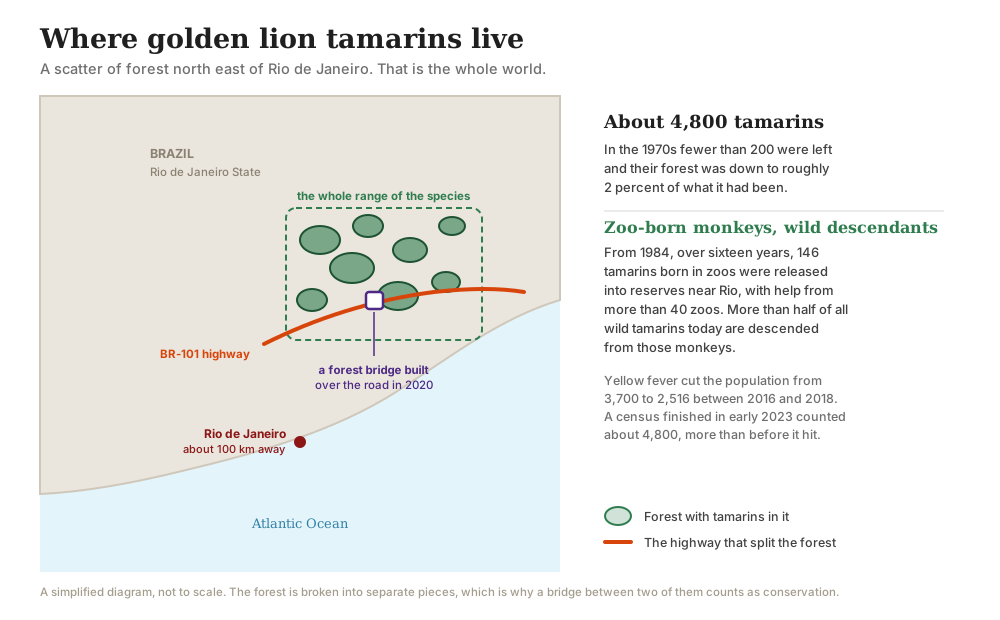
I live in Brazil, in the Atlantic Forest in the state of Rio de Janeiro, only about a hundred kilometers from downtown Rio. Over there they have skyscrapers and beaches and traffic, and over here there is me, hanging upside down off a branch. I am awake in the daytime, which I think makes me much easier to like. Most endangered animals in books are nocturnal and mysterious. I am out at lunchtime being loud.

My fingers are long and skinny, and instead of flat nails like yours, mine are shaped like little claws, so I can grip bark and run straight up a tree trunk. I poke my fingers into cracks in the bark and down into bromeliad plants, which hold rainwater in the middle, and I fish out insects and sometimes a small lizard. It is exactly like a claw machine at the arcade, except I am extremely good at it.

At night I sleep in a hole in a tree, and I have one rule about that: almost never the same hole two nights in a row. If a predator learns your address, that is the end of the story.

My mum had twins, because we almost always have twins. Here is my favorite part. My dad carried us. Both of us, all day, on his back, through the trees, and my big brother took turns too. Dad only handed us over to Mum when it was time to eat, and then he took us straight back. I have never in my life seen a more exhausted monkey. He never complained. Well. He complained a little.

In the 1970s there were fewer than 200 of us left, and our forest had been cut down to about two percent of what it used to be. Two percent. Then on the 31st of May in 1984, a family of eight tamarins who had been born at a wildlife park in Ohio, in the United States, were released into a reserve near Rio. Over the next sixteen years, 146 zoo-born tamarins came here, with more than 40 zoos across North America and Europe helping out. More than half of all the wild golden lion tamarins alive today, over 2,500 of them, are descended from monkeys who were born in zoos.

Then yellow fever swept up through Brazil and reached our forest, and it killed about a third of us. Before it there were about 3,700 of us; after it, only 2,516. Those were two very quiet years in the forest. We came back anyway. A census finished in early 2023 counted about 4,800 of us, which is more than there were before we got sick.

And in 2020, after years of people arguing about it, Brazil opened the first bridge of its kind in the country over the BR-101 highway. It is an overpass planted with real native trees, so a tamarin can cross a motorway without ever touching the ground.

A bridge. Made out of forest. For monkeys. Sometimes people are amazing.

Fun facts

Golden Lion Tamarin - Fun facts

Twelve facts about the smallest animal with the biggest hair.

  1. Golden lion tamarins are tiny. The body is only 20 to 33 cm and the tail adds another 31 to 40 cm.
  2. A whole adult weighs about half a kilogram, roughly the same as a squirrel.
  3. They have a thick lion-style mane around a dark bare face.
  4. Their coat is brilliant orange gold, which is not exactly camouflage.
  5. Females almost always give birth to twins.
  6. Dads and older brothers and sisters do most of the baby carrying, and only hand the twins to mum for feeding.
  7. Instead of flat fingernails they have claw-like nails, so they can cling to bark like squirrels.
  8. Their long skinny fingers poke into bark cracks and bromeliad plants to fish out insects and small lizards.
  9. They sleep in tree holes and usually don't use the same hole two nights in a row, so predators can't learn where they live.
  10. They are awake in the daytime, unlike most of the endangered animals people write about.
  11. They only live in one country, Brazil, about 100 km from downtown Rio de Janeiro.
  12. Brazil built them a bridge of trees over a highway so they can cross without leaving the treetops.

Where they live

Golden lion tamarins live only in Brazil, in what's left of the Atlantic Forest in Rio de Janeiro State. That is warm, thick, tangled forest full of vines and bromeliads, and it is only about 100 kilometers from a huge city. Their forest got chopped into separate pieces by farms and roads, which is why the wildlife bridge over the BR-101 highway matters so much.

Golden Lion Tamarin - map of where they live
The green blobs are the pieces of forest that are left, and that dotted box is the whole world for golden lion tamarins. The orange line is the highway, and the little purple square is the bridge built over it.

How many are left?

The good news

In the 1970s there were fewer than 200 golden lion tamarins left and their forest was down to about 2% of its original size. Starting in 1984, zoo-born tamarins were released into reserves near Rio, and over 16 years 146 of them were reintroduced with help from more than 40 zoos. More than half of all wild tamarins today, over 2,500 of them, are descended from those zoo-born monkeys. A yellow fever outbreak that spread through Brazil from 2016 and reached the tamarins' forest knocked the population from about 3,700 down to 2,516, which was awful, and then they recovered: a census finished in early 2023 counted about 4,800, more than before the outbreak.

How you can help

You can help! Tamarins need their forest joined back together.

  1. Support the groups replanting forest on old cattle pasture in Rio de Janeiro state. That pasture is what replaced the tamarins' forest, and turning it back into trees is the main work.
  2. Back the corridors and the canopy crossings. A tamarin family stuck on one island of trees slowly runs out of options, and a planted strip of forest or a bridge over a highway fixes that.
  3. Never buy a monkey as a pet, and do not share videos of pet monkeys. Tamarins were nearly wiped out by exactly this.
  4. Zoos really did help. About a third of the wild population today descends from tamarins born in zoos and released. If you visit one, find out whether it takes part in a breeding program.
Yangtze Finless Porpoise

Yangtze Finless Porpoise

Open the Yangtze Finless Porpoise section

Bao the Yangtze Finless Porpoise

Yangtze Finless Porpoise - Bao the Yangtze Finless Porpoise

Hello. My name is Bao, and I am smiling at you, but not on purpose.

My mouth curves up at the corners and it stays that way whether I am happy, bored, or thinking about lunch. People on the boats call us the smiling angels of the Yangtze, which is a lovely nickname, and I have decided to earn it even though the truth is that my face just does that by itself.

I am a porpoise, and I live in a river. That sounds normal until you find out I am the only porpoise on the entire planet who lives in fresh water. Every other member of my family is out in the ocean being salty. Porpoises as a family are something like 25 million years old, but my branch only moved into this river from the sea around the last Ice Age, which still means we were here long before the cargo ships and the bridges and the cities on both banks. We were here before pretty much everything.

I also have no fin on my back. None at all. Where other porpoises have a fin, I have a low bumpy ridge of skin, like a little road of goosebumps. That is why we are called finless, which I think we can all agree is not the most creative name anybody has ever come up with.

The Yangtze is packed with mud and silt, so the water is brown and you genuinely cannot see anything in it, which makes my eyes close to useless. Instead I see with sound. I fire out clicks and listen to how they bounce back, and from the echoes I can tell where the fish are, where the riverbed is, and where that enormous ship is. I am basically shouting into the dark and reading the answer.

I am not quite two meters long and weigh about as much as a really big dog, around seventy kilograms. Mothers carry a calf for a whole year and only ever have one baby at a time, so every single calf matters an enormous amount.

I have to tell you about my neighbor. The baiji was a river dolphin who lived here with us. In 2006 scientists searched the whole river for six weeks, the entire thing, and did not find a single one. So now I am the last mammal left in the Yangtze. I try not to think about that too much.

In the early 1990s there were about 2,700 of us. By 2017 there were 1,012, and everybody could see where that line was heading.

Then China did something huge. On the 1st of January 2021 the government banned fishing across the whole Yangtze basin for ten years. More than 111,000 fishing boats came off the water and 231,000 fishers were helped into new jobs, because you cannot simply tell people to stop working and then walk away. In 2022 the survey counted 1,249 porpoises, which was the first increase anybody had ever recorded. The 2025 survey, announced in January 2026, counted 1,426. A study published in February 2026 found that the ban stopped about seventy years of decline in the river, that fish numbers have doubled, and that 43 more kinds of fish were recorded than could be found before the ban.

Back in the early 1990s, scientists moved five porpoises into an old cut-off bend of the river called Tian-e-Zhou. It worked, which had never happened before with any whale, dolphin or porpoise anywhere on Earth, and porpoises born there have been released back into the main river.

We are still critically endangered, and I am not going to act like we aren't. For the first time in my family's very long history in this river, though, there are more of us than there were the last time somebody counted. I will take it. And I will keep smiling, since I can't really stop.

Fun facts

Yangtze Finless Porpoise - Fun facts

Twelve facts about the only porpoise who has never once seen the sea.

  1. The Yangtze finless porpoise is the only porpoise on Earth that lives in fresh water.
  2. It has no dorsal fin, just a low ridge of bumpy skin along its back.
  3. Its mouth curves upward, so it looks like it is permanently smiling. People call it the smiling angel of the Yangtze.
  4. Its branch of the porpoise family moved into the Yangtze from the sea around the last Ice Age, long before people built anything on its banks.
  5. The river is so full of silt that eyesight is nearly useless down there.
  6. So it sees by firing out clicks and reading the echoes that bounce back.
  7. Adults grow up to almost 2 meters long and weigh around 70 kilograms.
  8. Mothers carry a calf for about a year and have only one baby at a time.
  9. It shares the river with cargo ships, bridges and cities on both banks.
  10. Its neighbor the baiji river dolphin was declared functionally extinct after a six-week search of the whole river in 2006 found none.
  11. That makes the finless porpoise the last mammal left living in the Yangtze.
  12. In the early 1990s, five porpoises were moved to an old river bend called Tian-e-Zhou, and it became the first successful rescue of its kind for any whale, dolphin or porpoise anywhere.

Where they live

Yangtze finless porpoises live in the middle and lower parts of the Yangtze River in China, plus two lakes connected to it, Poyang and Dongting. It is not a quiet wilderness at all. There are cargo ships going over their heads and big cities on both banks. There is also a protected oxbow lake called Tian-e-Zhou, an old bend of the river that got cut off, where porpoises have been bred safely for decades.

Yangtze Finless Porpoise - map of where they live
The purple circles show how many porpoises were counted in each place. The dam at Yichang is the wall at the western end of their whole world.

How many are left?

The good news

There were about 2,700 of these porpoises in the early 1990s, and by 2017 there were only 1,012. Then on 1 January 2021 China banned fishing across the entire Yangtze basin for ten years, took more than 111,000 fishing boats off the water, and helped 231,000 fishers move into new jobs. The 2022 survey counted 1,249 porpoises, the first increase ever recorded, and the 2025 survey counted 1,426. A study in February 2026 found the ban has halted roughly 70 years of decline in the river, with some fish populations doubling and 43 extra fish species turning up. They are still Critically Endangered, so the work isn't over, but the numbers are finally going the right way.

How you can help

You can help! Everything on this list is about the river itself.

  1. Support fishing bans and the fishers affected by them. Getting tangled in fishing gear is the single biggest killer of these porpoises, and China's ban worked because 231,000 people were helped into new jobs, not just told to stop.
  2. Back the protected stretches of river and the oxbow reserves. Tian-e-Zhou was the first place in the world where a whale, dolphin or porpoise was successfully bred outside its home river.
  3. Keep water clean. Whatever goes down a drain ends up in a river somewhere, and a porpoise has to live in it.
  4. Remember the baiji. It went extinct in a river people thought was too big to empty, and telling that story is how it does not happen twice.
Mountain Gorilla

Mountain Gorilla

Open the Mountain Gorilla section

Bahati the Mountain Gorilla

Mountain Gorilla - Bahati the Mountain Gorilla

The first thing anyone ever learned about me was my nose.

Above my nostrils there is a pattern of wrinkles that belongs to no other gorilla alive. It works like a fingerprint, except it sits in the middle of my face where everybody can see it. Researchers sit at the edge of our clearing with notebooks and draw it, line by line, and then photograph it to be certain. Somewhere in an office at the bottom of the mountain there is a page with my nose sketched on it and my name written underneath. Bahati. Group of eleven. Virunga.

I did not ask to be written down. For a long time I resented it, the way anyone resents being watched while they eat. I feel differently now. The animals nobody counts are the animals nobody notices are missing.

I am a silverback. The hair across my back has gone the color of wet stone, I weigh about 170 kilograms, and when I stand up and start walking, eleven gorillas stand up and walk with me. I decide where we feed and where we sleep. I decide which slope we cross and which one carries too much human smell to be worth it. My daughter is four and follows closest of all, usually by hanging off my forearm while I am trying to look like someone worth following.

We live higher up than any gorillas on Earth, climbing the volcano slopes to about 3,800 meters, where the mornings are cold enough that mist beads on our fur. Our coats grew thick to answer that cold. We eat leaves and stems and green shoots, and we eat an astonishing quantity of them, which is why most of my day is spent sitting in wet vegetation, chewing, thinking about very little.

Every evening I build a nest, and every evening it is a new one. I bend branches inward, fold leaves over them, and press down until I have a bowl shaped like my own body. In the morning I climb out and never use it again. My whole life is a trail of beds behind me that I will not sleep in twice. Researchers follow that trail to count us, so even the things I abandon are evidence that I was here.

The danger up here was never meant for us, which somehow makes it worse. People set wire snares in the forest to catch antelope, and a wire cannot tell the difference between an antelope's leg and my nephew's hand. More than seven of every ten of us are used to being near humans now, and being used to humans means catching what humans carry. We share about 98 percent of our DNA with them. A cough that would keep a child home from school for two days can move through my family like fire.

Then something happened that I did not expect. When my nephew was caught, people came up the mountain on foot to help him. They are called the Gorilla Doctors, and they walk into the forest and cut snares off wild gorillas with their own hands. No other wild ape population on Earth gets regular medical care. I stood over them the entire time, close enough to be a serious problem, and they kept working anyway.

In the early 1980s there were around 250 mountain gorillas left in these volcanoes. In 2010 there were about 480. By 2016 there were 604, the highest number ever recorded here, and Bwindi, one forest over, held 459 in 2018. That made roughly 1,063 of us at the last full counts, and a new count began in 2025 that everyone expects to come back higher. In 2018 the people who keep such lists moved us from Critically Endangered down to Endangered. We are still endangered. But we are the only great ape whose numbers are climbing, and there is not one of us in any zoo anywhere. Every mountain gorilla alive is wild.

It took patrols pulling snares out of the undergrowth, doctors climbing volcanoes, and money from tourist permits going back to the families who live along the forest edge for schools and clean water. My daughter is four. She will not carry her first infant until she is about ten, and after that she will raise only one at a time, each for nearly four years. That is how slowly we rebuild.

So keep drawing my nose. I intend to be on the list the next time they count.

Fun facts

Mountain Gorilla - Fun facts

Here are twelve things I learned about mountain gorillas that I keep thinking about.

  1. Every mountain gorilla has a unique nose print, and researchers identify individuals by drawing and photographing the wrinkles above their nostrils.
  2. We share about 98% of our DNA with gorillas.
  3. A gorilla builds a brand new nest out of bent branches and leaves every single night and never sleeps in the same one twice.
  4. The dominant adult male is called a silverback, named for the saddle of silver-gray hair across his back.
  5. Silverbacks weigh between 120 and 190 kilograms, and the silverback decides where the whole group feeds, sleeps and travels.
  6. Virunga gorillas live as high as about 3,800 meters on volcano slopes, making them the highest-living gorillas on Earth.
  7. They grew unusually thick fur to survive the cold at that altitude.
  8. Their diet is mostly leaves, stems and shoots.
  9. Females have their first baby at around ten years old and then raise only one infant every four years or so, which is why rebuilding the population takes decades.
  10. The entire global range of the species is only about 790 square kilometers, split between two forest patches.
  11. There is not a single mountain gorilla in any zoo anywhere in the world. Every one alive is living wild.
  12. The biggest threats are disease caught from humans, wire snares set for antelope that catch gorillas by accident, habitat loss and armed conflict.

Where they live

Mountain gorillas live in only two forests, and those forests sit only 25 to 50 kilometers apart, depending on where you measure. The first is the Virunga Massif, a chain of forested volcanoes that crosses the borders of Rwanda, Uganda and the Democratic Republic of the Congo. The second is Bwindi Impenetrable National Park in southwestern Uganda. Together these two places add up to only about 790 square kilometers, which is the entire range of the species on this planet. The Virunga gorillas climb to about 3,800 meters, higher than any other gorillas anywhere.

Mountain Gorilla - map of where they live
Two patches of forest, 25 to 50 km apart depending on where you measure, holding every known mountain gorilla.

How many are left?

The good news

In the early 1980s only around 250 mountain gorillas survived in the Virungas, and most people expected the species to disappear. The Virunga count rose to about 480 in 2010 and then to 604 by 2016, the highest figure ever recorded there, while Bwindi held 459 in 2018. That brought the total to roughly 1,063 gorillas at the last completed counts; a new census of Bwindi began in 2025, and the total is expected to rise. In 2018 the IUCN moved mountain gorillas from Critically Endangered down to Endangered, crediting anti-poaching patrols and the veterinary teams who remove snares from injured wild gorillas. They are the only great ape whose numbers are currently increasing. They are still Endangered, and because females raise young so slowly, the recovery will take decades more.

How you can help

You can help! Gorillas are unusual, because one of the things that endangers them most is us being near them.

  1. If you ever go gorilla trekking, do not go with a cold. A human respiratory virus once made eleven of twelve gorillas in one group ill and killed two of them. Stay the required distance back, every time, and wear a mask if the guides offer one. Researchers watching treks found the distance rule broken on almost every single one.
  2. Support the tourism programs that share money with the communities living beside the parks. When local families benefit from gorillas being alive, poaching drops. That is the whole reason this recovery happened.
  3. Back the veterinary teams who cut snares off wild gorillas. They are the only project in the world doing that.
  4. Recycle old phones and laptops through a proper e-waste scheme. Mining for the metals inside them has destroyed the forests of the mountain gorilla's cousins, Grauer's gorillas, in eastern Congo, though be honest that recycling old handsets recovers very little of that metal today, so the bigger lever is keeping devices longer.
California Condor

California Condor

Open the California Condor section

Juno the California Condor

California Condor - Juno the California Condor

My name is Juno, and I cannot say it out loud.

Condors have no voice box. Not a small one or a weak one. None at all. I can hiss, I can grunt, and I can produce a wheeze that sounds like a door that needs oiling. That is my entire vocabulary. Every other bird in California wakes up and sings about it. I wake up and make a noise like a deflating tire.

So we talk with our faces instead. The skin on my head is bare, which people assume is ugly and is actually practical, because feathers on a head that spends its time inside a dead deer would be a disaster. That bare skin flushes color when I feel something. Pink when I am calm. Orange when I am interested. Red when another condor is standing on my meal and needs to leave. My whole mood is printed on my head in real time, which is either honest or humiliating depending on the day.

I am the largest land bird in North America. My wings stretch about nine and a half feet across, wider than most cars are long, and I weigh around twenty pounds. On a good day I can cover more than 150 miles, riding the thermals up to fifteen thousand feet and barely flapping. From that height the highways look like scratches. I can live sixty years or more, which means I have time to be patient, and I raise one chick at a time, usually only every other year, which means I have to be.

My family has been here since the Ice Age. My ancestors ate mammoths and giant ground sloths, and their bones are still coming out of the La Brea Tar Pits in Los Angeles. We watched the mammoths go. We did not think we would be next.

What almost finished us is not dramatic. It is a fragment of lead the size of a grain of rice. Hunters leave carcasses in the hills, and if the bullet was lead, it shatters into pieces too small to see. We eat them. Between 1992 and 2025 lead killed at least 161 of us, which is half of every condor death with a known cause. There is nothing to fight and nothing to fly away from. It is just a thing that gets swallowed. There is also microtrash, bottle caps and glass fragments that parents mistake for bone chips and carry home to their chicks.

By 1982 there were twenty-two California condors left alive on Earth. Twenty-two. In 1987 biologists decided to catch every single wild condor and bring them all into captivity, because the alternative was watching the last ones die one by one. The final free-flying condor was a male called AC-9, taken on April 19, 1987. For five years after that, the sky over California had no condors in it at all. Not one. My grandmother remembered nothing of the wild because there was no wild left to remember.

Then in 1992 they started putting us back.

By the end of 2025 there were 392 of us flying free and 607 in total. Fifty-four captive pairs laid 67 eggs that year, 46 birds were released, and 16 chicks fledged out in the open on their own, raised entirely by wild parents. California banned lead ammunition for all hunting statewide on July 1, 2019. When bird flu killed 21 of us in one terrible outbreak, they started vaccinating condors before releasing them, and there have been no disease deaths in the two years since. Wild deaths dropped from 58 that outbreak year to 22 two years later.

I wear a numbered tag on my wing and carry a transmitter on my back. Somewhere a biologist knows exactly where I am and what I had for lunch. I used to find that undignified.

I do not anymore, because of the Yurok. Their people have called us prey-go-neesh for longer than California has been called California, and they hold us sacred. In 2003 they made a promise to bring us home to their territory in the north, and it took nineteen years, and in 2022 they released the first condors over that land. Eight birds. By the end of 2025 that flock had grown to twenty-five.

I have no voice. But there are people down there who have been saying my name for a very long time, and they never stopped.

Fun facts

California Condor - Fun facts

Twelve things about California condors, and the first one still surprises me.

  1. A California condor has no voice box at all. It can only hiss, grunt and wheeze, and it cannot sing or call.
  2. It is the largest land bird in North America, with a wingspan of about 9.5 feet, wider than most cars are long.
  3. Adults weigh 18 to 25 pounds and can live 60 years or more.
  4. The bald head is not for looks. Feathers there would get filthy inside a carcass, so bare skin is easier to keep clean.
  5. That bare skin flushes pink, orange or red depending on the bird's mood, so condors basically talk with their faces.
  6. A condor cools itself by soaking its own legs so the liquid evaporates like sweat.
  7. It can soar over 150 miles in a single day at altitudes near 15,000 feet, riding thermals like a glider without flapping much at all.
  8. A pair raises only one chick at a time, and often only every other year.
  9. Condors have lived in California since the Ice Age, when they scavenged mammoths and giant sloths, and their bones turn up in the La Brea Tar Pits.
  10. Every wild condor wears a numbered wing tag and carries a radio or GPS transmitter, so biologists know each individual bird by number.
  11. Lead poisoning from ammunition fragments in carcasses is the main threat, causing 161 confirmed deaths between 1992 and 2025.
  12. Microtrash is another danger, because parents sometimes feed bottle caps and glass fragments to their chicks by mistake.

Where they live

California condors live in mountains, canyons and rocky coastal cliffs across California, Arizona, Utah and Baja California in Mexico. They nest in caves and cliff ledges and need huge open landscapes to soar over while searching for carcasses. Historically they ranged across much of western North America, all the way from British Columbia down into Mexico. Since 2022 there has also been a flock flying over Yurok ancestral territory in far northern California, where condors had been absent for more than a century.

California Condor - map of where they live
The purple patches are the only places condors fly wild. There is one more flock now, the newest, in the far north of California, too new to be on this map.

How many are left?

The good news

In 1982 there were only 22 California condors left on Earth. In 1987 biologists captured every remaining wild bird, and for five years there were zero condors flying free anywhere. Releases began in 1992, and by the end of 2025 there were 392 free-flying wild birds and 607 in total. The recovery is still fragile, because lead poisoning remains the leading known cause of death, but California's statewide lead ammunition ban took full effect in 2019, and wild deaths fell from 58 in 2023 to 22 in 2025. Some of that drop is because 21 of the 2023 deaths came from a single bird flu outbreak, which condors are now vaccinated against before release. In 2025, 16 chicks fledged in the wild without human help, which is the number that matters most.

How you can help

You can help! Condors are dying from something very specific, which means the fix is specific too.

  1. If anyone in your family hunts, ask them to switch to non-lead ammunition. Lead fragments left in a carcass are the leading cause of death in adult condors, and hunters who have tried copper bullets mostly rate them as good or better.
  2. If you live in condor country, pick up litter, especially small pieces. Bottle caps, glass chips and bits of wire are the biggest killer of condor chicks in California, because parents mistake them for bone fragments and feed them to their babies.
  3. Never fly a drone near cliffs where birds nest, and keep away from nest sites.
  4. Support the release programs and the tribes running them. The Yurok waited nineteen years to bring condors home and did it.
Hainan Gibbon

Hainan Gibbon

Open the Hainan Gibbon section

Jin the Hainan Gibbon

Hainan Gibbon - Jin the Hainan Gibbon

Before the sun clears the ridge, my father starts singing, and the whole mountain listens.

His song has at least three separate parts, and he never rushes them. When he reaches the right moment my mother comes in over the top of him with her great call, a long rising note that climbs and climbs and then breaks open. It travels for kilometers through the wet trees. I have been learning to sing since I was small, and I am still not good at it, which my mother finds hilarious.

My name is Jin. I was born pale, almost cream colored, the way every Hainan gibbon is born. Then I turned black, and I stayed black for years, and I assumed that was simply who I was. Now the gold is coming in across my shoulders and my back, because I am female and grown, and females turn gold. My brother will be black for the rest of his life. I keep catching my own arm in the light and being startled by it, like meeting somebody new.

We live in the treetops and we do not come down. Not for water, not for fruit, not for curiosity. I have never once put my hand on the forest floor. We travel by swinging arm over arm underneath the branches, which is called brachiation, and when it is going well it does not feel like effort at all. It feels like falling forward on purpose and being caught every time.

There are six of us in my family, which is unusual. Most gibbon species live in pairs, but Hainan gibbons usually live as one male, two females and their children. Six of us on one mountain, in about sixteen square kilometers of rainforest, and that is the whole world.

The strangest thing about being us is this. Nobody counts us by looking. They count us by listening. Forty or fifty people hike up into our territory and camp for about five days, and every morning before dawn they sit in the dark with their heads tilted, writing down which songs come from which direction. That is the survey. That is how anyone knows we exist. Gibbons in different places even sing with different regional accents, so our voices tell people where we are from.

In July 2014 a typhoon called Rammasun came across the island and tore the mountain open. Landslides ripped gaps through the forest up to thirty meters wide. One of them cut straight across the route my aunt's family used every single day, a gully averaging fifteen meters across, and for creatures who never touch the ground, a gap is a wall. They could see the trees on the other side. They could not reach them.

In 2015 people came with mountaineering rope. Tree climbers from Hong Kong strung a pair of rope bridges across the gully, the first canopy bridges of their kind in China, and hung a camera on them to see what would happen. Nothing happened. For a hundred and seventy-six days, nothing happened. Gibbons are cautious and the rope was strange and my aunt's family simply refused.

Then one of them crossed. And then another. They started using it more and more, and eventually every member of that group had gone over the 15.8 meter span except the adult male, who never did. Some of them walked it upright like a tightrope, holding a second rope above their heads as a handrail, which I am told looked ridiculous and worked perfectly.

In the 1950s there were over 2,000 of us spread across twelve counties. By the 1970s there were fewer than ten. When the first proper survey was done in 2003 they found thirteen gibbons in two families, and that was every Hainan gibbon on Earth. Today there are about forty-two of us in seven family groups. We are still the rarest primate alive, rarer than the panda or the tiger or any great ape.

People have planted more than 80,000 seedlings from 51 native tree species across 150 hectares, and the ones they put in a decade ago are finally bearing fruit that we can eat. And in February 2026 scientists studying our DNA found something nobody expected. Even though there are so few of us, our genetic load is surprisingly low, probably because our species squeezed through a bottleneck in the last ice age and then spread out for thousands of years afterward.

In plain language, we have been rare before, and our ancestors left us built for it.

So tomorrow, before light, I will sit next to my father and try again to get the ending right. Somewhere below us, somebody is awake in the dark with a notebook, waiting to hear us.

Fun facts

Hainan Gibbon - Fun facts

Twelve facts about the rarest primate on the planet.

  1. The Hainan gibbon is the rarest primate on Earth, rarer than the panda, the tiger or any great ape.
  2. Adult males are jet black with a pointed crest of hair on their heads, and adult females are golden-buff with a black cap.
  3. Every baby is born pale and then turns black. Males stay black for life, but females turn gold again once they are grown.
  4. Breeding pairs sing duets at dawn that carry through the forest, with the male's song containing at least three distinct parts.
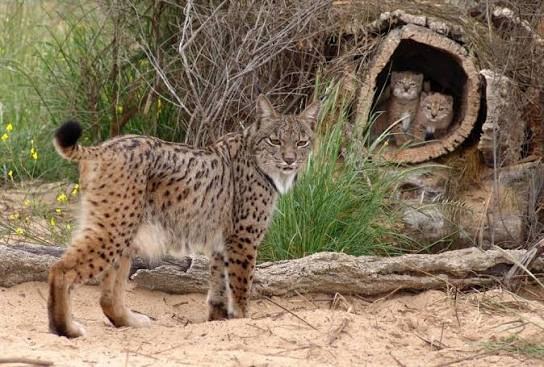
  5. The female adds a soaring note called the great call, which is the part that travels farthest.
  6. Gibbons living in different areas sing with different regional accents.
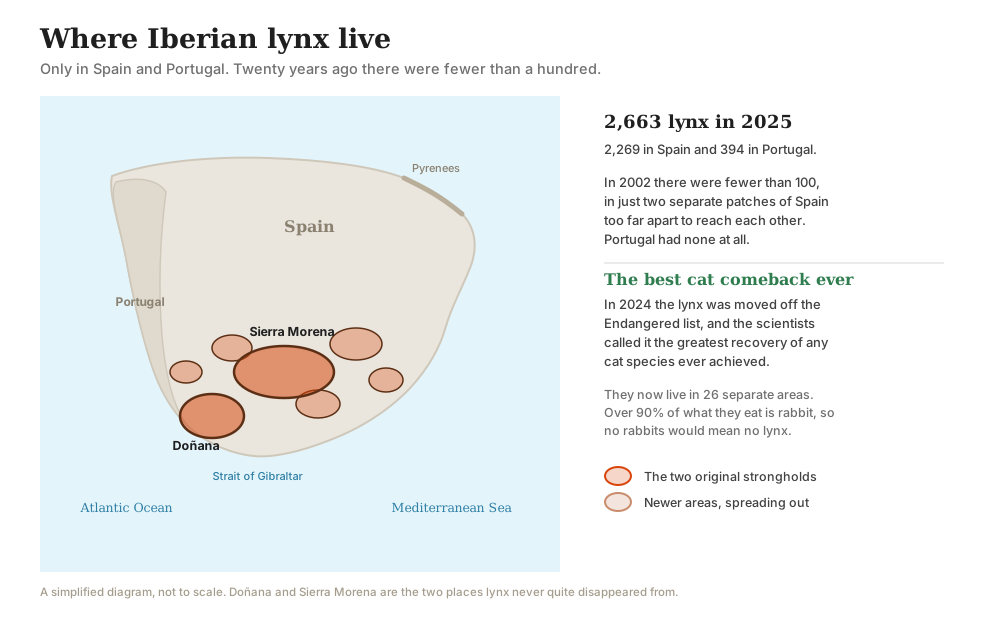
  7. They live entirely in the treetops and are essentially never seen on the ground.
  8. They move by brachiation, swinging hand over hand beneath the branches across enormous gaps.
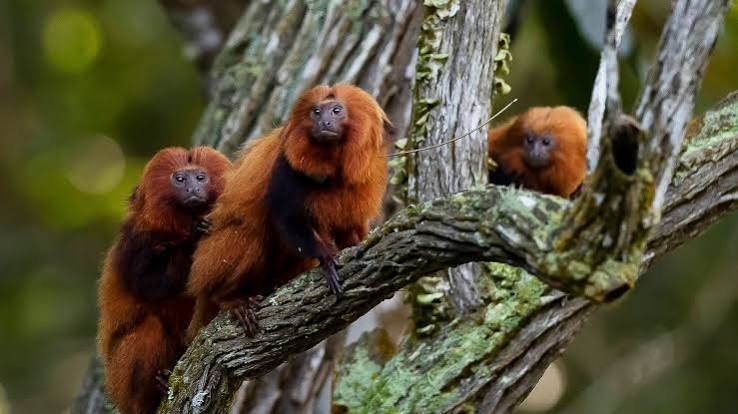
  9. Most gibbon species live in pairs, but Hainan gibbon families are usually one male, two females and their young.
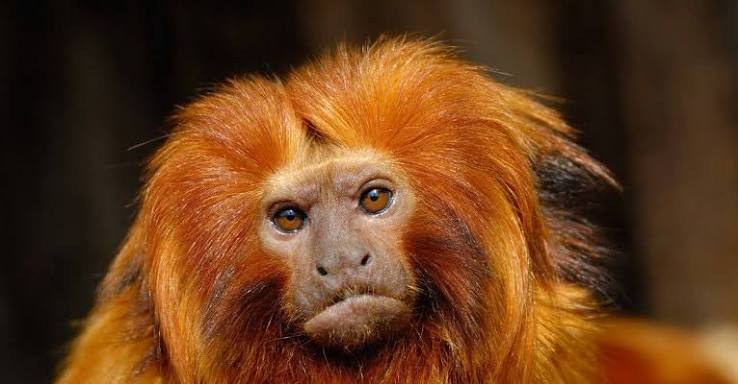
  10. They are counted by ear, not by sight.
  11. A survey team of 40 to 50 people camps in gibbon territory for about five days listening for the dawn songs.
  12. The entire species lives in roughly 16 square kilometers of rainforest.

Where they live

Hainan gibbons live only on Hainan Island, off the southern coast of China. Their entire range is about 16 square kilometers of tropical rainforest in the Bawangling area, which is now part of Hainan Tropical Rainforest National Park. They spend their whole lives in the canopy of mature forest and need tall, connected trees to travel through. When a storm or a road breaks that canopy, the gap can cut a family off completely, because these gibbons will not cross open ground.

Hainan Gibbon - map of where they live
The green patch in the west of Hainan Island is the 16 square kilometres of forest that holds every Hainan gibbon alive.

How many are left?

The good news

In the 1950s more than 2,000 Hainan gibbons lived across twelve counties on the island. By the 1970s there were fewer than ten left, and the first proper survey in 2003 found only thirteen individuals in two family groups. Today there are about 42 gibbons in seven family groups, so the population has more than tripled from its lowest point. Habitat work has helped, including over 80,000 seedlings from 51 native tree species planted across 150 hectares, and China's first canopy rope bridges, built in 2015 to reconnect a group cut off by typhoon landslides. A genetic study published in February 2026 found the gibbons carry a surprisingly low genetic load for such a small population, which suggests they may be better equipped to survive being rare than anyone assumed.

How you can help

You can help! There are about forty of these left, so every bit of forest counts.

  1. Support rainforest restoration. The seedlings people planted a decade ago are only now growing fruit the gibbons can eat, which tells you how long this work takes.
  2. Their forest was cut down decades ago for timber and rubber, so the fix now is patient replanting and reconnecting the fragments. Support the groups doing exactly that, because this animal's whole problem fits inside sixteen square kilometers.
  3. Tell people this animal exists. Almost nobody has heard of the rarest primate on Earth, and species nobody has heard of do not get funded.
  4. If you like engineering, look up the canopy bridges. Somebody solved a life-or-death problem for a whole species with mountaineering rope.
Sumatran Orangutan

Sumatran Orangutan

Open the Sumatran Orangutan section

Bulan the Sumatran Orangutan

Sumatran Orangutan - Bulan the Sumatran Orangutan

It takes me about ten minutes to build a nest, and I can do it now without thinking, which is the whole point of this story.

I choose a fork high in the canopy, bend the living branches inward until they lock against each other, then weave smaller ones across the top and line the middle with leaves. If the sky looks heavy I add a roof. Every night a fresh one, because a nest holds the weather and the insects of the day it was built and is no good to anyone by morning. My son watched me do it from my hip for the first two years of his life. Lately he has started making his own, badly, three branches and an air of enormous satisfaction, and I let him sleep in mine anyway.

I should not know how to do this. That is the part people do not understand about me.

I do not remember my mother's face. I remember the sound the air rifle made, and I remember being carried by hands that were the wrong size and the wrong temperature, and then I remember a crate. Orangutan infants are worth money as pets, and the only way to take one is to kill the mother first, because she will not let go. Mine did not let go. I was probably two years old. Female orangutans give birth only once every eight or nine years, one of the slowest rates of any mammal alive, so when a mother is shot the loss is not one life. It is every life she would have raised for the next thirty years.

The people at the rescue center had to teach me things my mother would have taught me. Not tricks. The actual business of being an orangutan. How to tell which fruit is ripe by weight. How to fold a leaf into a glove so you can grip a spiky durian or push through a branch full of thorns. How to strip a stick down and work it into a hole in a trunk to fish out termites and ants and honey. There was a woman there who came every morning and stood at the bottom of a training tree with her arms folded, and when I refused to climb, which was often, she would say the same word. Naik. Climb. She never sounded impatient. She just kept saying it until I did.

I was released in 2018, at a place called Jantho, a pine forest reserve in Aceh where there had been no orangutans for a very long time. They opened the crate and stepped back and nobody explained anything to me. I went up the nearest trunk out of habit and sat there until dark, and then I realized nobody was going to bring me food, and nobody was going to come back for me, and nobody ever did. That was the gift. I understood that later.

The first nest I built on my own fell apart under me at two in the morning and dropped me into the branches below. The second one held.

There is a lot to learn about a forest when you are the first of your kind to live in it. I learned which ridge catches the wind and which valley floods. I learned that my arms span more than two meters from fingertip to fingertip, wider than I am tall, and that this is not clumsiness but design, because we are the largest tree-dwelling animals on Earth and we are meant to move hand over hand through the canopy rather than walk beneath it. I learned to listen for the long call of a flanged male, that low roaring sound that carries more than a mile and tells you exactly how much space you should give him.

We are the only great apes in Asia. The gorillas, the chimpanzees and the bonobos are all African. There are just three orangutan species, and one of them, the Tapanuli, was only recognized as separate in 2017. We share about 97 percent of our DNA with humans, which people bring up often, usually as though it were a compliment to us.

One morning in May, a field team confirmed that I had a healthy male infant. He was born in the forest, to a mother who was born in the forest, raised in a cage, and then given the forest back. He is the tenth confirmed birth to a released orangutan at Jantho, which does not sound like many until you remember how long we take. A few months after him, a female named Wenda had a daughter, and that made eleven.

I will not pretend the news is good everywhere. There are about 11,694 Sumatran orangutans left, and that number has fallen by roughly a fifth since 2011. Nearly all of us, around 10,519, live inside the Leuser Ecosystem, 2.6 million hectares of forest across Aceh and North Sumatra, the last place on Earth where orangutans, tigers, rhinos and elephants still share the same trees. About nine out of every ten of my species depend on one forest.

The same study found something worth holding onto, though. The decline happened even though forest loss had genuinely slowed, which means the cutting is easing and the population is simply lagging behind, the way anything must when its mothers only give birth once a decade. Meanwhile the rescue program has pulled more than 500 orangutans out of crates and cages and returned over 330 of them to two completely new wild populations, here and at Bukit Tigapuluh.

My son does not know any of this. He knows that the top of a nest goes on last, and that if he asks with enough persistence I will let him ruin mine. He learned that from me, and I learned it from a woman standing at the bottom of a tree saying climb.

Fun facts

Sumatran Orangutan - Fun facts

Twelve things about Sumatran orangutans, including several I had to read twice.

  1. Sumatran orangutans share about 97% of their DNA with humans.
  2. An adult male's arm span reaches roughly 2.2 meters, over seven feet, which is wider than he is tall.
  3. Large adult males develop flanges, the wide cheek pads on either side of the face, and produce a long call that carries more than a mile through the forest.
  4. They build a fresh nest in the treetops every night, and it takes only about ten minutes. In heavy rain they add a roof.
  5. They are skilled tool users, poking sticks into tree holes to fish out termites, ants and honey.
  6. They also make gloves out of leaves so they can handle spiky fruit and thorny branches without hurting their hands.
  7. They are the largest tree-dwelling animals in the world, traveling hand over hand through the canopy instead of walking on the ground.
  8. They are the only great apes found in Asia. Gorillas, chimpanzees and bonobos all live in Africa.
  9. Females give birth roughly every eight to nine years, one of the slowest reproductive rates of any mammal, which is why losing even a few adults matters so much.
  10. There are only three orangutan species: Sumatran, Bornean and Tapanuli.
  11. The Tapanuli orangutan was not recognized as its own species until 2017.
  12. The main threats are deforestation for oil palm, forest fragmentation, deliberate shooting with air rifles, and the illegal pet trade, where infants are captured after their mothers are killed.

Where they live

Sumatran orangutans live only on the northern tip of the Indonesian island of Sumatra, in the provinces of Aceh and North Sumatra. Almost the entire species depends on the Leuser Ecosystem, 2.6 million hectares of lowland and montane rainforest that holds about 10,519 orangutans, roughly nine out of every ten Sumatran orangutans alive. Leuser is the last place on Earth where orangutans, tigers, rhinos and elephants all live in the same forest. Because orangutans travel through the canopy rather than on the ground, they need continuous unbroken forest, so a road or plantation cut through the trees can isolate a population as effectively as a wall.

Sumatran Orangutan - map of where they live
The green patch at the top of Sumatra is the Leuser Ecosystem. Nine out of ten Sumatran orangutans live inside it.

How many are left?

The good news

Surveys carried out between 2021 and 2023 estimate about 11,694 Sumatran orangutans remain, a decline of roughly 19.5% since 2011. This is an honest decline, and it should not be dressed up. The same research found something encouraging, which is that the decline happened despite forest loss slowing down, meaning deforestation rates have genuinely improved and the population numbers are lagging behind that improvement because females reproduce so slowly. The Sumatran Orangutan Conservation Program has rescued over 500 orangutans and reintroduced more than 330 into two entirely new wild populations at Bukit Tigapuluh and Jantho Pine Forest Nature Reserve. Jantho has now recorded eleven confirmed births to released orangutans, including a male infant born to a rehabilitated female named Bulan and, a couple of months later, a female infant born to another released female named Wenda. Orangutans rescued from traffickers are raising wild-born babies of their own, which is the clearest sign that reintroduction actually works.

How you can help

You can help! Orangutans are losing forest, and some of that forest is in your shopping.

  1. Look for certified sustainable palm oil rather than avoiding palm oil altogether. Certification is imperfect and does not stop everything, but boycotting is worse, because the oils that would replace palm need up to nine times more land.
  2. Never like or share videos of pet orangutans, however cute they look. An infant orangutan only becomes a pet after somebody shoots its mother.
  3. Buy FSC-certified paper and wood.
  4. Support the rescue and reintroduction centers. They are the reason orangutans taken from traffickers are now raising wild-born babies. Killing and capture are the parts of this problem that no shopping label can touch.
Javan Rhino

Javan Rhino

Open the Javan Rhino section

Arum the Javan Rhino

Javan Rhino - Arum the Javan Rhino

There is no photograph of me taken by a person standing in front of me. Not one. Every picture of my kind that exists in the world was taken by a machine strapped to a tree, triggering in the dark while nobody was there.

I prefer it that way. I am not shy exactly, but I am solitary and I am careful, and I have arranged my entire life around not being met. I walk the same mud paths at the same hours. I eat from more than three hundred different plant species, so I am never forced to be predictable about food. I lie in wallows until the mud dries gray on my back and I look like part of the riverbank, which is the highest compliment I can pay myself.

My skin folds over itself in overlapping plates, so people who have seen me say I look armored. I have no horn at all, only a low bump where one might have been, because most females do not grow them. Even the males here carry horns under twenty-five centimeters, the smallest of any rhino alive. The men with rifles have never seemed to care about that distinction.

There are things about us nobody knows and may never know. No Javan rhino has ever been born in captivity, because no Javan rhino has ever lived in captivity. There is not one of us in any zoo on this planet today. So nobody has been able to sit with a pregnant female and record how long she carries her calf. Scientists guess at our lifespan, thirty to forty years, and they guess at the length of a pregnancy, and they write the guesses down carefully and label them as guesses. Almost everything humans understand about me, they learned from footprints, from dung, and from photographs I did not know I was posing for.

We used to be everywhere. Our range once covered nearly all of Southeast Asia, from India through Burma and Thailand and Vietnam and down across the islands. Vietnam had a few left when I was young. In 2010 a poacher shot the last one, and after that this peninsula on the far western tip of Java was the only place in the world where a Javan rhino could stand. Roughly twelve hundred square kilometers of rainforest and mud and freshwater, with a live volcano called Anak Krakatau smoking out at sea. I have felt the ground move under me more than once. It is not the volcano I am afraid of.

In 2023 the rangers began noticing that camera traps were vanishing from the forest. A camera would be there in the spring and gone by the summer, the strap cut. At the same time I stopped crossing paths with rhinos I had known for years. I do not seek company, so it took me longer than it should have to understand what the absence meant. The forest was not quiet. It was emptier.

In May 2024 the police announced what they had found. A poaching syndicate had confessed to killing twenty-six of us between 2019 and 2023. Twenty-six. Roughly a third of every Javan rhino that existed. Thirteen poachers and traders were arrested, and the man who organized it, Sunendi, was sentenced to twelve years in prison. Our official count had peaked at seventy-six in 2022. There are about fifty of us now.

I want to be honest about that, because I think there is a version of my story that skips it, and that version is worth nothing.

Here is what I hold onto instead. In 1967 there were about twenty-five Javan rhinos left in this park. Twenty-five, in the whole world, and everybody who studied us assumed they were watching the end. We climbed back out of that. It took decades and it was not graceful, but it happened once, which means it is a thing that can happen.

The park now runs thirty-five clusters of camera traps, a hundred and forty cameras in total, and they are watched far more closely than they used to be. At least five calves have been born in the last two years, three of them confirmed in a single spring. Every one of them was discovered by a machine on a tree, because there is no other way to find us.

One night in January, at seventeen minutes past ten, I walked a path I have walked a thousand times and something clicked in the dark. My son was beside me, four months old, close against my flank, and he startled and then decided it did not matter. I did not slow down. I have never once slowed down for a camera.

Days later the Ministry announced what the image showed. A female they believed to be Arum, with a calf under five months old.

They know my name. They know his face now too. Let them count him.

Fun facts

Javan Rhino - Fun facts

Twelve facts about the rarest large mammal on Earth, and some of them are really just admissions of how little we know.

  1. The Javan rhino is the rarest large mammal on Earth.
  2. There are no Javan rhinos in captivity anywhere on the planet today.
  3. Almost every photograph ever taken of a living Javan rhino is a camera trap image.
  4. Females often have no horn at all, or just a small bump where one would be.
  5. Males' horns average under 25 centimeters, the smallest horn of any living rhino.
  6. Their skin folds into overlapping plates that make them look like they are wearing armour.
  7. Their diet includes more than 300 different plant species.
  8. They are solitary and secretive and are almost never seen directly by humans.
  9. Nobody has ever confirmed how long a Javan rhino pregnancy lasts, because no birth has ever been observed in captivity.
  10. The best estimate for their lifespan is 30 to 40 years, and even that is an estimate.
  11. Recent research documented a likely cleaning partnership between Javan rhinos and slender-billed crows, which pick parasites off their skin.
  12. They once ranged across almost all of Southeast Asia, but Vietnam lost its last individual in 2010 when a poacher shot her.

Where they live

Every Javan rhino alive lives in Ujung Kulon National Park, on the far western tip of the island of Java in Indonesia. The park covers roughly 1,200 square kilometers of tropical rainforest across a peninsula, with mud wallows, dense lowland vegetation and freshwater sources the rhinos depend on. Offshore sits Anak Krakatau, an active volcano, which means a single eruption or tsunami is a genuine risk to the entire species. Conservationists have discussed establishing a second population elsewhere for exactly this reason, because keeping every individual of a species in one place is dangerous no matter how well that place is protected.

Javan Rhino - map of where they live
The green patch on the far western tip of Java is the entire range of the species. The orange triangle offshore is Anak Krakatau.

How many are left?

The good news

There are about 50 Javan rhinos alive today. The population fell to roughly 25 in 1967 and then recovered over several decades, reaching an official count of 76 in 2022. That progress was reversed by poaching: in 2023 rangers noticed camera traps disappearing, and by May 2024 police announced that a syndicate had confessed to killing 26 rhinos between 2019 and 2023, about a third of the species. Thirteen poachers and traders were arrested and the ringleader, Sunendi, received a 12 year prison sentence. Security has been overhauled since, and the park now operates 35 clusters of camera traps totalling 140 cameras, which is how new calves are found. At least five calves have been born in the last two years, three of them confirmed in a single spring, and in January a camera trap recorded a female with a calf under five months old. Indonesia's Ministry of Environment and Forestry announced it days later, saying a preliminary analysis suggested the mother was a known rhino named Arum.

How you can help

You can help! There are about fifty Javan rhinos, and poaching is the whole problem.

  1. Never buy anything containing rhino horn, and be suspicious of traditional medicines that do not list what is in them. There is no scientific evidence that rhino horn treats anything at all.
  2. If you see wildlife products for sale online, tell an adult and ask them to report the listing. Companies removed tens of millions of illegal wildlife listings after people flagged them, and most trafficking happens on ordinary websites now.
  3. Support ranger funding. A poaching ring operated inside a guarded national park for five years, and better-paid, better-equipped rangers are the answer to that.
  4. Argue for a second population. Every Javan rhino on Earth lives in one park next to an active volcano, and that is a risk nobody should accept.
Philippine Eagle

Philippine Eagle

Open the Philippine Eagle section

Lakpue the Philippine Eagle

Philippine Eagle - Lakpue the Philippine Eagle

For most of the last century, people called my family monkey-eating eagles. It was a good name in the way that a rumor is a good story, and like most rumors it was mostly wrong. Eventually somebody looked properly at what we actually eat and the name was dropped, though our scientific name still means ape-eater, so the misunderstanding is preserved in Latin forever.

What I eat is flying lemurs, mostly. Also squirrels and fruit bats and rats, monitor lizards, snakes, hornbills, and owls. I have eaten other birds of prey. I mention this not to boast but because it explains something about how much forest one of me requires. A single pair can need thousands of hectares of mature mountain rainforest. You cannot fit an eagle into a woodlot.

My wings measure over two meters across and carry more surface area than any other eagle's on Earth, which some people use to argue that I am the largest eagle in the world. When something interests me I raise the long shaggy feathers at the back of my head, and they lift into a mane. I am on the currency of my country. Children learn my picture before they learn my range.

I hatched in a tree on Mindanao and I do not remember it. What I remember begins with hands. Poachers took me out of the nest as a chick, and I was small enough that I could not have flown from them if I had understood I should. I was rescued, and then I lived for years among people who fed me and measured me and wrote things down about me.

I want to be precise about this, because it gets confused. I was not made in a cage. I was only kept in one. There are Philippine eagles who were bred in captivity, and they are remarkable and their story is not mine. I was hatched wild, taken, and eventually given back. My keepers described me as fiercely wild, which they meant as an assessment and I took as a compliment.

In March 2025 they moved three of us to Leyte, an island where eagles had been lost. Not thinned. Lost. Two had already gone before us, Carlito and Uswag, released at Burauen the year before, and they were the first Philippine eagles ever reintroduced anywhere in the country. Uswag drowned at sea about a month after his release, which is the part of this story people tend not to repeat. They kept me for half a year in an aviary at the forest's edge, letting me learn the shape of the ridges through wire. Then one morning, near the end of September, somebody opened the door and stood aside.

Here is what nobody tells you about being released onto an island your species has vanished from. There is no one to learn from. On Mindanao an eagle grows up inside a map that other eagles drew, knowing which ridge holds the thermals and which valley the flying lemurs favor at dusk. On Leyte I inherited nothing. I flew over a forest that had no memory of me in it and I had to make every mistake myself, in order, out loud.

We mate for life, and the whole business of raising young takes two years. Both parents feed a single chick for roughly twenty months, which is slower than most large mammals manage. We can live thirty to sixty years, so there is time, but the arithmetic is unforgiving. Every eagle shot out of a tree with an air gun or caught in a nylon snare costs the species two years of work that had already been done.

There are Filipinos who have spent their whole careers on that arithmetic. The Philippine Eagle Foundation has been breeding eagles since 1992, when a chick named Pag-asa, which means hope, became the first Philippine eagle ever bred in captivity. Recently they announced their thirty-second, a chick named Bayani, meaning hero. Thirty-two eagles in thirty-four years. Nobody in that building is in a hurry, because hurrying is not an option available to them.

And on Mount Apo, more than two hundred Indigenous and upland community members work as Forest Guards. They patrol the mountain, they have removed over two hundred traps, and they have planted eleven thousand native trees grown in nurseries they run themselves. Those trees are not for them. Trees that size are for whoever is flying in sixty years.

Nobody can agree on how many of us are left. The estimates run from about 180 mature individuals up to 784, and the scientists arguing about it are not being careless. We are simply very difficult to count in mountain rainforest, and I have made my living out of being difficult to see.

Earlier this year a camera caught me at the edge of a river in Leyte, standing in the shallows and drinking. The biologists were delighted. They said it proved I had adapted to living wild.

I was thirsty. That is all it was, from where I stood.

I understand what they meant by it, though, and I have thought about it since. That river ran through this island for a long time without a single eagle bending over it. Four of us are flying this island now, out of the five who were given the chance, and there is a plan for sixteen, six breeding pairs eventually, and a recent study mapped more than ten thousand hectares of forest here that would suit us, most of it far enough from towns to be genuinely safe. Which means that somewhere on this island there is very likely a female working out the same ridges I am, making the same mistakes in a different order.

I have a name I did not choose and a river I did not know existed. In a year or two, if I am careful, I will have something better. I will have someone to call to.

Fun facts

Philippine Eagle - Fun facts

Twelve facts about the national bird of the Philippines, starting with a name it had to get rid of.

  1. The Philippine eagle is arguably the largest eagle in the world, with the greatest wing surface area of any eagle and a wingspan over two meters.
  2. Its old name was the monkey-eating eagle, which was dropped because it gives a misleading picture of what the bird actually eats.
  3. Its diet includes flying lemurs, squirrels, fruit bats, rats, snakes, monitor lizards, owls and hornbills, and it will take other birds of prey.
  4. Its scientific name still translates to ape-eater, so the old misunderstanding survives in Latin.
  5. Philippine eagles mate for life.
  6. The full breeding cycle takes two years, and both parents care for a single chick for about 20 months.
  7. That makes their reproductive rate slower than most large mammals.
  8. They live roughly 30 to 60 years.
  9. They have a shaggy crest of long feathers that they raise like a mane when alert.
  10. The Philippine eagle is the national bird of the Philippines and appears on the country's currency.
  11. A single breeding pair can require thousands of hectares of mature mountain rainforest.
  12. Deforestation is by far the biggest threat, followed by shooting with air guns and trapping in nylon snares.

Where they live

Philippine eagles live only in the Philippines, and only on four islands: Mindanao, Samar, Leyte and eastern Luzon. They need mature mountain rainforest with tall emergent trees for nesting, and a single pair may range across thousands of hectares. The great majority survive on Mindanao, where Mount Apo remains one of the most important strongholds. Leyte had lost its eagles entirely, which is why the reintroduction project there matters so much, and a study published in June 2026 mapped 9,554 hectares of highly suitable release habitat on the island.

Philippine Eagle - map of where they live
The Philippines has more than seven thousand islands. Eagles survive on four of them.

How many are left?

The good news

Population estimates for the Philippine eagle vary widely, from around 180 to 500 mature individuals up to about 784, and scientists genuinely disagree because eagles are extremely hard to count in mountain rainforest. The Philippine Eagle Foundation has bred eagles in captivity since 1992, when a chick named Pag-asa, meaning hope, became the first of its species ever bred this way, and it has since announced its 32nd chick, named Bayani, meaning hero. The most significant work now is the Leyte reintroduction, the first in the country's history, which uses rescued and rehabilitated wild-born eagles rather than captive-bred ones. Carlito and Uswag were the first two released at Burauen, though Uswag drowned at sea about a month later. Three more eagles followed, and one of them, Lakpue, was released and later filmed drinking from a river in Leyte, which biologists cited as evidence he had adapted to wild living. Five eagles have been released so far, with a plan for about 16 and eventually six breeding pairs, and a recent study mapped over 10,000 hectares of suitable habitat on the island. Alongside this, the Forest Guard Program employs more than 200 Indigenous and upland community members who patrol Mount Apo, have planted 11,000 native trees grown in their own nurseries, and have removed over 200 traps.

How you can help

You can help! An eagle needs forest, and it needs people not to shoot it.

  1. Never shoot at birds or set snares, and speak up if you see someone doing it. Of the twenty-four Philippine eagles rescued since 2019, nearly half had been shot, mostly with air guns, and young eagles get caught in nooses set for pigs and deer.
  2. Support the Forest Guards. More than two hundred Indigenous and upland community members patrol Mount Apo, and they have removed over two hundred traps.
  3. Plant native trees, not ornamental ones. The eagles need mature forest, so trees planted now are for eagles flying in sixty years.
  4. If you know of an eagle being kept captive, report it. Rescued eagles are exactly the birds being released into Leyte.
Amur Leopard

Amur Leopard

Open the Amur Leopard section
Language

What the Cameras Know About Me

Amur Leopard - What the Cameras Know About Me

There is a gray metal box strapped to the trunk of a Korean pine about four hundred paces from where I sleep, and I have decided to forgive it. The first time it flashed at me I dropped flat with my ears back and stayed that way for an embarrassing length of time, waiting for the thing to explain itself. It never did. It just sat there in the cold with its one eye open. Now I walk past it the way you walk past a neighbor you have run out of things to say to.

My name is Zima. The people who own the boxes do not know that. They know me by the rings on my left flank, because no leopard wears the same pattern as another, not ever, in the same way that neither of your hands leaves the same print on a window. Somewhere there is a file with my shoulder in it and a number where a name should be. I have never really minded. A number means somebody was counting, and for almost all of my mother's life nobody was counting us at all.

I am smaller than you are imagining. Say it out loud, the rarest big cat on Earth, and something enormous appears in your head. I weigh about what a large farm dog weighs. My cousins in the hot countries would look at me and see unfinished work. Yet in November I took a roe deer in wet snow and hauled it up into the fork of an oak, and if you want to understand what that costs, go and lift something as heavy as you are above your head, and then climb. I do it so the crows and the badgers get nothing. Hauling something close to my own weight up a trunk is the hardest thing I do, and meat that is up a tree is still mine in the morning. The other thing I am is fast and briefly airborne: thirty-seven miles an hour over a short distance, which is enough, and more than nineteen feet in a single jump, flat out across a gully, and ten feet straight up. The branch you thought was safe is not safe.

Winter here is not a season, it is an argument. I grow two coats a year for it. In summer my fur is short, barely the depth of a knuckle, and when the cold comes it grows back almost three times as long, and paler than the fur of any leopard living south of me, because what you have to disappear into here is snow and gray wood and the light that comes bouncing off ice. When I sleep I bring my tail round and lay it over my nose like a scarf. I have watched you do exactly the same thing with yours.

Mostly I say nothing at all. I have a hoarse cough that tells other leopards where the edges of my ground run, and it is an awful sound, like an old man clearing his throat, but it carries. I also purr while I eat, which is undignified, and I would prefer that you did not repeat it. My tongue is covered in small hard hooks. I can take a rib down to the bone with it.

I was born blind and weighing about half a kilogram, which is less than a loaf of bread, in a hollow under a rock face my mother had chosen months in advance. She kept us hidden for two months. She moved us the day she decided the den had been found. I knew her smell and the sound of her coming back long before I ever saw her face.

She told me about the empty years. Men wanted our skins because our skins were rare, and the rarer we became the more the skins were worth, which is the worst arithmetic I know of. They shot our deer too, so that leopards nobody was hunting starved politely, out of sight. Fires ran through the oak and the pine and left grass behind them, and grass is not forest, and I will not cross a wide open place if I can avoid it. My mother once walked for days without meeting anyone. There were leopards south of here, in Korea, and they had stopped being there before she was even born.

And there is a thing I do not have good words for. Everyone here is my relative. When there are very few of you, you end up loving your cousins, and the bodies that come out of that are sometimes wrong in small ways. There is a young male two valleys over with white feet, which is an impossible color on a leopard, and a female whose tail stops too soon, as though somebody changed their mind halfway. Nobody did that to them. It is only what happens when a family gets too small. That frightens me more than rifles do, because you cannot post guards against it.

The guards came anyway, better trained than before, and they actually walked the ground, and the men with snares grew scarce. Then something happened that I still find hard to believe. The deer came back. Sika deer in numbers my mother talked about the way you talk about a story from your grandmother, enough of them that a bad hunt in January is only a bad hunt and not the beginning of the end of you. Cubs that would have died in their second winter did not die. In the valley where my metal box lives, the humans counted twenty-eight of us where they once found sixteen, and when the two countries finally counted together they made it two hundred and twenty-three of us in all. In autumn I cross the river into the other country, where the forest has been allowed back and lanes have been cut so animals can travel, and there are boxes on those trees as well. I have worked out that both sets of people have me in their files, which means that on paper I am two leopards. I find this funnier than I probably should.

My cubs are hidden right now, in a place I am not going to describe. In a year they will walk past a gray box of their own and something will flash and they will drop flat exactly as I did, and someone in a heated room will look at the rings along their sides and give them numbers. That is not nothing. My mother was never photographed once. But being counted is not the same as being safe, and I know the difference, because I have walked through forest that used to have leopards in it. What I have is a park, and deer, and a border that has stopped mattering. It is more than she had. Whether it is enough, I honestly cannot tell you.

Fun facts

Amur Leopard - Fun facts

Twelve things worth knowing about the small, pale, almost silent cat that lives where the snow does.

  1. The Amur leopard is probably the rarest big cat on Earth.
  2. Every leopard's spot pattern is unique, like a fingerprint, and it is how scientists tell individuals apart in camera trap photographs.
  3. It can run up to 37 miles an hour, leap more than 19 feet horizontally, and jump 10 feet straight up.
  4. It grows two coats a year. Summer fur is about 2.5 cm long and winter fur about 7 cm.
  5. It is paler than other leopards, which hides it against snow, and it wraps its tail around itself like a scarf for warmth.
  6. Its tongue is covered in sharp rasps called papillae, which scrape meat off bone.
  7. Cubs are born blind, weigh about half a kilogram, and their mother keeps them hidden for six to eight weeks.
  8. It can haul prey roughly as heavy as itself, sometimes heavier, up into a tree so scavengers cannot steal it.
  9. It is mostly silent, but it makes a hoarse rasping cough to mark territory, and some individuals purr while eating.
  10. Adult males weigh only 70 to 105 lb, which is small for a big cat and about the weight of a large dog.
  11. It is the only leopard that lives in snow, in forest with bitterly cold winters and hot summers.
  12. Amur leopards most likely disappeared from South Korea in the late 1960s.

Where they live

Amur leopards live in temperate forest in the Russian Far East, mainly in southwest Primorsky Krai near Vladivostok, and across the border in the Chinese provinces of Heilongjiang and Jilin. It is oak and pine and Korean pine forest on hilly ground, buried in snow for months and then genuinely hot in summer. They avoid open grassland, which is why forest fires are so damaging: burnt forest often comes back as grass, and grass is habitat a leopard will not use. Their range today is a fraction of what it once was, and it almost certainly no longer includes South Korea, with only unconfirmed traces left in the far north of the peninsula. The Russian and Chinese halves of the population are separated only by a river and a fence line, which some leopards simply ignore.

Amur Leopard - map of where they live
The two green shapes are the national parks on either side of the border. The 223 is the first count that does not tally the same leopard twice.

How many are left?

The good news

The first careful count, in the early 1970s, found only 38 to 46 leopards in Russia, and by 1985 a survey of southwest Primorye found just 25 to 30. After an eleven-year campaign, Russia created Land of the Leopard National Park in 2012, now covering about 2,799 square kilometers, roughly 60% of the remaining habitat, and China created the Northeast China Tiger and Leopard National Park in 2021, covering 14,000 square kilometers. In 2024, researchers ran 130 camera traps at 66 stations across 770 square kilometers, collected more than 9,000 wildlife photographs, nearly 1,000 of them leopards, and identified 28 individual animals, up from 16 in 2015; density hit 1.86 leopards per 100 square kilometers, a 183% increase on the 0.65 recorded there in 2015 and the highest that site had seen in a decade of monitoring. The chain of causes is unusually clear: better-trained anti-poaching patrols meant fewer poachers, which let sika deer numbers rebound to record levels, which meant more food, which meant more cubs surviving. Russia and China now share a transboundary protected area of nearly 17,000 square kilometers with joint surveys and coordinated patrols, and China has restored around 40,000 hectares of forest and opened five wildlife migration corridors. The first joint Russian and Chinese census counted 135 leopards inside Land of the Leopard National Park and 223 across the whole transboundary population, which is the first number that does not double-count the animals crossing the river. The population is growing, in a small area, because specific people keep doing specific work, and that is a real reason for hope rather than a guarantee.

How you can help

You can help! Fewer than three hundred of these exist, and the threats are unusually clear.

  1. Support anti-poaching patrols, and understand what they are really protecting: the deer. The clearest chain in this whole story is better patrols, then more sika deer, then more leopard cubs surviving. People hunting the leopard's food is the pressure that matters most.
  2. Be careful with fire near forest. Almost all the fires here are lit by people, and once forest burns repeatedly it comes back as grass, which a leopard will not cross. A fire cuts its world in half.
  3. Support forest restoration and the wildlife corridors that let leopards move between Russia and China.
  4. Notice when two countries cooperate. Russia and China now share a protected area and count these leopards together, and that is worth pointing at.
Sumatran Rhino

Sumatran Rhino

Open the Sumatran Rhino section
Language

What Is Left of the Cold

Sumatran Rhino - What Is Left of the Cold

I sing at dusk, when the heat finally lets go of the leaves. There are three sounds I make. A small eep, which is hardly more than a question. A whistle with a hard blow of air behind it, which carries further. And then the long one, which starts so low in my chest that it goes underneath the forest rather than through it, past the trunks and the wet air and over the ridge, further than my legs have ever taken me. People who have recorded that one say it sounds like a whale. I have never met a whale. I am willing to believe them.

My name is Gema. I am a rhinoceros, and I am covered in hair. I know. Nobody expects that. It is reddish brown, and it is thickest and softest on calves, and it is the reason I am not really an animal of this hot green place at all. My family is about twenty million years old. The animal I am closest to is the woolly rhinoceros, the one you have seen drawn on cave walls, and she has been gone for fourteen thousand years. I am what is left of the cold. I am an Ice Age walking around in a rainforest, quietly wondering why it is so warm.

That is also why I live in mud. Every day I lie down in it, and the water in it pulls the heat out of me, and when it dries it becomes a gray coat that the sun cannot get through and the insects cannot get under. A clean rhinoceros is an unhappy rhinoceros. I have two horns, which no other rhinoceros in Asia has, and the front one is longer. I use it the way you use your hands. Last season I turned over a fallen log with it, just to find out what was living underneath.

You have almost certainly never seen one of us, and neither has anybody else. The mountains here are steep and wet and the leaves grow into one another, and an animal my size can live inside that for ten years without ever appearing. So the people who study me know me the way you know somebody from their handwriting. They find what I leave behind. They measure my footprints in the stream mud. They put cameras on the trails and collect my shoulder, my tail, half of my face. Lately they have learned to scrape the bark of the trees I rub against and read me out of what my skin leaves there, which is either wonderful or unsettling, and I have not decided which.

What I find difficult is this. Nothing is hunting me. There were years when men came for horns, and I remember being afraid then in a simple, useful way, the way you are afraid of a snake in a path. That fear made sense. What is happening now does not. I am alone because there is nobody to find. Not because we were killed last week, but because we were killed slowly, over a long time, and the ones left over are scattered through hundreds of kilometers of forest that all looks the same, calling, and mostly not being answered.

I sing anyway. That is what the long low note is for. It was built to get through exactly this kind of forest. Twice in my life it worked. The second time was eleven years ago, and he stayed three days, and afterwards I waited to feel the thing I had been told about, the slow sixteen months, the ridiculous length of it. It did not happen.

And because it did not happen, something in me has been closing. A female who goes too long without a calf grows small hard knots inside her, and after enough empty years her body simply stops being able. So the loneliness makes the emptiness and the emptiness makes more loneliness, and you can see the shape of that, how it turns and tightens. Nobody is doing it to me. That is somehow the worse version.

Not far from where I stand there is a fence, and inside it there are ten of us, and nearly everything I have to be hopeful about is in there. A calf called Andatu was born behind it, and his name is his father's and his mother's names, Andalas and Ratu, folded together, and it is also short for a human sentence that means a gift from God. Then Delilah. Then a female called Sedah Mirah, whose mother Rosa lost eight pregnancies before her, which I think about more than is good for me. Then Anggi. Then a male called Indra, and Indra is the one that matters most, because his mother is Delilah, who was born behind that same fence, grew up, and had a calf of her own. His father is called Harapan, which in the human language means hope, and he was born on the other side of the world in an American city and was the last of us in that entire country before they put him on a plane and brought him home. There is also a female in there called Bina, somewhere around forty-two years old, older than any of us has ever been recorded as getting, who was carried out of a logging concession when she was young.

There is stranger news too. In a laboratory in Berlin there are cells that used to be the skin of a male who died in Malaysia, and they have been persuaded to become something more general, something that might one day, in theory, at the end of a long line of things nobody has ever done, become the beginning of a calf. I do not know what to do with that sentence. I am not sure the people saying it know either. It is not a rescue. It is a door that is not locked yet.

And last August, dogs came into the forest with people behind them holding long leads, and in a valley where everyone had decided we were finished, one of them put its nose down in the leaf litter and stopped. What they found was dung. The first test said it was probably one of us. The careful tests were still running when I heard, and for all I know they still are. I will not tell you it was mine, because I have learned to treat hope the way I treat a slope after rain, which is to test it before I put my weight on it. But it means there may be somebody out here that nobody has been counting. And a young female born behind a fence is, tonight, somewhere, feeding her son. So I will keep singing at dusk, because the sound goes much further than I can, and because I would very much like to be wrong about being alone.

Fun facts

Sumatran Rhino - Fun facts

Twelve things worth knowing about the hairy, singing, almost invisible rhinoceros that has outlasted the Ice Age.

  1. The Sumatran rhino is the smallest rhino, but its group is the oldest, emerging roughly 20 million years ago.
  2. It is the closest living relative of the woolly rhino, which went extinct around 14,000 years ago, so it is an Ice Age animal still walking around.
  3. It is hairy. Its coat is reddish brown and shaggiest on calves, and no other living rhino is anywhere near this hairy.
  4. It is the most vocal rhino, with three documented call types: eeps, whistle-blows, and whale calls.
  5. The whale calls genuinely resemble humpback whale song, and the recordings were published in a peer-reviewed acoustics journal.
  6. Some of its sound is too low for human ears to hear, and low sound travels well through dense forest.
  7. Its genus name means two horns, and it is the only Asian rhino with two. The front horn is longer than the back one.
  8. Pregnancy lasts about 16 months.
  9. It wallows in mud constantly, which cools it, blocks ultraviolet light, and keeps insects off its skin.
  10. Because scientists almost never see wild ones, most knowledge comes from dung, footprints, camera traps, and now DNA scraped off tree bark where the rhinos rub.
  11. The biggest threat today is unusual: the animals are too few and too scattered to find each other and breed.
  12. Females that go long periods without pregnancy develop cysts and fibroids that can leave them permanently infertile, so isolation causes infertility, which causes more isolation.

Where they live

Sumatran rhinos survive only in Indonesia. The known animals live in Gunung Leuser and the surrounding forest in northern Sumatra, in Way Kambas in the south, and in Bukit Barisan Selatan, with possibly two or three animals hanging on in Borneo. Their forest is steep, wet, and extremely dense, including mountain cloud forest, and the terrain is difficult enough that a large animal can live there undetected for a decade. That hiddenness protects them from people and also hides them from each other. It is the reason surveys depend on dung, tracks, dogs, and cameras rather than on anybody actually seeing a rhino.

Sumatran Rhino - map of where they live
The three green patches are the only forests where rhinos are known to survive. The breeding sanctuary at Way Kambas holds ten more.

How many are left?

The good news

Only 34 to 47 Sumatran rhinos are believed to remain, and that figure has not changed for three years; in 2007 the estimate was 180 to 200, and the population has fallen by more than 70% in thirty years. The Sumatran Rhino Sanctuary at Way Kambas, built in 1996, holds the only reproductively viable captive Sumatran rhinos anywhere, now ten animals, and five calves have been born there: Andatu on 23 June 2012, Delilah on 12 May 2016, Sedah Mirah on 24 March 2022 to Rosa after eight lost pregnancies, Anggi on 30 September 2023, and Indra on 25 November 2023. Indra is the most important of them, because his mother Delilah was herself born at the sanctuary, meaning a rhino born in the program grew up and reproduced; his father Harapan was born at Cincinnati Zoo and was the last Sumatran rhino in the United States before moving to Sumatra in 2015. Andalas, the father of Andatu and Delilah, was also born at Cincinnati Zoo, in 2001, the first Sumatran rhino born in captivity in more than 112 years. In August 2025, detection dogs working in Way Kambas found several piles of dung believed to be from Sumatran rhinos in an area where the species was thought to have been wiped out over the past decade, and preliminary DNA came back positive, though confirmatory testing was still under way. Separately, after Malaysia's last male, Kertam, died in 2019, a team at the Max Delbruck Center in Berlin turned his preserved skin cells into stem cells, which is an early step and not a cure. So the honest picture is this: a rhino born inside a sanctuary became a mother, dogs may have found rhinos nobody knew were alive, and the species is still closer to disappearing than to safety.

How you can help

You can help! This is the hardest one on this site, and it still has answers.

  1. Support the Way Kambas sanctuary. Ten rhinos live there and it is the only place in the world where Sumatran rhinos are successfully being born.
  2. Look for certified sustainable palm oil and FSC-certified paper. Their forest is cut for both.
  3. Back the survey work, including the detection dogs. The best news in years came from two dogs finding dung in a valley everyone had written off.
  4. Share this one. Almost nobody knows there is a hairy rhinoceros that sings like a whale, and animals nobody knows about do not get saved.
Vaquita

Vaquita

Open the Vaquita section
Language

What I Have Instead of a Name

Vaquita - What I Have Instead of a Name

The water where I live is the color of weak tea, and I like it that way. You would hate it. You would put your face in and watch your own hand vanish. I have never once needed to see. I make a sound too high for you to hear, a fast run of clicks, and the shape of everything comes back to me: the sand ridge, the shrimp, my mother's ribs, the hull of a boat and how far off it is and whether it is coming closer. I do not look at my world. I ask it questions.

I am the smallest cetacean on Earth. That is a real word, and it covers everything in the sea that breathes air, and I am the smallest one there is. If you are twelve years old and reasonably tall, you are longer than my mother, and she is fully grown. I am a porpoise, which people confuse with a dolphin, and it bothers me more than it should. Dolphins have those long grinning beaks. I have a blunt face and teeth shaped like tiny spades.

I have dark rings around my eyes and dark curved lines at the corners of my mouth, so in every photograph I look like I am smiling and mildly amused by you. The people in the boats call us the panda of the sea. They also call us vaquita, which in their language means little cow. I am not a cow, and I am not smiling, and I have decided not to argue about it. Nobody even knew we existed until 1958, and they found us by finding our skulls on a beach. That is how my kind was introduced to yours. We were discovered dead.

We live in one corner of one sea, up in the north of the Gulf of California, in warm shallow murky water near the place where the Colorado River arrives with almost nothing left in it, off a town called San Felipe. Not mainly there. Only there, and nowhere else, and never anywhere else. Every vaquita who has ever lived has lived in a space you could cross in a morning in a fast boat.

Nobody wants me. I need you to understand this part, because it is the strangest fact about us. We are not hunted. No one has ever wanted my skin or my teeth or any part of me. There is a big fish here called the totoaba, and inside the totoaba there is an organ that keeps it floating at the right depth, and dried, in another country, that organ is worth more than gold by weight. So men come out at night and hang walls of thin string in the water. The string is the one thing my clicking does not always bring back to me, because it is too fine. I hear the engine, I hear the floats, I hear the current pushing on something, and then I am in it, and I cannot get up, and I have to breathe every few minutes. Every one of us that has died in a net died by accident, the way a stone breaks a window nobody was aiming at.

My mother is called Frida, after a painter. She got a name because her dorsal fin has a bend in it, and that bend is how they tell her from anyone else. She has had two calves in three years, and I am one of them. She says there used to be more voices out here. She says she used to answer more often than she does now, and she does not make a speech about it, she just goes quiet for a while and then goes back to hunting.

They find us by listening. Last time there were 1,228 underwater microphones sitting in 497 places, recording for more than eight thousand days altogether, waiting for us to click. There were also seventeen young people from San Felipe up on the boats, learning to spot a small gray back in the chop. Some of them were barely older than me. Around the same time, a group of humans whose entire job is whales wrote a warning about us that they had never written for any animal before, in the whole history of their organization. They called it an Extinction Alert. My mother does not know what that is. I only know because sound carries.

Then two things happened that I hold on to. The first is a piece of paper. Scientists read twenty of us all the way through, right down inside, expecting to find what you find in a family that has become too small: broken instructions stacking up, the kind of damage that finishes an animal no matter what anybody does for it. They did not find it. Of twelve kinds of sea mammal they compared, we carried the fewest broken things of any of them. It turns out we were always rare. We were rare long before anyone put a net anywhere near us. So the faults that pile up in small families were thrown out of us a long time ago, and in the only way that counts, we are fine. Their models say that if the nets stop, we come back. We are not dying of what we are. We are dying of something people do on purpose in order to catch a fish, which means it is a thing that can be stopped.

The second is that in the last two searches they found vaquitas outside the protected water. That sounds like nothing. It is not nothing. It means the box they had drawn around us was too small, and there may be some of us who have never been added up. And there are hardly any nets left in the strictest part of the sea now, and more than a thousand of them have been dragged out, and in one month the fast boats turned back around eighty illegal boats. For three years the number has not fallen the way it used to fall, and it used to fall by almost half every year.

I do not have a name. My mother has one because of her fin. What I have is a percentage in a report: a sixty-seven percent chance that the people counting saw between seven and ten of us in the part of the sea they were searching. That is not the same as how many of us there are. Nobody knows how many of us there are. Some nights I still hear an engine cut and something heavy going over the side, and I turn and take my mother's line and go the other way. I would like to be in the count next year. I would like my own calf to be a bend in a fin that somebody recognizes. The part that decides whether any of that happens is not a part of the sea I can swim to.

Fun facts

Vaquita - Fun facts
Vaquita - Fun facts
A 3D model rather than a photograph. It shows the markings correctly, but no photograph of a living vaquita at this range exists.

Twelve things worth knowing about the smallest cetacean on Earth, an animal that dies only by accident.

  1. The vaquita is the smallest cetacean on Earth, smaller than any other whale, dolphin or porpoise. Adults are 1.2 to 1.5 m long and weigh 30 to 55 kg.
  2. A tall twelve-year-old is taller than a full-grown vaquita.
  3. Nobody knew the species existed until 1958, when it was described from skulls found on a beach.
  4. It has dark rings around both eyes and dark curved lips, so it looks like it is permanently smiling, which is why its Spanish nickname is panda del mar.
  5. Vaquita means little cow in Spanish.
  6. It has the smallest range of any marine mammal in the world: one corner of the northern Gulf of California, and nowhere else, ever.
  7. It is a porpoise, not a dolphin. Porpoises have blunt faces and spade-shaped teeth.
  8. It is not hunted. Every vaquita death is an accident in a gillnet set for a fish called the totoaba, whose swim bladder sells for enormous sums.
  9. Scientists find vaquitas mostly by listening rather than looking, using underwater microphones that pick up their echolocation clicks.
  10. In 2023, the International Whaling Commission issued the first Extinction Alert in its history, for the vaquita.
  11. A known female called Frida, named after Frida Kahlo and identifiable by her bent dorsal fin, has been seen in three consecutive surveys and had a calf with her every single time.
  12. A 2022 study in the journal Science sequenced whole genomes from twenty vaquitas and found that of twelve marine mammal species analyzed, the vaquita carried the fewest potentially harmful mutations, so it is not doomed by inbreeding.

Where they live

Vaquitas live in the northern Gulf of California in Mexico, off the town of San Felipe, near the mouth of the Colorado River. The water there is shallow, murky and warm, which is why they rely on sound instead of sight. This is the smallest range of any marine mammal on Earth, and vaquitas have never lived anywhere else. Within that small area there is a Zero Tolerance Area where gillnetting is banned outright and enforcement is concentrated. Surveys in 2024 and 2025 found vaquitas outside the protected zones, which suggests the search area itself had been drawn too small.

Vaquita - map of where they live
The purple oval is the whole range of the species. The red square is where nets are banned outright.

How many are left?

The good news

Proper estimates put the population at 567 in 1997, 245 in 2008, 59 in 2015, and about 9 or 10 in 2018, a fall of about 99% between 2011 and 2018 alone. In the 2025 survey, scientists agreed there was a 67% chance they had seen between seven and ten distinct individuals, and it is important to be precise about that: it is a count of animals seen inside a search area, not an estimate of every vaquita alive. For three consecutive years there has been no substantial decline, after years of falling around 45% annually, and calves were confirmed in all three of those years with a female called Frida. Enforcement has changed the picture: gillnetting inside the Zero Tolerance Area is down by more than 90%, more than 1,200 illegal nets have been removed, and where patrols once counted over 170 boats in the strictest zone they now detect only a handful. The 2025 survey used 1,228 acoustic detectors across 497 sites gathering over 8,000 days of data, and 17 young people from San Felipe were trained in visual monitoring and took part in the work. The most important finding of all is genetic: because vaquitas were always naturally rare, harmful mutations were purged long ago rather than accumulating, and simulations show the species can recover if bycatch stops. The vaquita is not dying of being too inbred. It is dying of nets, which means the problem is made of human decisions and can be undone by them.

How you can help

You can help! Every vaquita death is an accident, which means every one of them is preventable.

  1. Be careful about shrimp. There is no such thing as certified vaquita-safe shrimp, whatever a label suggests, and the United States has banned seafood, including shrimp, caught with dangerous gear in the vaquita's corner of the Gulf. If your family buys shrimp, ask where it was caught and how.
  2. Never buy totoaba products, and tell an adult if you see them advertised. Dried totoaba swim bladder sold in China is the entire reason the nets are in the water, and vaquitas just happen to be there.
  3. Support the net removal patrols. Sea Shepherd says its crews have pulled more than 1,200 illegal and abandoned nets out of that sea since 2015, working with the Mexican Navy.
  4. Tell people the genetics. Everyone assumes the vaquita is too inbred to save, and the science says the opposite, so the only thing standing between this animal and recovery is a human decision.

About us

We are two sisters, and we have been researching and writing about endangered animals since 2020.

Inika B.

Now in grade 11 · started this website in grade 5

I feel we humans are responsible for taking care of our Earth and all the species that live alongside us. The animals provide us with a healthy ecosystem, and we must provide them with a safe home. We should stop cutting forests, stop spraying pesticides, and ban the plastics that disrupt that ecosystem in so many ways.

If you are a child, tell your parents that it matters not to spray weed killers and pesticides on plants. The insects and butterflies that live and feed on those plants are the ones responsible for pollinating and keeping the ecosystem healthy, and the pesticides kill them.

Anika B.

Now in grade 7 · started writing for this website in grade 5

I picked bonobos for my science project in first grade and I never really stopped. My stories are the funny ones, because I think if you laugh at an animal you remember it, and if you remember it you might do something for it later.

We are little kids just like you, and we have a passion for all animals and would like to help save them, so we hope you will join us on this journey.

About the facts on this website

We keep the numbers on these pages up to date as new surveys are published, which is why the stories are not dated. A population count from a few years ago can be out of date by the time you read it, so we would rather correct a story than leave a number in it that is no longer true. Everything here is checked against the IUCN Red List, WWF, and the national wildlife agencies and research teams named in each section. If you find something wrong, please email us and we will fix it.

Ask us about an animal

Email us if you have any questions, or if there is an animal you would like to learn about. We will research it and post a story and facts for you to read.

nikanimalsb@gmail.com